Horse Height Measurement: 5-Step Guide For Accurate Results
Discover precise techniques to measure your horse's height accurately, understand breed standards, and estimate growth for better equine management.
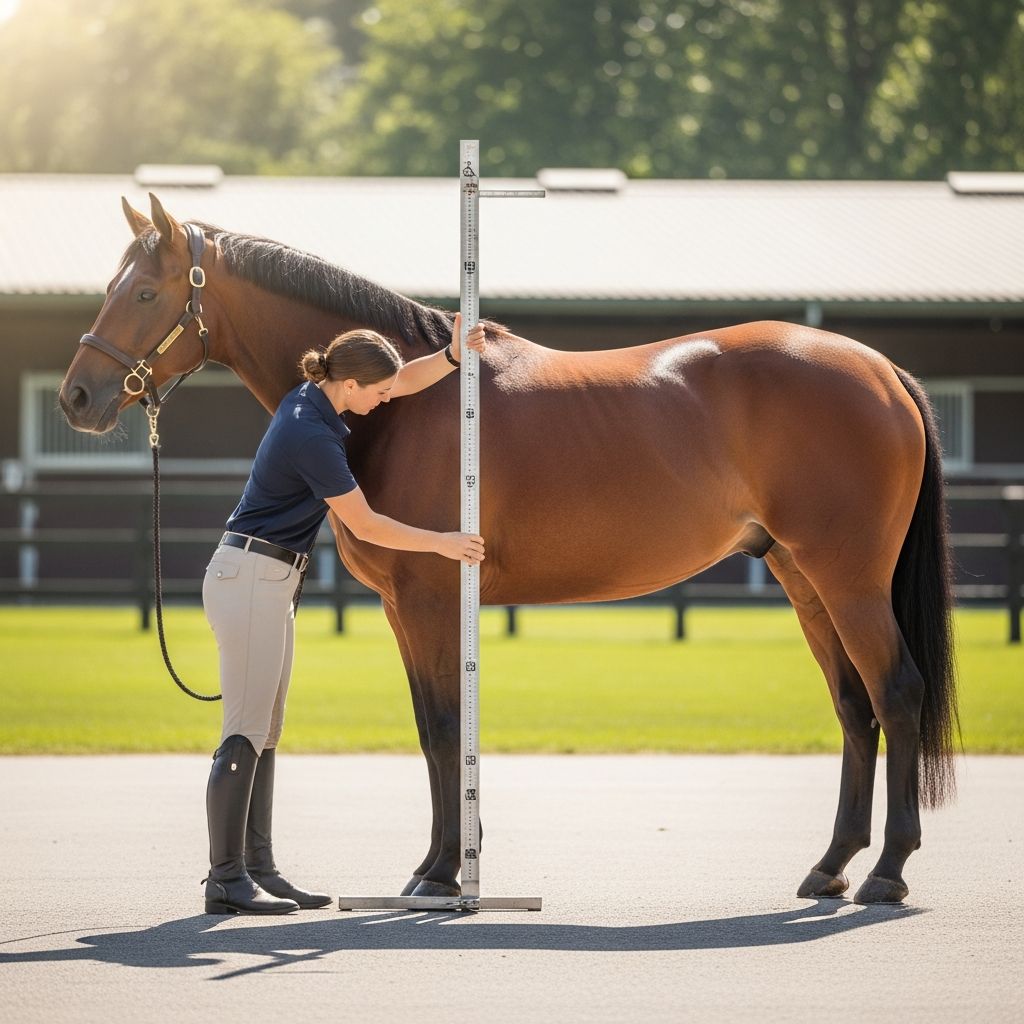
Mastering Horse Height Measurement: A Complete Guide for Owners
Accurately determining a horse’s height is fundamental for health monitoring, breeding decisions, competition eligibility, and overall management. Horses are measured in
hands
(hh), where one hand equals four inches, from the ground to the highest point of the withers—the ridge between the shoulder blades. This standardized approach ensures consistency across equestrian disciplines.Why Horse Height Matters in Equine Care
Height influences saddle fit, nutritional needs, and suitability for specific disciplines like jumping or dressage. Tall horses like Shires average 17 hands (68 inches), while ponies rarely exceed 14.2 hands. Regular measurements track growth in young horses and detect changes due to nutrition or health issues. For official registries, precise height verifies breed standards and prevents disputes.
Essential Preparations Before Measuring
Success starts with optimal conditions. Position the horse on flat, level ground like concrete to avoid distortions. Ensure all four feet are squarely placed with pasterns evenly flexed—front feet slightly ahead, hind feet even. Relax the horse to prevent muscle tension or head tossing, which skews results. Measure barefoot if possible, or subtract shoe height (typically 0.5-1 inch) for accuracy in competitions.
Tools You’ll Need
- Measuring stick: Aluminum or wood with sliding arm and spirit level for precision.
- Tape measure: Soft fabric or vinyl, marked in inches/centimeters.
- Helper: To hold the horse steady.
- Notebook: For recording multiple readings.
Step-by-Step Guide to Measuring Adult Horse Height
Follow these proven steps for reliable results, repeatable at home or professionally.
- Stand the horse squarely: Check alignment from front and side views.
- Locate the withers: Feel for the highest bony prominence behind the mane.
- Position the tool: Place stick base perpendicular to ground using level; lower arm to touch withers lightly.
- Read the measurement: Note hands and inches; convert if needed (inches ÷ 4).
- Repeat 2-3 times: Average results for precision; discard outliers.
For tape measures, keep it taut and vertical, assisted by a second person.
Converting Inches to Hands
| Inches | Hands | Example |
|---|---|---|
| 60 | 15.0 hh | 60 ÷ 4 = 15 |
| 67 | 16.3 hh | 67 ÷ 4 = 16.75 (0.75 = 0.3) |
| 52 | 13.0 hh | 52 ÷ 4 = 13 |
| 58 | 14.2 hh | 58 ÷ 4 = 14.5 (0.5 = 0.2) |
Use decimals: 0.25 inches = 0.1 hh, 0.5 = 0.2 hh, 0.75 = 0.3 hh.
Common Mistakes and How to Avoid Them
Errors like uneven footing or shod measurements lead to inaccuracies up to an inch. Avoid measuring excited horses or in poor light. Don’t press tools into the coat—light contact suffices. Always verify front feet alignment first.
- Uneven ground: Inflates height by 0.5+ inches.
- Shoes ignored: Add false height; note separately.
- Tape sag: Use helper for straightness.
Breed Height Standards: What to Expect
Horse breeds vary widely, from miniatures under 9 hh to drafts over 17 hh. Ponies are capped at 14.2 hh; above that is horse territory.
| Breed/Type | Average Height (hh) | Inches |
|---|---|---|
| Connemara Pony | 12.2–14.2 | 50–58 |
| Dales Pony | 13–14 | 52–56 |
| Dartmoor Pony | 11–12.2 | 44–50 |
| Shire (Tallest) | ~17 | 68 |
These ranges guide purchases and breeding; extremes may indicate health issues.
Predicting Foal Mature Height
Estimate adult size early using fetlock-to-elbow distance + 2 inches, held vertically from elbow. Measure at 3-6 months for best accuracy. Growth plates close around 2-3 years, stabilizing height.
- Early foal method: Fetlock to elbow ≈ mature shoulder height.
- Monitor quarterly: Track against breed norms.
Beyond Height: Accurate Weight Estimation
Weight ties to height for dosing meds and feed. Use formulas over tapes for 95% accuracy.
Heart Girth x Body Length Formula
Inches (lbs): ((Heart girth² × Body length) ÷ 330)
Centimeters (kg): ((Heart girth² × Body length) ÷ 11,990)
Heart girth: Circumference behind withers, under belly. Body length: Shoulder to buttocks.
Example: 75″ girth, 78″ length = ((75×75)×78)÷330 ≈ 1,330 lbs.
Weight Tape Method
Wrap around heart girth on level ground; ~90% accurate but less than formulas.
Advanced Tips for Professional Measurements
For shows, use official sticks; some registries measure pre-shoeing. Digital apps with levels emerging, but traditional tools remain gold standard. Track trends over time for nutritional insights.
Frequently Asked Questions (FAQs)
What is a hand in horse measurement?
One hand = 4 inches (10.16 cm), historical from hand width.
Should I measure with shoes on?
For casual use, yes; competitions often specify barefoot or note shoe height.
How often should I measure my horse?
Young horses quarterly; adults annually or post-injury.
What’s the tallest horse breed?
Shire, averaging 17 hh.
Can I measure alone?
With practice and tape, yes; stick preferred with help.
Final Thoughts on Equine Sizing
Mastering these techniques empowers informed care. Combine height with weight for holistic health tracking. Consult vets for anomalies.
References
- How Tall Are Horses? Understanding Equine Measurements and Breed Heights — Equine Institute. 2023. https://equineinstitute.org/blogs/horse-care-tips/how-tall-are-horses-understanding-equine-measurements-and-breed-heights
- How to Measure a Horse’s Height & Weight in 3 Easy Ways — Pink Equine. 2024. https://www.pinkequine.com/how-to-measure-a-horse/
- How to Measure a Horse’s Height and Weight — Schneiders Blog. 2023. https://www.sstack.com/blog/how-tos/how-to-measure-a-horses-height-and-weight/b/r0182/
- How Horse Height is Measured — Horse.com. 2024. https://www.horse.com/blogs/news/how-horse-height-is-measures
- Stop the Guesswork: Measure Your Horse’s Height Correctly — Horse & Rider. 2022. https://horseandrider.com/how-to/height-matter-16268-2/
Similar Articles



Read full bio of Sneha Tete