

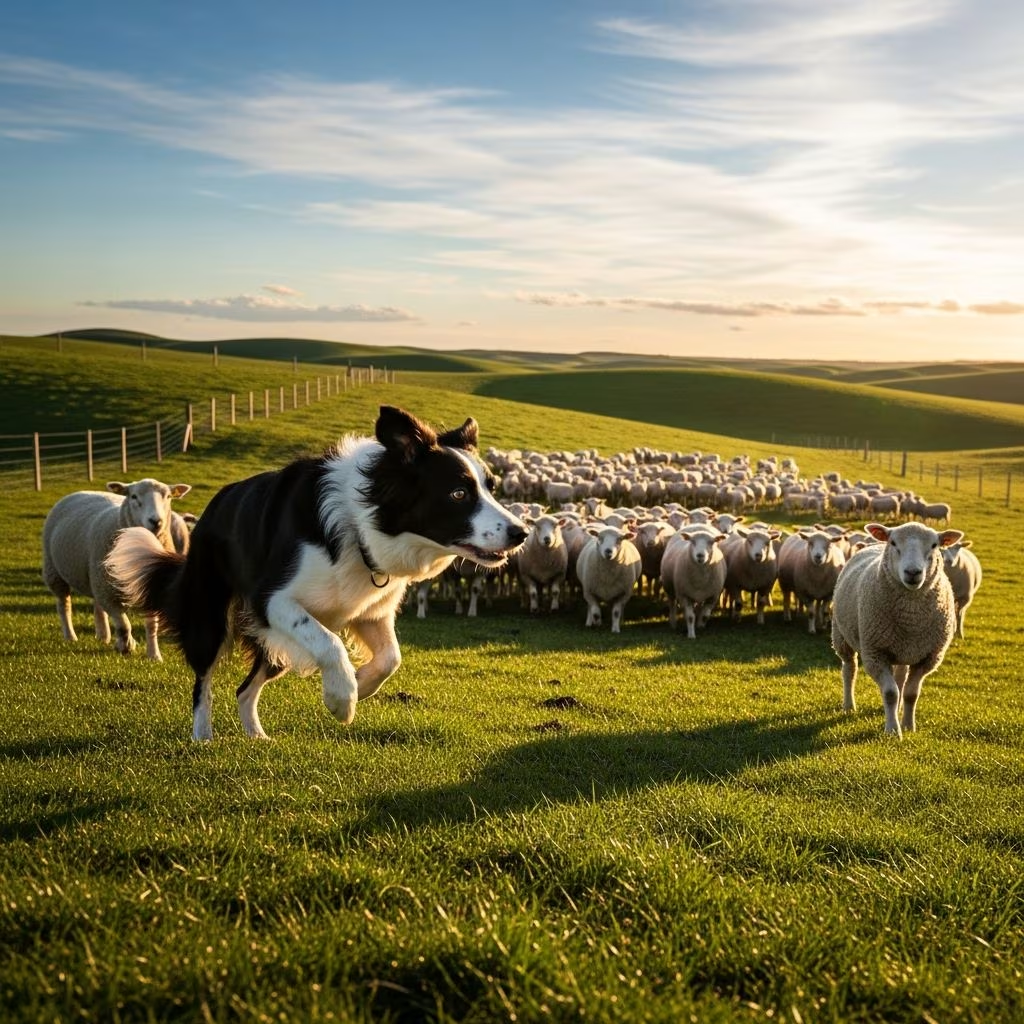
Border Collies stand out as premier herding dogs due to their sharp intelligence, agility, and deep-rooted instinct to control livestock. Training them to herd requires a thoughtful approach that builds on their natural drives while instilling discipline and responsiveness. This guide outlines a complete pathway, starting with preparatory skills and advancing to real-world applications, helping owners cultivate reliable working partners.
Understanding the Border Collie’s Herding Drive
The herding instinct in Border Collies originates from centuries of selective breeding for farm work, particularly in managing sheep across rugged terrains. This drive manifests as an intense focus, often called “the eye,” where the dog stares down stock to influence movement without physical contact. Recognizing this helps trainers channel energy productively rather than allowing frustrated behaviors like nipping at heels in non-working environments.
Key traits include high energy levels, problem-solving ability, and sensitivity to handler cues. Without proper outlets, these can lead to anxiety or destructive habits. Herding training provides mental stimulation, physical exercise, and purpose, strengthening the human-dog bond.
Foundational Obedience Skills
Before introducing livestock, solidify basic obedience to ensure control in dynamic settings. These commands form the bedrock for herding-specific instructions.
- Sit and Stay: Teach reliability from various distances to prevent the dog from breaking toward stock prematurely.
- Come (Recall): Practice off-leash in distracting environments; vital for calling the dog off stock when needed.
- Down: Encourages calmness, countering the urge to chase impulsively.
- Heel: Maintains position during approaches to herds.
Use positive reinforcement: treats, toys, or praise delivered immediately after compliance. Sessions should last 5-10 minutes, multiple times daily, to match the breed’s attention span.
Introducing Herding-Specific Commands
Herding relies on directional cues delivered verbally, with whistles, or hand signals. Core commands include:
| Command | Meaning | Handler Signal |
|---|---|---|
| Walk Up | Approach the stock head-on | Point forward |
| To Me / Come Bye | Circle clockwise, driving stock left | Arm sweep left |
| Away to Me | Circle counterclockwise, driving stock right | Arm sweep right |
| That’ll Do / Stand | Stop working and return to handler | Flat palm |
Begin in a distraction-free yard using a large exercise ball or traffic cones as proxies for stock. Leash the dog, toss the ball, and issue “walk up” while guiding forward. Reward proximity without contact. Progress to flanking: position opposite the “stock,” cue “to me” to nudge it toward you.
Consistency is paramount—use identical phrasing and signals. Incorporate a sheepdog whistle for distance work: short blasts for come-bye, longer for away.
Safe Introduction to Livestock
Desensitization prevents fear or overexcitement. Start with calm, dog-experienced animals like sheep or cattle in a confined pen.
- Select a small group (4-6 head) in a 50×50 foot enclosure.
- Enter leashed, command sit/stay 10 feet away. Allow sniffing air and observing movements.
- Gradually close distance over days, rewarding calm focus.
Monitor stress signals: whale eye, tucked tail, or barking indicate overload—back off. Pair exposure with high-value rewards to build positive associations.
Progressive Training Exercises
Leashed Circling
With dog leashed, walk a tight circle around the group at 6-8 feet. At each half-circle, cue direction change (e.g., “away” to reverse). This teaches balance and positioning.
Off-Leash Drives
Unleash in the pen. Command “walk up” to gather, then flank to drive stock in straight lines. Use a long line (30-50 feet) initially for safety.
Distance Control
Teach proper “lift” distance—10-20 feet from stock’s heads. Reward maintaining position without creeping closer. Practice “there” or whistle peeps to adjust range.
Daily 15-20 minute sessions build muscle memory. Vary stock numbers and pen sizes to generalize skills.
Advanced Techniques for Precision
Once basics solidify, introduce complexity:
- Shedding: Split groups by driving wedges through the herd.
- Penning: Guide stock into confined areas without scattering.
- Cross-Driving: Move herds perpendicular to natural flight paths, testing control.
Work larger fields with 20+ stock. Handler positions vary: behind for outruns, at head for drives. Video sessions to analyze positioning errors.
Common Challenges and Solutions
| Issue | Symptoms | Solution |
|---|---|---|
| Gripping (Biting) | Nipping heels excessively | Increase distance training; correct with sharp “no” and recall |
| Flank Blindness | Ignores one direction | Extra drills on weak side with toys |
| Overexcitement | Barking, looping wide | Shorten sessions; add down-stays |
| Handler Errors | Dog ignores cues | Refine signals; train without stock first |
Patience prevents frustration. Puppies under 8-10 months lack physical maturity—focus on obedience.
Equipment Essentials
- Long training line (50 ft).
- Sheepdog whistle (e.g., Thorpe).
- High-visibility stock collar.
- Training stockpen or round pen.
- Assorted toys/balls for simulations.
Safety Protocols
Prioritize welfare: vaccinate dog and stock, check for injuries post-session. Avoid hot weather; provide water. Supervise interactions to prevent trampling. Train progressively to avoid burnout—include play breaks.
Building Handler-Dog Partnership
Effective herding demands intuitive communication. Spend non-training time bonding via walks or games. Read canine body language: alert ears signal engagement, averted gaze shows confusion.
Enter trials for feedback once proficient. Organizations like USBCHA offer venues to test skills.
Frequently Asked Questions
Can any Border Collie learn to herd?
Most possess the instinct, but intensity varies. Instinct tests confirm aptitude.
How long until ready for real work?
Basics in weeks, proficiency in months with daily practice.
What if my dog lacks instinct?
Channel energy into agility or obedience; herding may not suit.
Best age to start?
Obedience at 8 weeks; livestock intro at 6-12 months.
Professional help needed?
Ideal for novices; clinics accelerate progress.
References
- How to Train Your Border Collie Dog to Herd Cattle — WagWalking. 2021-01-08. https://wagwalking.com/training/herd-cattle-2
- Unlocking the Secrets of Herding Dog Training Tips and Techniques — Collieball. N/A. https://www.collieball.com/blog/unlocking-the-secrets-of-herding-dog-training-tips-and-techniques
- Herding 101 (+R Edition) — Stale Cheerios. N/A. http://stalecheerios.com/dog-training/herding-101-edition/



