

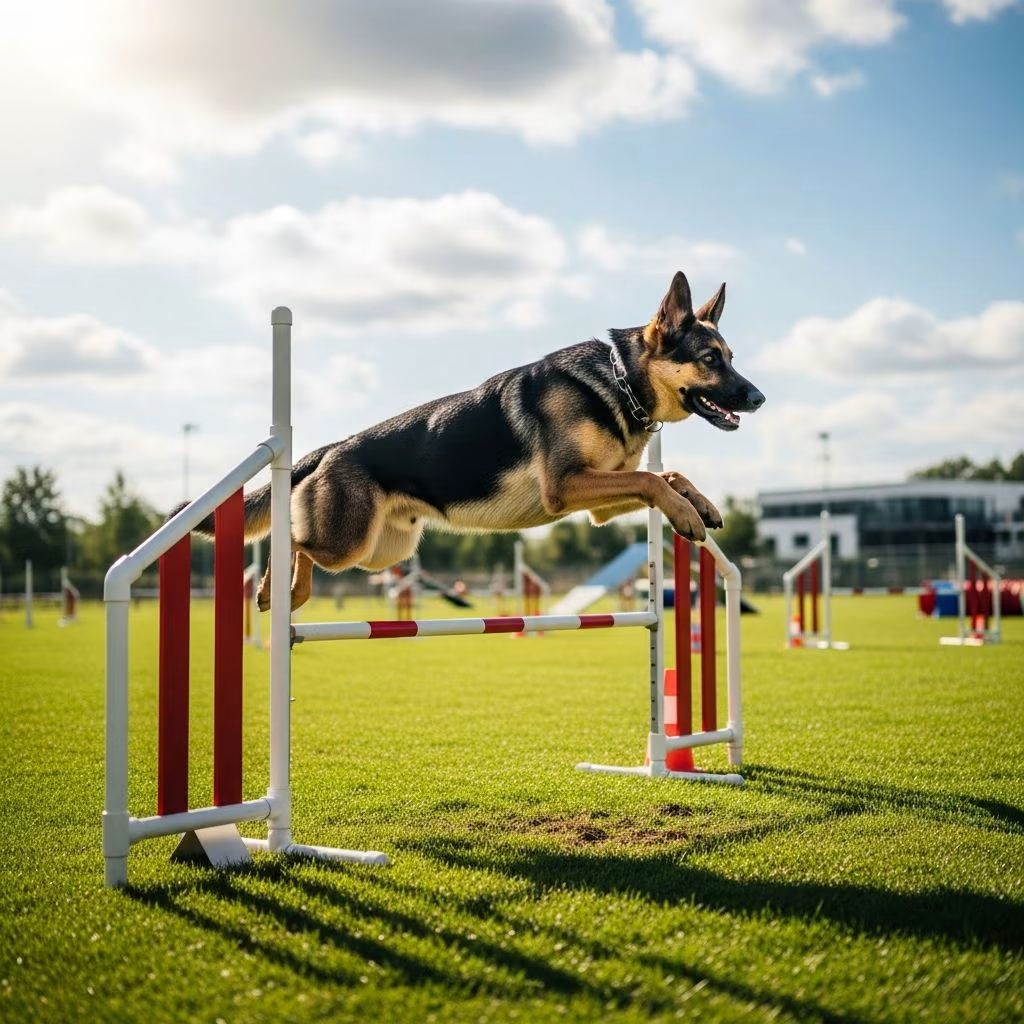
German Shepherds stand out as one of the most intelligent and versatile dog breeds, renowned for their loyalty, strength, and eagerness to work. Proper training transforms these powerful dogs into reliable family members, working partners, or protection companions. This guide provides a complete roadmap for training your German Shepherd at every life stage, emphasizing positive reinforcement, consistency, and mental engagement to harness their natural abilities.
Understanding the German Shepherd Temperament
German Shepherds possess a unique blend of high energy, sharp intelligence, and protective instincts. These traits make them exceptional in roles like police work, search and rescue, and herding, but they demand structured guidance to thrive in home environments. Without adequate outlets for their drive, they may develop issues like excessive barking, digging, or anxiety. Owners must commit to daily mental and physical challenges to prevent boredom-induced behaviors.
Key temperament highlights include strong prey drive, which can lead to chasing if not managed, and a natural wariness of strangers that requires early socialization. Their work ethic shines through in obedience tasks, making them quick learners when trained correctly.
Starting Strong: Puppy Training Essentials (8 Weeks to 6 Months)
The foundation of a well-trained German Shepherd begins in puppyhood. At 8 weeks, focus on building trust and basic routines to set lifelong habits.
- Crate Training: Introduce the crate as a safe space using meal times. Short sessions of 5-10 minutes help puppies acclimate, reducing separation anxiety risks.
- Housetraining: Leverage their natural cleanliness with constant supervision and crate breaks. Most German Shepherd puppies housetrain quickly with consistency.
- Socialization: Expose them to diverse people, sounds, and environments positively. This counters their guarding tendencies, teaching them to distinguish friends from threats.
Daily short sessions prevent overwhelm. Use treats and praise to associate commands with rewards, fostering a positive learning mindset.
Core Commands for Puppies
| Command | Purpose | Training Tip |
|---|---|---|
| Sit | Impulse control, polite greetings | Hold treat above nose, move back over head until hips drop; reward immediately. |
| Down | Vet visits, calming high energy | Lure from sit with treat to floor; practice in varied spots. |
| Stay | Safety during distractions | Build duration gradually; start at 1-2 seconds. |
Practice these in 5-minute bursts multiple times daily for retention.
Building Obedience: 6 to 18 Months
As your German Shepherd grows, ramp up training to channel their maturing strength and independence. This phase targets impulse control and reliable responses amid distractions.
Enroll in puppy obedience classes for socialization and structured learning. Focus on loose-leash walking to curb pulling, a common issue with their size and power. Test commands in real-world scenarios, like sitting before play, to reinforce thinking over reacting.
- Recall (Come): Vital for off-leash safety. Use high-value rewards and never chase; instead, run away to encourage pursuit.
- Heel: Teach polite walking by rewarding position at your side. Gradually add distance and speed.
- Leave It: Prevents grabbing forbidden items, essential for their curious nature.
Avoid repeating commands multiple times, as this teaches ignoring you. Enforce the first cue consistently to build respect for your leadership.
Advanced Skills and Behavior Management
Beyond basics, German Shepherds excel in advanced obedience, protection work, and sports like agility or tracking. Introduce these once foundations are solid.
Impulse Control Techniques: Teach waiting for permission to eat or exit doors. This curbs jumping, nipping, and over-excitement. For barking, pair “quiet” with rewards after a brief bark allowance via “speak”.
Address common pitfalls:
- Leash Reactivity: Counter-condition with treats for calm behavior around triggers.
- Destructive Chewing: Provide mental puzzles like scent games over physical exercise alone.
- Guarding Tendencies: Muzzle train positively for safety and desensitize to handling.
Mental vs. Physical Exercise
While walks are essential, mental workouts tire German Shepherds more effectively. Scent tracking, obedience drills, and problem-solving toys engage their intellect, reducing anxiety. Aim for 1-2 hours daily, split into sessions.
Exercise Regimen for Optimal Health
German Shepherds require structured activity to maintain physical condition and mental sharpness. Off-leash runs in safe areas, combined with training drills, suit their needs best.
- Daily: 45-60 minute brisk walks or jogs.
- Weekly: Agility sessions or tracking games.
- Rest: Teach settling to balance energy spikes.
Over-exercising young pups risks joint issues; prioritize controlled growth.
Socialization Strategies for Lifelong Confidence
Early and ongoing socialization prevents fear-based aggression. Introduce controlled exposures to dogs, children, and novel stimuli, always supervising. Positive associations via treats build friendliness without diminishing protective instincts.
For adults, gradual re-socialization uses parallel walks and calm rewards. Consistency proves commands override impulses.
Common Mistakes and How to Avoid Them
Many owners falter by relying solely on treats without proofing commands in distractions, leading to unreliable obedience. Others under-exercise mentally, fostering boredom. Punitive methods erode trust; stick to positive reinforcement.
Table of Pitfalls:
| Mistake | Consequence | Solution |
|---|---|---|
| Repeating Commands | Dog ignores until nagged | Enforce first ask; use leash guidance. |
| Insufficient Mental Work | Hyperactivity, destruction | Add scent/obedience challenges. |
| Poor Socialization | Fear aggression | Controlled exposures from puppyhood. |
Training Tools and Resources
Invest in quality leashes, harnesses, crates, and puzzle toys. High-value treats motivate during tough sessions. Consider professional classes for personalized feedback.
Commands like “kennel up,” “place,” and “go eat” enhance daily management.
FAQ
How long does it take to train a German Shepherd?
Basics take 3-6 months with daily practice; advanced skills ongoing. Consistency accelerates progress.
Can older German Shepherds be trained?
Yes, adults respond well to structured positive methods, focusing on motivation over force.
How to stop my GSD from pulling on leash?
Use heel training: Reward side position, turn away from pulls, and practice in low-distraction areas first.
Is crate training necessary?
Highly recommended for housetraining and preventing separation issues.
What if my GSD is aggressive?
Consult a professional trainer; rule out medical issues and use counter-conditioning.
References
- Your German Shepherd Training Blueprint! — Tom Davis (YouTube). 2023. https://www.youtube.com/watch?v=c9zbP90BMfc
- The Training of German Shepherds: What to Know — The Training of Dogs. 2024-05-15. https://www.thetrainingofdogs.com/post/the-training-of-german-shepherds-what-to-know
- How to Train a German Shepherd Puppy: Timeline 8 Weeks to 2 Years — American Kennel Club (AKC). 2024-08-20. https://www.akc.org/expert-advice/dog-breeds/puppy-training-timeline-for-your-german-shepherd-dog/
- Training German Shepherds – A Realistic, Honest GSD Training Guide — Best Mate Dog Training. 2023-11-10. https://www.bestmatedogtraining.co.nz/german-shepherd-training
- 29 Essential Training Commands To Teach Your German Shepherd — German Shepherd Shop. 2024-02-05. https://germanshepherdshop.com/blogs/list/29-essential-training-commands-to-teach-your-german-shepherd



