

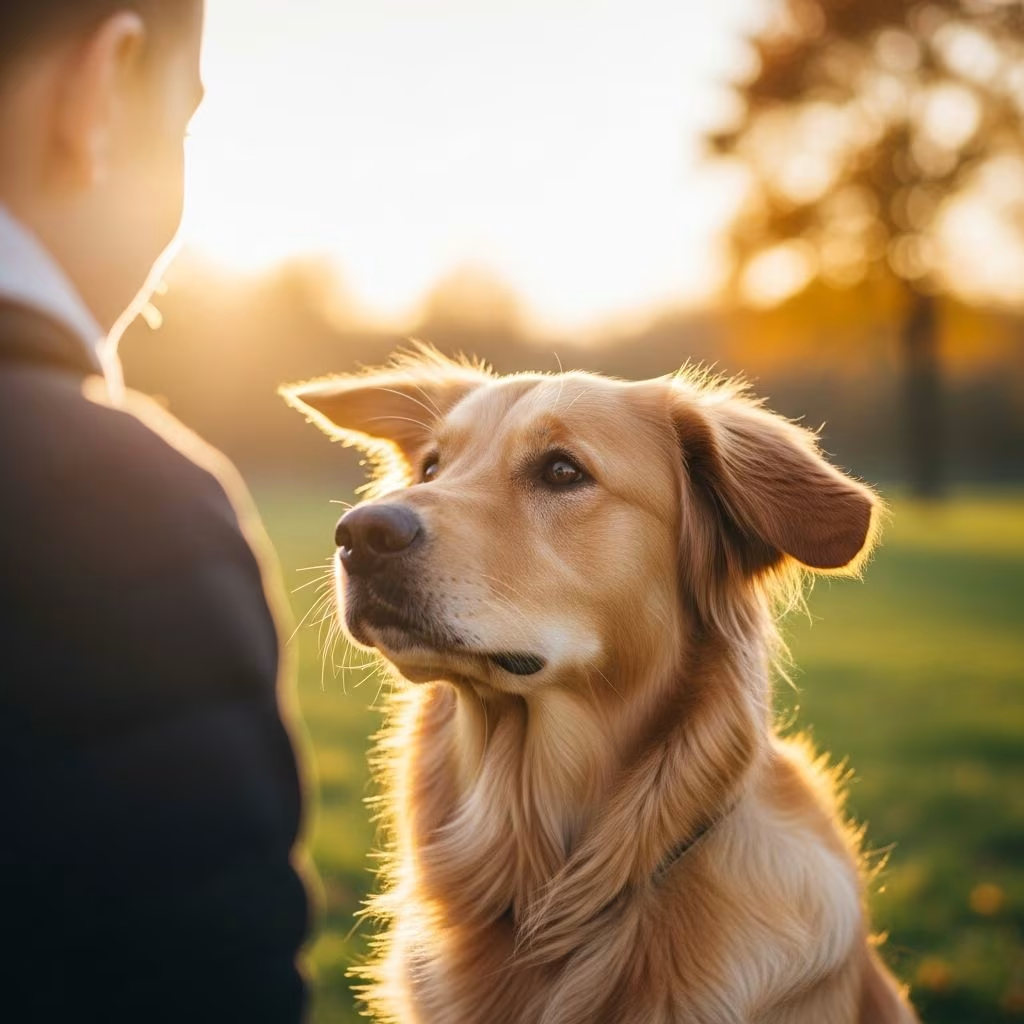
Dogs often struggle with distractions due to their natural curiosity, but with systematic training, you can teach them to prioritize you over temptations like squirrels, toys, or passersby. This guide provides original, research-backed strategies to build focus progressively.
Understanding Why Dogs Get Distracted
Dogs explore the world through senses far sharper than ours, making everyday stimuli overwhelming. Rather than defiance, distraction stems from environmental overload where scents, sounds, and sights compete for attention.Impulse control develops through consistent reinforcement, not punishment.
Young puppies and high-energy breeds like Border Collies or Labs are particularly prone, but all dogs benefit from structured sessions that mimic real-life challenges. Start indoors with mild interruptions to set a foundation of success.
Building a Strong Foundation at Home
Begin training in a quiet space to establish core cues like “sit,” “stay,” and eye contact before adding complexity. Use the three Ds of dog training—distance, duration, and distraction—mindfully, varying only one at a time.
- Control the environment: Remove toys or close doors to minimize variables initially.
- High-value rewards: Reserve top treats like chicken or cheese for focus-building exercises.
- Short sessions: Keep them to 5-10 minutes to maintain engagement without fatigue.
Practice daily, ending on a positive note to foster enthusiasm. Consistency across family members prevents confusion.
Gradual Exposure: The Key to Distraction-Proofing
Desensitization exposes dogs to distractions at sub-threshold levels, gradually increasing intensity. Rank distractions on a 1-5 scale: 1 for background noise, 5 for a squirrel.
| Distraction Level | Example | Starting Distance | Reward Frequency |
|---|---|---|---|
| 1 (Low) | TV sounds | Full room away | Every response |
| 2-3 (Medium) | Toy on floor | 10-15 feet | Every 2-3 successes |
| 4-5 (High) | Person walking by | 20+ feet | High-value every success |
Introduce at a distance where your dog notices but responds to your cue. Reward immediate check-ins with praise and treats, then calmly retreat. If fixation occurs, increase distance—no scolding needed.
Essential Cues for Regaining Attention
Master these commands to redirect focus swiftly:
- Watch Me: Hold a treat near your eyes, say “watch,” reward eye contact. Add distractions once solid, using it to recapture attention.
- Leave It: Place a low-value item down, cue “leave it,” reward for ignoring. Progress to moving temptations.
- Let’s Go: For walks, use to signal forward movement, rewarding heel position.
Pair with an alternative behavior, like targeting your hand, to occupy their mind.
Boosting Engagement with Reinforcement Strategies
Increase reinforcement rate in new settings: If your dog walks 20 steps reliably at home, drop to every 4 outdoors initially, fading as proficiency grows.
- Use variable schedules to mimic unpredictability, strengthening responses.
- Play games: Toss treats between reps to build speed and joy.
- Premack principle: Let exploration follow compliance, e.g., “sit” then “okay” to sniff.
This positions you as the source of fun, outshining distractions.
Fun Games to Sharpen Impulse Control
The 1-2-3 Game
Designed for food-motivated dogs, this Leslie McDevitt-inspired exercise builds predictability. Start at home:
- Hold treats visibly. Count “1-2-3” aloud, delivering a treat on “3” if your dog focuses.
- Ignore glances away; reset calmly.
- Add mild distractions, progressing outdoors.
Its rhythm creates reliability, ideal for reactive or distracted pups.
Permission-Based Exploration
Teach that calm earns freedom: Expose to a distraction, cue a behavior like sit, then release with “okay.” Recall and reward promptly. This links focus to rewards.
Real-World Application: Walks and Public Spaces
Walks amplify distractions, so simulate them home first—drop toys, play sounds, enlist helpers. Outdoors, start in low-traffic areas, using “watch me” proactively.
For service dogs or high-drive pets, daily variety prevents regression. Track progress in a journal: note environments, success rates, and adjustments.
Common Pitfalls and How to Avoid Them
- Too much too soon: Overloading leads to failure; always set up for wins.
- Punishment: Corrections erode trust; rewards build habits.
- Inconsistency: Mixed signals confuse—align on cues and methods.
- Ignoring regressions: Normal, but increase distance and reinforce basics.
Patience yields results; expect weeks for proficiency.
Advanced Techniques for Stubborn Cases
For severe distraction:
- Target training: Teach hand-following to block visuals.
- Engagement drills: Reward voluntary check-ins with play bursts.
- Structured proofing: List 10 distractions, train weekly in varied spots.
Consult professionals for underlying issues like anxiety.
FAQs: Distracted Dog Training
How long does it take to train distraction-proof focus?
Typically 4-8 weeks with daily 10-minute sessions, varying by dog age and breed. Consistency accelerates progress.
What if my dog ignores high-value treats outdoors?
Start farther from stimuli, use even better rewards like steak, or switch to toys/play. Build value at home first.
Is this suitable for puppies?
Yes, begin at 8 weeks with mild exposures. Short sessions prevent overwhelm.
Can I train without treats?
Use praise, play, or freedom as reinforcers. Food speeds initial learning.
What about reactive dogs?
Focus on counter-conditioning with distance; games like 1-2-3 excel here.
Tracking Your Progress
Use this simple table to log sessions:
| Date | Location | Distraction Level | Success Rate (%) | Notes |
|---|---|---|---|---|
| Week 1 | Home | 1-2 | 90% | Great eye contact |
| Week 4 | Park | 3-4 | 75% | Increase distance |
Adjust based on data for steady gains.
References
- Training a Distracted Dog: How Service Dogs Learn to Stay Focused — Putnam Service Dogs. 2023. https://www.putnamservicedogs.org/blog/training-a-distracted-dog/
- What Squirrel? 10 Techniques for Training with Distractions — Clicker Training. 2022. https://clickertraining.com/what-squirrel-10-techniques-for-training-with-distractions/
- Dealing with Distractions: How to Keep Your Dog Focused on Walks — OVRS. 2024. https://www.ovrs.com/blog/dealing-with-distractions-how-to-keep-your-dog-focused-on-walks/
- Training Your Dog to Ignore Distractions—No Matter Where You Are — American Kennel Club (AKC). 2025-03-15. https://www.akc.org/expert-advice/training/training-dogs-to-ignore-distractions/
- Overcoming Distractions — Chasing the Tale Academy. 2023. https://chasingthetaleacademy.com/overcoming-distractions/
- How to Train a Dog That Won’t Pay Attention to You — YouTube (PetJoy). 2024. https://www.youtube.com/watch?v=DtK5DYWBNHo
- Teach Your Dog To Ignore Distractions With The 1,2,3 Game — YouTube (Sara Ondrako). 2023. https://www.youtube.com/watch?v=YEkYXk1skU0



