

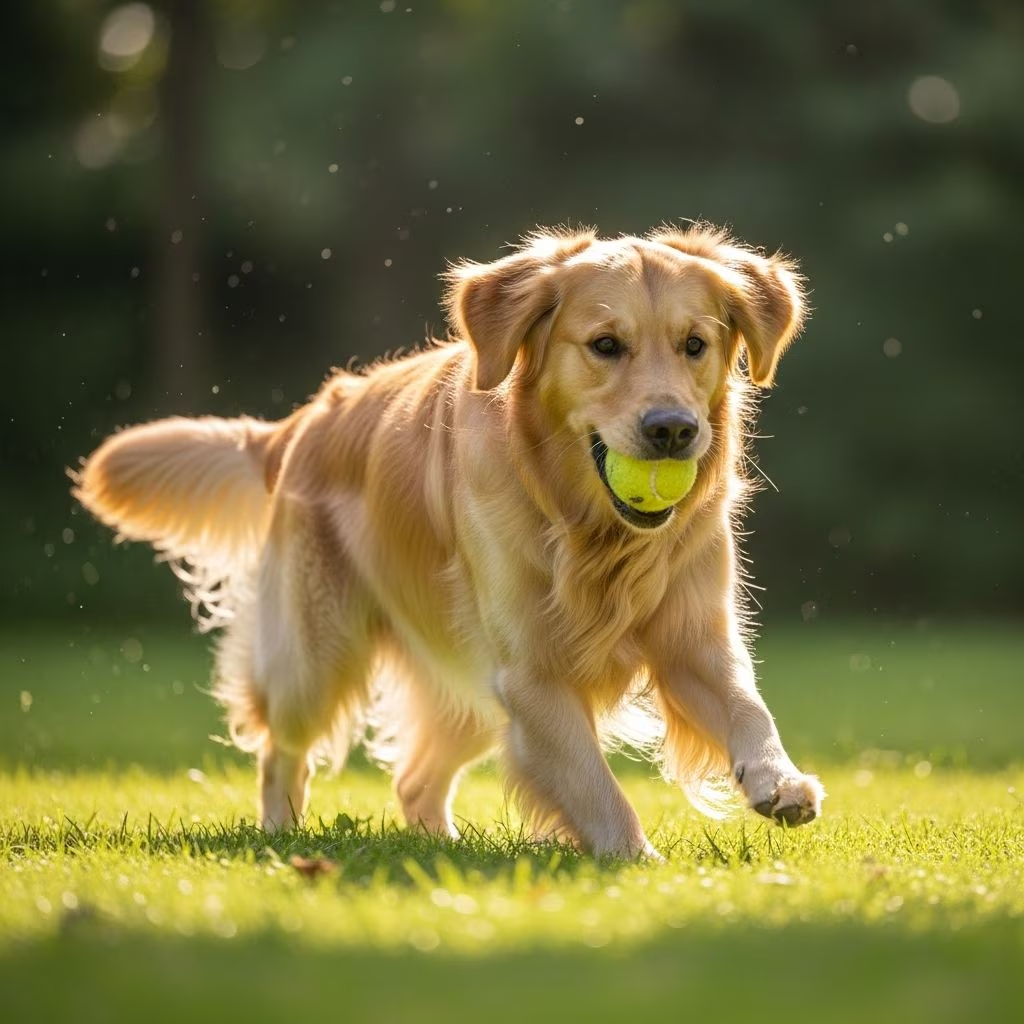
Dogs thrive when their training translates seamlessly from quiet living rooms to bustling parks. Fluency ensures quick, precise responses, while generalization makes behaviors reliable across diverse settings. This guide breaks down these concepts, offering actionable strategies to elevate your dog’s skills.
Understanding the Core Stages of Dog Learning
Dog training unfolds through distinct phases, each building on the last to create robust, adaptable behaviors. Starting with acquisition, where the dog first grasps a cue, trainers progress to fluency for refinement and generalization for real-world application. Maintenance then sustains these skills long-term.
- Acquisition: Introduce the behavior in a distraction-free zone using luring, shaping, or capturing to build initial understanding.
- Fluency: Refine speed, accuracy, and reliability under controlled conditions.
- Generalization: Expand the behavior to new contexts, reducing dependence on specific cues.
- Maintenance: Periodic reinforcement to prevent skill fade.
Recognizing these stages prevents common pitfalls, like assuming a dog ‘knows’ a command after one success.
Building Fluency: Speed, Precision, and Reliability
Fluency marks the transition from basic knowledge to polished performance. A fluent dog responds promptly with minimal errors, even as challenges increase slightly. Measure it by latency (response time), speed of execution, and precision of the action.
To develop fluency:
- Begin in low-distraction areas, rewarding only the best responses.
- Gradually introduce mild variables, like turning away or changing hand positions.
- Use high-value treats for quick replies, fading rewards as consistency grows.
Short, frequent sessions—5-10 minutes daily—keep engagement high without overwhelming the dog. Track progress: if your dog sits in 1 second 9/10 times, fluency is emerging.
| Fluency Metric | Beginner Level | Fluent Level |
|---|---|---|
| Latency | 3-5 seconds | <1 second |
| Accuracy | 60-70% | 95%+ |
| Speed | Slow movement | Crisp, fluid action |
This table illustrates benchmarks; adjust based on your dog’s breed and age.
The Power of Generalization: Breaking Contextual Chains
Dogs often tie behaviors to specific contexts—like sitting only when treats are visible or in familiar rooms. Generalization severs these links, enabling responses anywhere. Without it, a ‘perfect’ home sit fails at the vet’s office.
Key signs of poor generalization include context-specific failures. A survey noted dogs trained in varied spots improved generalization by over 40%, highlighting environment’s role.
Strategies for effective generalization:
- Change one variable at a time: Practice ‘down’ standing, then sitting, then lying down.
- Vary cues subtly: Say ‘sit’ with hands behind back or facing away.
- Incorporate the 3 Ds: Restart with reduced Distance, Duration, and Distraction in new places.
Patience is vital; rushing leads to frustration. Aim for Bob Bailey’s 80% rule: ensure 80% success before advancing.
Proofing vs. Generalizing: Clarifying the Difference
Proofing tests behaviors under high distractions, while generalizing builds broad applicability first. Over-proofing early risks confusion; generalize to build confidence, then proof.
Jean Donaldson’s “Push, Stick, or Drop” method guides this: Push criteria if fluent (e.g., add distance), stick if struggling, drop if failing. This ensures steady progress toward environmental neutrality.
| Approach | Goal | When to Use |
|---|---|---|
| Generalizing | Broad context adaptation | After fluency in base setting |
| Proofing | High-distraction reliability | Post-generalization |
Practical Drills for Everyday Generalization
Integrate training into daily life for natural progress. Walks become fluency builders: cue ‘heel’ amid passing cars, rewarding focus.
- Home Variations: Practice recalls in kitchen, bedroom, yard—different floors, lighting.
- Outdoor Progression: Start quiet yard, advance to park edges, then crowded paths.
- Social Scenarios: ‘Leave it’ near other dogs, gradually closing distance.
- Handler Switches: Family members cue behaviors to generalize beyond you.
For challenging cases, break behaviors into micro-steps. Struggling with ‘stay’ in new rooms? Start at 1-foot distance, build incrementally.
Overcoming Common Generalization Hurdles
Dogs may regress in novel spots due to heightened arousal. Counter this by lowering expectations: revert to acquisition-level criteria temporarily.
- High Arousal Fixes: Use calming signals like ‘sit’ to refocus.
- Motivation Dips: Rotate reward types—toy, praise, food.
- Plateaus: Introduce play breaks or novel twists.
Train the dog in front of you: age, breed, and history influence pace. Puppies generalize faster than seniors.
Advanced Techniques for Competition-Level Skills
For sports like agility or obedience, fluency must hit near-perfection across venues. Use variable reinforcement schedules post-generalization to mimic competition unpredictability.
Incorporate discrimination training: teach ‘sit’ vs. ‘down’ amid distractions, ensuring cues stand alone. Video sessions to self-assess fluency metrics objectively.
Long-Term Maintenance for Lifelong Reliability
Fluency fades without upkeep. Weekly ‘fluency checks’ in random settings prevent regression. Randomize cues during routines to keep generalization sharp.
Track via a simple journal:
| Behavior | Date | Locations Tested | Success Rate |
|---|---|---|---|
| Sit | 2026-03-01 | Park, Vet | 95% |
| Recall | 2026-03-08 | Beach, Store | 88% |
Frequently Asked Questions (FAQs)
How long does generalization take?
Typically 4-12 weeks per behavior, depending on consistency and dog’s aptitude. Vary sessions daily for best results.
What if my dog regresses in new places?
Go back to basics: reduce criteria by 50% and rebuild gradually. Avoid punishment; focus on positive reinforcement.
Can all dogs achieve fluency?
Yes, with tailored methods. Adapt for breed traits—herding dogs excel in movement cues, scent breeds in tracking.
High-value rewards or everyday treats for fluency?
Start high-value for motivation, fade to life rewards like toys or access to play.
Group classes vs. solo for generalization?
Both: solo builds base fluency, classes accelerate generalization via peer distractions.
Key Takeaways for Trainers
- Prioritize fluency before heavy generalization.
- Use data-driven metrics like 80% success thresholds.
- Make training fun and integrated into life for sustainability.
Consistent application yields dogs that respond confidently anywhere, strengthening your bond.
References
- Understanding the Four Key Learning Stages in Dogs — KJ K9 LLC. 2023-05-15. https://www.kjk9dt.com/post/understanding-the-four-key-learning-stages-in-dogs-acquisition-fluency-generalization-and-maintenan
- Stages of Learning — Become a Professional Dog Trainer. 2024-02-10. https://www.becomeaprofessionaldogtrainer.com/articles/training-behavior/learning-theory-science/learning-theory-stages-of-learning/
- Teaching Dogs Generalization: Expanding Behaviors Beyond Contextual Cues — Fenzi Dog Sports Academy. 2023-11-20. https://www.fenzidogsportsacademy.com/blog/teaching-dogs-generalization-expanding-behaviors-beyond-contextual-cues
- Proofing Vs Generalizing In Dog Training — YouTube (Dog Training Video). 2024-01-05. https://www.youtube.com/watch?v=FKUo3NWXhLE
- Generalization & Proofing in Dog Training — Pupford. 2023-09-12. https://pupford.com/blogs/all/generalizing-behaviors-new-environments
- Achieving Fluency in Dog Training Behaviors — Pet Dog Trainer. 2024-03-18. https://www.petdogtrainer.com/blog/achieving-fluency-in-dog-training-behaviors-mastering-latency-speed-and-precision



