

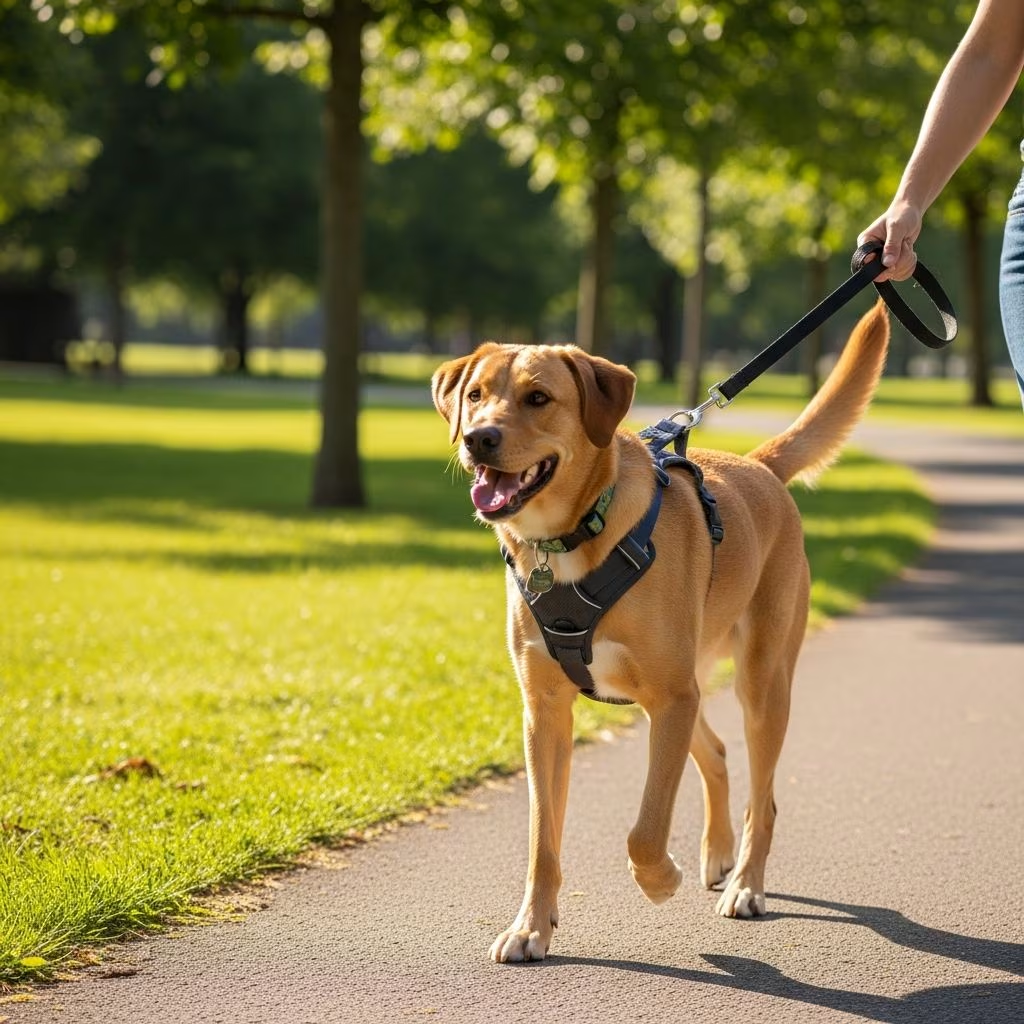
The Easy Walk harness stands out as a front-clip design engineered to curb pulling during walks, distributing pressure across the chest rather than the neck for enhanced safety and comfort. This tool transforms chaotic outings into enjoyable experiences by redirecting your dog’s forward momentum gently.
Why Opt for a Harness Like the Easy Walk Over Traditional Collars?
Collars can exert undue strain on a dog’s throat, potentially leading to tracheal damage, especially in breeds prone to respiratory issues or those that pull vigorously. Harnesses like the Easy Walk shift control to the torso, minimizing injury risk while promoting better walking habits.
- Reduced Neck Pressure: Prevents choking and supports delicate structures in small or flat-faced breeds.
- Improved Training: Front attachment encourages dogs to stay close without harsh corrections.
- Versatility: Suitable for daily strolls, training sessions, and even car rides with compatible models.
Studies from canine behavior experts highlight that front-clip mechanisms, as in the Easy Walk, effectively reduce pulling by up to 70% in consistent training scenarios, making it a staple for proactive pet owners.
Understanding the Design and Build of the Easy Walk Harness
Crafted with durable nylon webbing and padded chest panels, the Easy Walk features four adjustment points for a custom fit: two at the neck girth and two at the belly strap. The quick-release buckle ensures easy on-off, while reflective accents boost nighttime visibility.
| Component | Function | Material Benefit |
|---|---|---|
| Front Chest Strap | Leash attachment for pull redirection | Quick-adjust sliders for snug fit |
| Back Support Panel | Stabilizes without restricting shoulders | Breathable mesh for airflow |
| Belly Strap | Secures lower torso | Neoprene padding against chafing |
| Shoulder Straps | Y-shaped for mobility | Reinforced stitching for strength |
These elements combine to create a lightweight yet robust setup, ideal for dogs from 5 to 130 pounds, with color options for style.
Selecting the Correct Size for Your Dog
Accurate sizing prevents slippage and discomfort. Measure your dog’s girth behind the front legs and around the neck base, using the manufacturer’s chart for guidance. For instance, small breeds like Chihuahuas typically need XS sizes (girth 13-18 inches), while Labs fit large (28-36 inches).
- Stand your dog naturally and wrap a tape measure snugly.
- Add 1-2 inches for growth in puppies.
- Test fit: Two fingers should slip under all straps.
Breed-specific advice: brachycephalic dogs (Pugs, Bulldogs) benefit from wider chest panels to avoid breathing restriction, while hounds require extra belly adjustability.
Step-by-Step Instructions: Putting on the Easy Walk Harness
Fitting takes under a minute with practice. Always start in a calm environment indoors.
- Prepare the Harness: Unbuckle and lay flat, ensuring the front clip faces forward and ‘Easy Walk’ label is readable on the chest.
- Position Your Dog: Have them sit or stand; lift front legs gently if needed.
- Slip Over Head: Place the narrow neck strap over the head, positioning the wider chest piece across the breastbone.
- Secure Belly Strap: Bring the end under the belly and buckle, adjusting for two fingers’ width between strap and body.
- Fine-Tune Adjustments: Tighten neck straps so they meet at the shoulder blades without gaping; cinch chest strap to lie flat against the sternum.
- Check Fit: Tug gently—harness shouldn’t ride up or shift more than an inch. Attach leash to front ring.
Visual cues include no rubbing on armpits and free shoulder movement. Repeat daily to build positive associations.
Tailoring the Harness for Different Dog Breeds and Sizes
Not one-size-fits-all: active herding breeds like Border Collies thrive with the Y-configuration for agility, while heavy pullers like Pit Bulls need max tightening on belly straps.
| Breed Category | Ideal Adjustment Focus | Why It Matters |
|---|---|---|
| Toy Breeds | Minimal neck tension | Fragile frames avoid pressure points |
| Medium Active | Balanced chest/belly | Supports endurance without fatigue |
| Large Powerhouses | Reinforced belly cinch | Handles strength for control |
| Brachycephalic | Wide chest panel | Prevents airway compression |
For working dogs, pair with dual-clip variants for multi-activity use.
Proven Benefits and Training Integration
Beyond comfort, the Easy Walk aids loose-leash training by naturally turning the dog toward you upon pulling, reinforcing heel position over time. Pair with treats for rewards, yielding calmer walks in weeks.
- Safety Boost: Lowers escape risk compared to collars.
- Health Perks: Shields spine and joints in seniors or rescues.
- Owner Ease: Less arm strain from constant tugging.
Cleaning, Storage, and Longevity Tips
Hand-wash with mild soap weekly, air-dry away from sun to preserve elasticity. Store unbuckled in a ventilated bag. Inspect for frays monthly, replacing every 6-12 months based on use.
Pro tip: Apply pet-safe conditioner to straps for supple feel in dry climates.
Frequently Asked Questions (FAQs)
Can puppies wear the Easy Walk harness?
Yes, from 12 weeks, selecting adjustable XS sizes that accommodate growth. Consult a vet for very young pups.
What if my dog slips out during walks?
Tighten all straps further and double-check buckle security. Consider padded versions for wrigglers.
Is it suitable for car travel?
Many models clip to seatbelts; verify compatibility and use back panel for stability.
How does it compare to dual-clip options?
Easy Walk prioritizes front-pull correction; dual-clips add back versatility for advanced training.
Does it work for aggressive pullers?
Effective starter tool, but combine with professional training for severe cases.
Advanced Usage: Combining with Leash Training Techniques
Integrate the harness with positive reinforcement: stop walking when pulling occurs, rewarding slack leash. Progress to off-leash cues for mastery. Track improvements weekly for motivation.
For multi-dog households, match sizes to prevent tangling. In rainy weather, opt for water-resistant coatings available in premium lines.
References
- Understanding Different Types of Dog Harnesses and Their Uses — Pet Care Shed. 2023-05-15. https://petcareshed.com.au/blogs/pet-supplies/understanding-different-types-of-dog-harnesses-and-their-uses
- Best Types of Dog Harnesses: Comparison & Trainer Recommendations — Pupford. 2024-02-10. https://pupford.com/blogs/all/types-dog-harnesses
- The 8 Different Types Of Dog Harnesses For Every Need — Neewa Dogs. 2023-11-20. https://www.neewadogs.com/blogs/blog/types-of-dog-harnesses
- Types of Dog Harnesses — EzyDog Store. 2024-01-05. https://store.ezydog.com/blogs/news/types-of-dog-harnesses
- Types of Dog Harnesses and Their Differences — Voyager Harness. 2023-08-12. https://voyagerharness.com/blogs/news/types-of-dog-harnesses-and-their-differences
- How Do I Choose the Best Harness for My Dog? — Red Dingo. 2023-09-18. https://reddingo.com/blog/how-do-i-choose-the-best-harness-for-my-dog/
- Choosing the Right Dog Harness for Your Dog — American Kennel Club (AKC). 2024-03-22. https://www.akc.org/expert-advice/lifestyle/choosing-the-right-dog-harness/



