

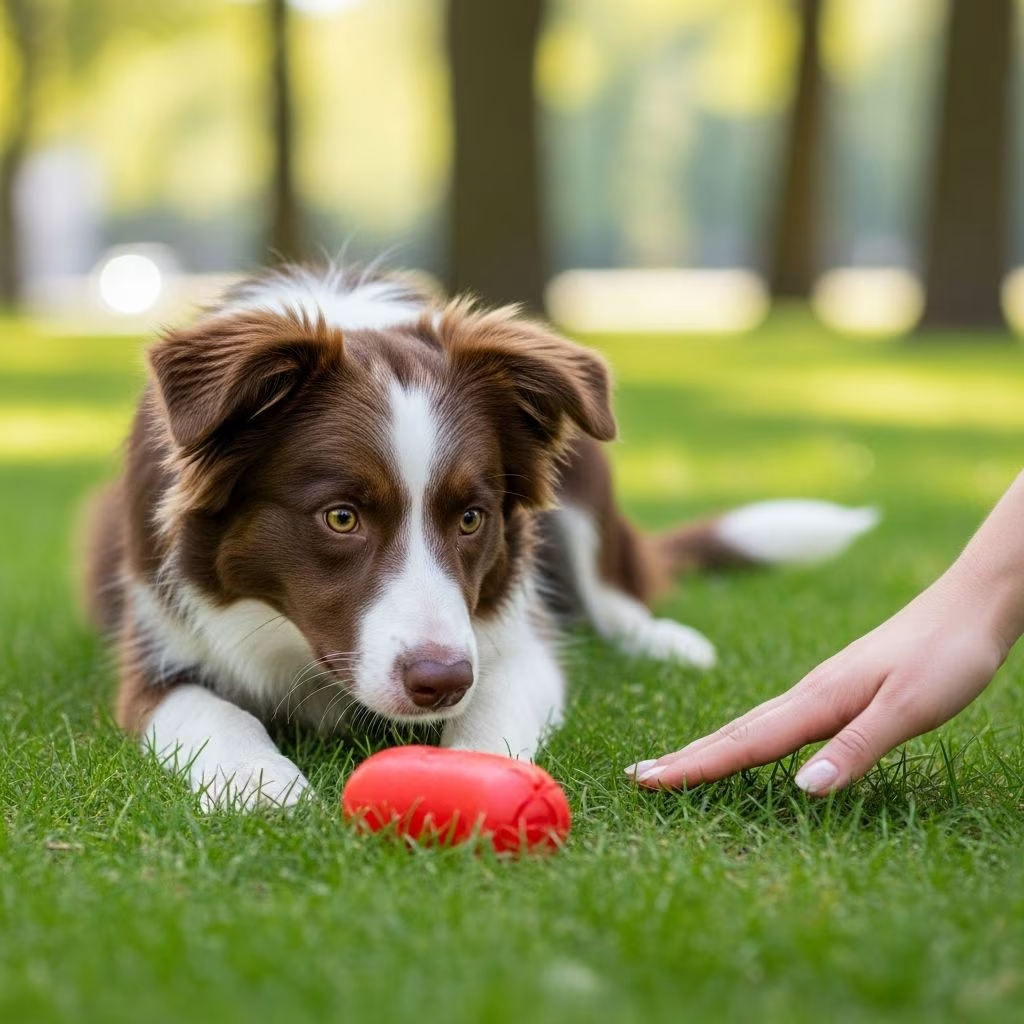
Puppies naturally explore their world by mouthing objects, from toys to household items. Teaching the **drop it** command empowers owners to intervene safely and effectively. This skill prevents ingestion of dangerous items and fosters a cooperative relationship built on positive reinforcement.
Understanding the Drop It Command
The drop it cue instructs a dog to release whatever is in its mouth immediately. Distinct from “leave it,” which prevents approaching an object, drop it focuses on relinquishing possession. Reliable execution requires associating the verbal signal with rewarding outcomes, creating an automatic response.
Research from animal behavior experts emphasizes early training during the socialization phase, typically between 8-16 weeks. Puppies at this stage learn quickly due to their developing brains and eagerness to please.
Core Principles of Positive Reinforcement Training
Force-free methods outperform punishment-based approaches by strengthening desired behaviors without fear. Key principles include:
- Timing: Reward within 1-2 seconds of the action to link cue and consequence.
- Consistency: Use the same word and process every time across household members.
- High-value rewards: Select treats or toys more appealing than the held item.
- Short sessions: Limit to 5-10 minutes, 2-3 times daily, to maintain engagement.
These elements ensure puppies view training as enjoyable, accelerating progress.
Step-by-Step Training Guide
Phase 1: Conditioning the Verbal Cue
Begin without objects to pair “drop it” with positivity. Sit or kneel with small, soft treats. Say the puppy’s name followed by “drop it,” then scatter treats on the floor nearby. Repeat 10 times per session. This builds anticipation: hearing the cue predicts rewards.
After 2-3 sessions, puppies often look expectantly, signaling cue recognition.
Phase 2: Introducing Low-Value Items
Offer a boring toy like a plain rope or soft ball. Let the puppy take it, say “drop it,” and immediately trade with scattered treats while retrieving the item. Return it promptly to encourage engagement. Practice 10-15 repetitions.
Progress only when the puppy drops 90% of the time. Use a marker word like “yes!” right as the mouth opens for precise reinforcement.
Phase 3: Fading the Lure
With the toy in mouth, say “drop it” and pause 2-3 seconds. If released, mark and reward from your hand—no scattering. If not, calmly repeat without frustration. Gradually increase pause to 5 seconds.
Test reliability by withholding the trade occasionally. Reward heavily on success, then resume play. This teaches dropping on verbal cue alone.
Phase 4: Building Value and Distance
Introduce higher-value toys like squeaky balls. During fetch, command “drop it” before close contact. For distance, practice from 3-5 feet, using a long leash if needed. Reward lavishly to counter excitement.
| Item Value | Training Focus | Sessions Needed |
|---|---|---|
| Low (e.g., sock) | Cue association | 3-5 |
| Medium (e.g., rope toy) | Trade reliability | 5-7 |
| High (e.g., favorite ball) | Impulse control | 7-10 |
Advanced Techniques for Real-World Application
Once basics solidify, simulate distractions: practice outdoors, during play, or with household items. For stubborn cases, use two-toy trades—offer a superior toy as incentive.
Incorporate games like “two-toy tug,” where you say “drop it,” swap to the second toy, and resume. This maintains fun while proofing the behavior.
Common Challenges and Solutions
Puppies may resist dropping valuables. Avoid chasing, as it reinforces the game.
- Running away: Ignore and redirect with a better toy nearby.
- Guarding: Never force; build trades gradually with lower-value items first.
- Slow progress: Revert one phase, shorten sessions, or upgrade treats.
Patience prevents setbacks. Track sessions in a journal to monitor improvement.
Safety Considerations for Puppy Mouthing
Mouthing peaks at 3-6 months but declines with training. Supervise closely; remove hazards like small toys or cords. The drop it command reduces risks from toxic ingestions or blockages.
Integrating Drop It with Other Commands
Combine with “leave it” for comprehensive control: leave it for ground items, drop it for mouth-held ones. Pair with recall during walks for full obedience.
Long-Term Maintenance
Practice weekly indefinitely. Randomize rewards to prevent cue fading. Involve family for consistency.
Frequently Asked Questions
How long until my puppy masters drop it?
Most puppies respond reliably in 2-4 weeks with daily practice, varying by breed and age.
What if my puppy swallows items anyway?
Use prevention: crate training and supervision complement commands. Consult vets for breed-specific risks.
Can older dogs learn this?
Yes, adapt sessions for adults, focusing on motivation matching their preferences.
Is punishment ever okay?
No—positive methods yield faster, lasting results without damaging trust.
What treats work best?
Soft, pea-sized pieces of chicken, cheese, or commercial training treats.
Benefits Beyond Obedience
Mastering drop it enhances bonding, reduces stress, and prepares for advanced activities like agility. Owners report fewer accidents and more enjoyable playtime.
References
- Teaching Your Dog to Drop It — Battersea Dogs & Cats Home. 2023. https://www.battersea.org.uk/pet-advice/dog-advice/teaching-your-dog-drop-it
- Drop It! Teaching Your Dog to Drop Anything Quickly and Easily — McCann Dogs. 2022-10-15. https://www.mccanndogs.com/blogs/articles/drop-it-teaching-your-dog-to-drop-anything-quickly-and-easily
- How to Train Your Dog to DROP It: Step-by-Step Tutorial — YouTube (Will Atherton Canine Training). 2023-05-12. https://www.youtube.com/watch?v=4sDCPXcZkEM
- Teach Your Dog to Drop Anything — Even at a Distance — YouTube (DOGGYU). 2024-01-20. https://www.youtube.com/watch?v=ExeOy_KdpP4
- American Kennel Club Puppy Training Guidelines — AKC (akc.org). 2025-02-10. https://www.akc.org/expert-advice/training/puppy-training-timeline-teaching-good-behavior/



