

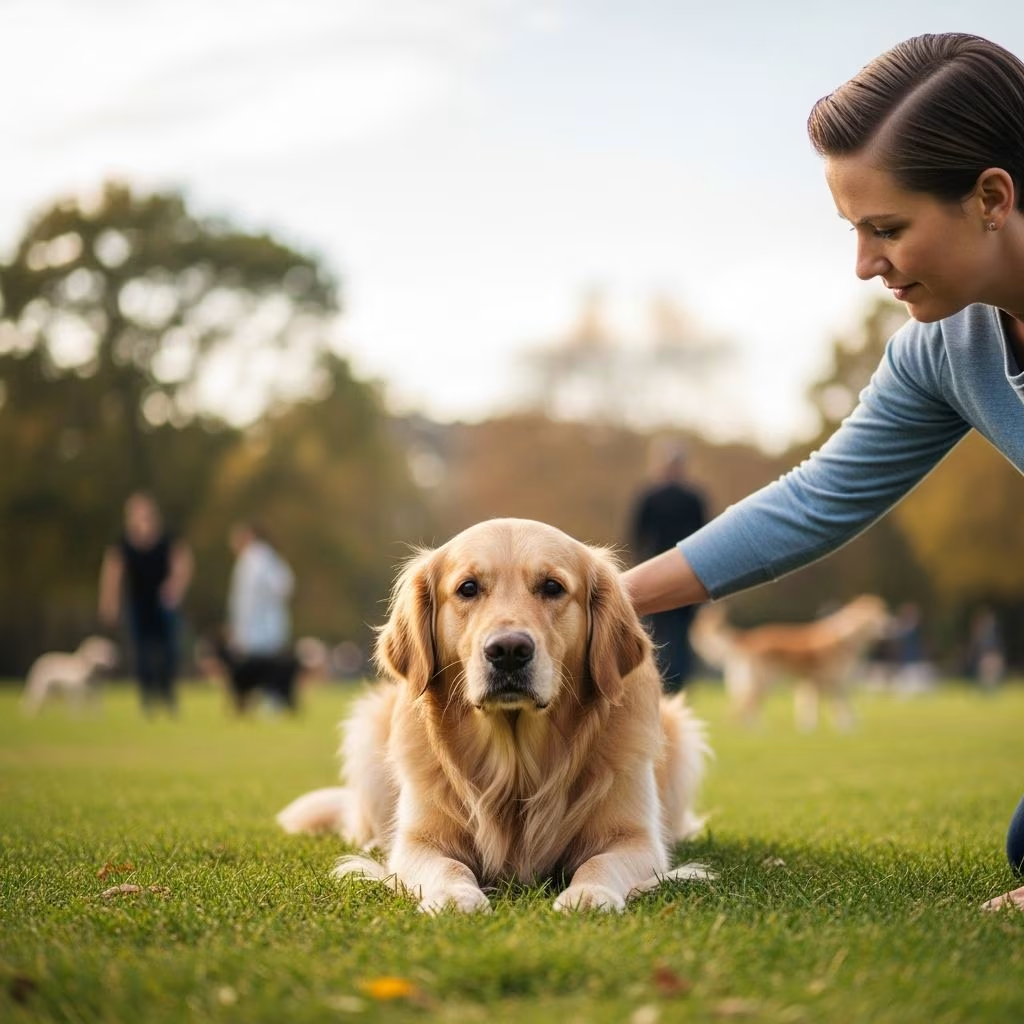
The down command is a cornerstone of basic dog obedience, helping dogs settle calmly in various situations, from home routines to public outings. This skill promotes relaxation, curbs unwanted jumping, and lays the groundwork for advanced training. By using positive reinforcement methods, owners can teach this behavior humanely and effectively, fostering a stronger bond with their canine companions.
Why the Down Command Matters in Dog Training
Teaching a dog to lie down on cue offers practical benefits beyond mere compliance. It signals to the dog that it’s time to relax, which is invaluable during meals, guest visits, or vet appointments. Regular practice reduces hyperactivity and improves impulse control, making everyday life smoother for both dog and owner. Studies from canine behavior experts emphasize that commands like down enhance overall trainability, as they teach patience and self-regulation.
In high-energy environments, such as parks or family gatherings, a reliable down prevents chaos. For puppies, early mastery prevents the development of stubborn habits, while for adult dogs, it rehabilitates poor manners. Consistency in training yields a dog that responds promptly, even amid distractions, boosting confidence in handling diverse scenarios.
Core Principles of Positive Reinforcement Training
Positive reinforcement forms the backbone of modern dog training, rewarding desired actions to encourage repetition. Unlike punishment-based methods, it builds trust and enthusiasm, minimizing stress. Key elements include high-value treats, praise, and clickers for precise timing. Timing is critical: mark the exact moment of compliance with a click or word like “yes,” followed by an immediate reward.
Short sessions of 5-10 minutes prevent fatigue, ideally conducted when the dog is moderately hungry or post-exercise for better focus. Patience is essential; progress varies by breed, age, and temperament. High-drive breeds like Border Collies may learn faster, while laid-back ones like Bulldogs require gentler persistence.
Method 1: Luring Your Dog into Position
Luring guides the dog physically using a treat or toy, making it ideal for beginners. Start in a quiet space with few distractions. Have your dog sit, then hold a smelly treat at nose level. Slowly lower it straight down to the floor between the front paws, forming an imaginary L-shape by sliding it forward. As the dog’s nose follows, their body naturally lowers into a down.
- Position: Sit or stand; for standers, drop the lure directly to the ground.
- Motion: Palm down, elbow tucked, move treat 6-12 inches forward.
- Mark and reward: Click/praise as elbows and rear touch the floor.
Repeat 5-10 times per session. Fade the treat by using an empty hand signal after 3-5 successes, rewarding from the other hand. Introduce the verbal cue “down” just before the hand motion. Within days, most dogs respond to the signal alone.
Method 2: Shaping the Behavior Step by Step
Shaping breaks the down into micro-steps, rewarding incremental progress. This suits dogs resistant to luring, building behaviors without force. Begin by rewarding glances at the floor, then head lowers, elbow bends, chest drops, and finally full prone position.
- Target floor gaze: Toss treat nearby; reward eye contact with ground.
- Head dip: Lure chin toward floor briefly.
- Elbow flex: Reward partial bends.
- Full down: Combine steps, increasing criteria gradually.
Use a clicker for precision. Sessions should end on successes to maintain motivation. Shaping takes longer but produces durable results, as dogs learn independently.
Method 3: Capturing Natural Downs
Capturing leverages voluntary downs, rewarding spontaneous lies for association. Keep treats handy during downtime. When the dog settles, say “down,” mark, and reward without prompting. Over time, they offer the position proactively near you.
Enhance by predicting downs (e.g., post-play) and cueing seconds before. This passive method excels for low-energy dogs or relaxed settings, transitioning seamlessly to cues. Combine with other methods for versatility.
Advanced Techniques for Reliability
Once basic down is solid, proof against distractions. Practice from different positions: stand, walk, or play. Add duration by delaying rewards, building a “down-stay.” For emergencies, teach a rapid “drop” from motion, starting close and marking stops.
| Technique | Description | Best For |
|---|---|---|
| Leg Bridge | Lure under legs/stool to force prone crawl. | Reluctant droppers. |
| Duration Build | Count seconds before reward. | Stays. |
| Distance Cue | Step back post-down. | Off-leash control. |
Incorporate toys for play-driven dogs; vary rewards to prevent boredom.
Common Challenges and Solutions
Dogs may flop partially, pop up, or ignore cues. Solutions:
- Partial down: Withhold reward until full prone; lure slower.
- Pop-ups: Train tired; use higher-value treats.
- Ignores cue: Reduce distractions; revert to basics.
Avoid forcing: Pushing resists, eroding trust. Never train frustrated; end positively.
Integrating Down into Daily Life
Apply during meals (down before food), walks (settle at curbs), or greetings (down for pets). Randomize cues for fluency. Pair with recall for safety: down on command halts charges.
For multi-dog homes, train individually to avoid competition. Track progress in a journal, noting sessions and improvements.
FAQs
How long does it take to teach down?
1-7 days for basics with consistent practice; fluency takes weeks.
What if my dog is too energetic?
Exercise first; tired dogs comply better.
Can I teach without treats?
Yes, via praise/toys, but fade food gradually.
Is down safe for puppies?
Yes, from 8 weeks; gentle methods suit all ages.
What cue word works best?
“Down,” “settle,” or “place”; consistent is key.
Tailoring Training to Your Dog’s Breed and Age
Puppies learn quickest but distract easily; adults may resist change but generalize faster. Breeds like Labs respond to food lures, while herders prefer shaping. Seniors benefit from capturing for joint ease.
Adjust for size: small dogs need less lure distance; giants require space. Health issues like arthritis warrant vet consultation before intensive sessions.
Tools and Resources for Success
Clickers sharpen timing; variable treat pouches keep handy. Apps track sessions. Group classes reinforce socialization alongside skills.
Monitor body language: ears back signal stress; adjust accordingly. Celebrate milestones to sustain fun.
References
- How to Teach Your Dog to Lie Down — American Kennel Club. 2023-05-15. https://www.akc.org/expert-advice/training/how-to-teach-dog-lie-down/
- How to Teach ANY Dog to Lie Down on Command — Nate Schoemer, Sit Stay Learn (YouTube). 2020-02-01. https://www.youtube.com/watch?v=qmgjNWDif1k
- Teaching the “Emergency Stop” (or “Flying Lie Down”) — Patricia McConnell, The Other End of the Leash. 2019-08-12. https://www.patriciamcconnell.com/theotherendoftheleash/teaching-the-emergency-stop-or-flying-lie-down/
- Dog Training 101: Down Command — Brandon McMillan (YouTube). 2021-03-10. https://www.youtube.com/watch?v=6WItBayQONc
- Episode 145: 10 Ways To Teach A Dog To Lay Down — Dogs That (Podcast). 2022-07-20. https://dogsthat.com/podcast/145/



