

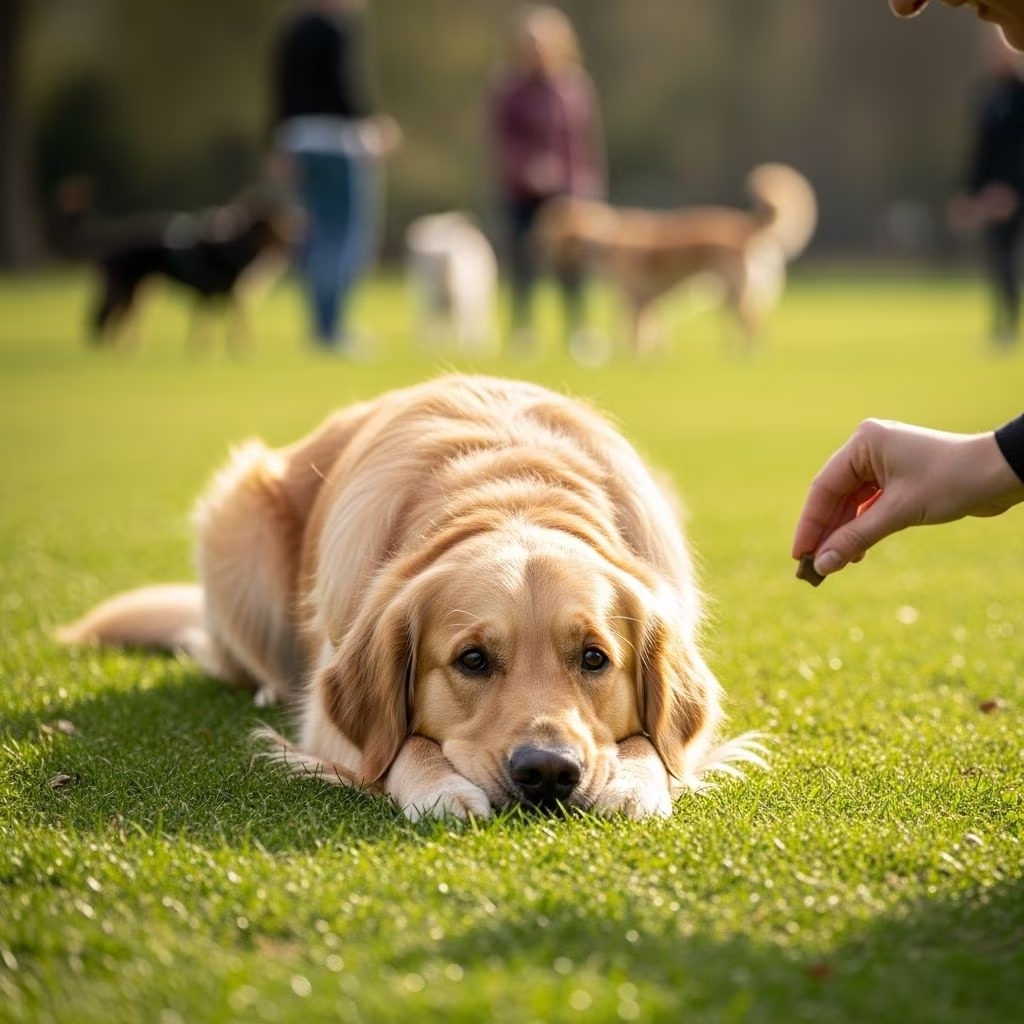
The down command stands as one of the most valuable skills in a dog’s obedience repertoire. It promotes calm behavior, aids in impulse control, and serves practical purposes like waiting patiently during meals or vet visits. Unlike the sit, which many dogs offer naturally, lying down requires more commitment from the dog, making it a foundational behavior for advanced training. This guide explores multiple training approaches, progression strategies, and solutions to hurdles, drawing from established positive reinforcement principles.
Why Prioritize the Down Command?
Teaching a dog to lie down on cue fosters relaxation in stimulating environments. It helps manage high-energy dogs by encouraging settled postures, reducing jumping or hyperactivity. Owners report improved daily management, such as keeping dogs off furniture or waiting at doors. Behaviorally, it counters excitement-driven actions, promoting mindfulness. For puppies, early mastery builds confidence; for adults, it reinforces leadership without force.
- Practical benefits: Eases grooming, medical exams, and public outings.
- Behavioral gains: Enhances focus amid distractions like visitors or other pets.
- Foundation for advanced skills: Prepares for stays, recalls, and tricks.
Essential Preparation Before Training
Success hinges on setup. Choose quiet spaces initially, free from distractions. Use high-value treats like soft cheese or chicken bits—small enough to swallow quickly. Sessions should last 5-10 minutes, ending on positive notes. Train when your dog is moderately hungry for motivation, but never starved. Equip with a clicker if using marker training for precise timing. Consistency across family members prevents confusion.
| Item | Purpose | Tips |
|---|---|---|
| High-value treats | Motivate compliance | Vary types to prevent boredom; use pea-sized pieces |
| Clicker (optional) | Mark exact behavior | Charge it first by clicking then treating repeatedly |
| Leash (for some methods) | Prevent popping up | Use loosely; avoid pulling |
| Quiet environment | Build focus | Start indoors, graduate outdoors |
Method 1: Luring into Position
Luring leverages a dog’s food drive to guide them naturally. Begin with your dog standing or sitting squarely in front of you. Kneel to their level for better control.
- Hold a treat at nose level to capture attention.
- Slowly lower it straight down to the floor between front paws, forming an imaginary L by sliding it forward.
- As elbows tuck and belly touches ground, mark with “yes” or click, then deliver the treat while they’re down.
- Repeat 3-5 times, praising calmly to avoid over-excitement.
Key nuance: Move slowly if the dog backs up instead of folding. For stand-starters, this mimics natural settling. After reliability, fade the lure by using an empty hand signal—palm down, moving toward floor—rewarding from the other hand.
Method 2: Capturing Natural Downs
This passive approach rewards voluntary lying down, ideal for low-food-drive dogs. Observe during downtime.
- Wait for spontaneous downs, especially post-play or meals.
- Instantly mark and treat upon full contact (belly and elbows grounded).
- Repeat daily; dogs soon offer the behavior more frequently, anticipating rewards.
- Introduce the cue “down” mid-motion once purposeful.
Patience pays off—expect 3-7 days for association. Combine with luring if progress stalls.
Method 3: Shaping the Behavior
Shaping builds incrementally without guidance. Start broad, refine precisely.
- Click/treat for glancing at floor.
- Progress to head lowering, then elbow bend, full collapse.
- Use variable rewards to solidify.
- Add cue before final step.
Suitable for thoughtful breeds; requires consistent timing. Videos demonstrate hand signals like palm-down sweeps.
Adding the Verbal Cue Effectively
Timing is critical: Say “down” just as motion begins, not before. Pair with hand signal initially.
- Practice 80% success before verbal-only trials.
- Test randomly during walks or play.
- If ignored, revert to signal-assisted reps.
Dogs learn cues contextually; vary locations early. Hand signals often outlast verbals due to visual clarity.
Building Duration and Distance
Once cued downs are solid, extend time and separation.
Duration: Delay rewards progressively—count silently to 1, then 3, 5. Release with “free” or stand-up cue. Use a leash looped under your shoe to discourage rising.
Distance: Step back one pace after down, return to treat. Gradually increase to 5-10 feet. Practice recalls from down for reliability.
Proof against distractions: Add toys, food bowls, or guests stepwise.
Advanced Variations and Fun Applications
Elevate training with creative twists.
- Under-leg crawl: Form a bridge with legs; lure through to enforce prone posture.
- Flying down: From distance or motion, cue for emergency stops.
- Relax-on-mat: Pair with a designated spot for settling anywhere.
These build engagement, turning obedience into games.
Troubleshooting Common Challenges
Problems arise; solutions exist.
| Issue | Possible Causes | Solutions |
|---|---|---|
| Dog backs up instead of down | Too fast lure; cramped space | Slow motion; use wall behind for guidance |
| Pops up immediately | Reward too late; low motivation | Mark/treat while down; higher-value food |
| Ignores cue in new places | Over-training in one spot | Generalize early; short outdoor sessions |
| Creeps forward | Treat too far | Keep lure close; reward stillness |
| Arthritic resistance | Physical discomfort | Use softer surfaces; consult vet; capture only |
For stubborn cases, mix methods or seek professional help.
Training Puppies vs. Adult Dogs
Puppies (8-16 weeks) learn fastest—short sessions match attention spans. Adults may need motivation refreshers; address fears like past punishments. Rescues benefit from capture to rebuild trust. All ages thrive on positivity; avoid corrections, which erode enthusiasm.
Integrating Down into Everyday Life
Apply during meals (down before bowl), greetings (settle first), car rides (prevents chaos). Consistency yields polite, adaptable companions. Track progress in a journal for motivation.
Frequently Asked Questions
How long until my dog masters down?
Most learn basics in 1-2 weeks with daily practice; fluency takes 4-6 weeks.
Can I train without treats?
Yes, via capture or toys, but treats accelerate learning for most dogs.
What if my dog is food-aggressive?
Use toys or praise; tether for safety; consult a trainer.
Does breed matter?
Herding breeds excel quickly; scent hounds may need higher motivation.
Help—my dog only downs for food!
Fade treats randomly; intersperse free downs with life rewards like walks.
References
- How to Teach Your Dog to Lie Down — Happy Hounds Dog Training. Accessed 2026. https://happyhoundsdogtraining.ca/how-to-teach-your-dog-to-lie-down/
- How to Teach a Dog to Lie Down — Chewy. Accessed 2026. https://www.chewy.com/education/dog/training-and-behavior/basic-dog-commands-how-to-teach-a-dog-to-lie-down
- How to Train a dog to Lie “Down” (K9-1.com) — YouTube (K9-1). Accessed 2026. https://www.youtube.com/watch?v=hHKtUp9-xbc
- How to Teach Your Dog to Lie Down — American Kennel Club (AKC). Accessed 2026. https://www.akc.org/expert-advice/training/how-to-teach-dog-lie-down/
- How to Teach ANY Dog to Lie Down on Command — YouTube (Sit Stay Learn). Accessed 2026. https://www.youtube.com/watch?v=qmgjNWDif1k



