

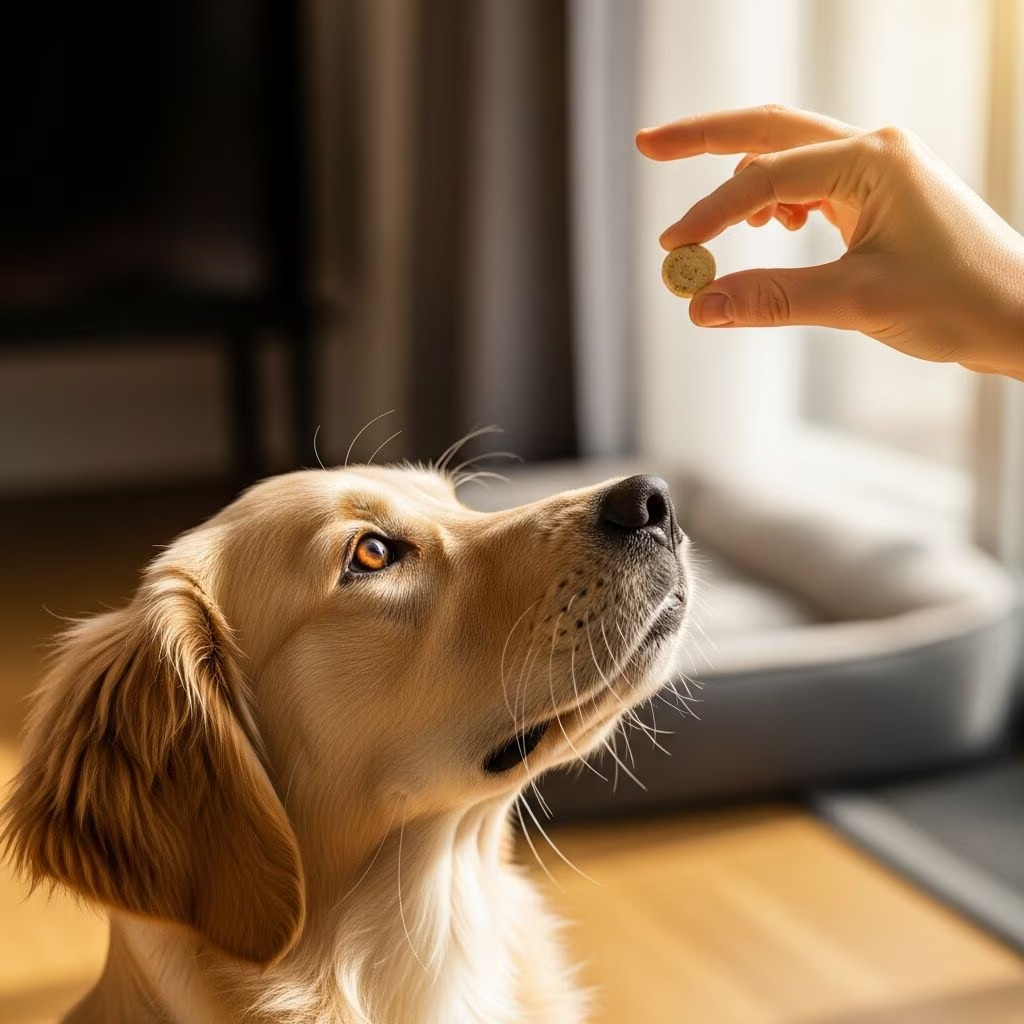
Your dog’s name is far more than a simple label—it’s the cornerstone of successful training, serving as an immediate attention-grabber and gateway to rewards. By associating the name with positivity, owners can foster quicker learning, improved focus, and deeper connections with their pets.
Why a Dog’s Name Matters in the Training Process
In the world of canine behavior, a dog’s name functions primarily as a cue for attention rather than a personal identifier like it is for humans. Research indicates dogs process names through sound patterns and consistent pairings with rewards, enabling them to recognize up to 150 or more words, including their own name. This recognition builds the foundation for all subsequent commands, as it directs the dog’s focus toward the handler.
Behaviorists emphasize that names with distinct acoustic properties—sharp consonants like ‘k’, ‘p’, or ‘d’—cut through noise effectively, making them ideal for training environments. Two-syllable names often excel because the initial syllable primes the ear for the second, enhancing recall speed.
Selecting the Perfect Name for Optimal Responsiveness
Choosing a name thoughtfully can significantly boost training outcomes. Opt for short, punchy options that end in vowels for easy pronunciation and auditory appeal to canine ears. Names like “Kira,” “Tucker,” or “Piper” leverage crisp sounds that dogs detect readily.
- Clarity first: Avoid names resembling common commands (e.g., “Kit” vs. “Sit”) to prevent confusion.
- Joy factor: Select a name that excites you, as your enthusiasm transfers to the dog during repeated use.
- Resonance: Test names by saying them aloud; the one eliciting the quickest head-turn wins.
If a shelter dog arrives with a potentially tainted name from past negative experiences, re-naming provides a fresh start. This erases old associations and allows you to pair the new name exclusively with positive outcomes.
Building Positive Name Associations from Day One
The golden rule of name training: name equals good things. Dogs learn through classical conditioning, linking the sound of their name to rewards like treats, play, or praise, much like they associate a leash with walks. This creates an automatic, eager response without hesitation.
Start in low-distraction settings. Say the name cheerfully when the dog is already looking at you, followed by a marker (clicker or “Yes!”) and a high-value treat. Repeat 10-20 times per session to solidify the link. Over time, this evolves into a conditioned response where the name alone prompts eye contact and anticipation.
| Training Stage | Goal | Method | Repetitions |
|---|---|---|---|
| Basic Pairing | Associate name with reward | Say name (dog looking) → Marker → Treat | 20-30 daily |
| Distance Test | Response from 5-10 feet | Say name → Reward on look-back | 15 per session |
| Distraction Proof | Ignore mild distractions | Incorporate toys/noise → Name cue | 10 advancing |
Common Mistakes That Undermine Name Training
One critical pitfall is “poisoning” the name by using it during corrections or scolding. This introduces uncertainty: Is the name signaling fun or trouble? Dogs hesitate, slowing response times and eroding trust. Reserve the name strictly for positive contexts; use neutral phrases like “Leave it” for discipline.
Overuse in casual calling can dilute its impact, turning it into background noise. Limit name usage to intentional training moments or when redirecting focus. Inconsistent tone—yelling versus soft speaking—also confuses dogs, who rely heavily on vocal inflections.
Advanced Techniques for Rock-Solid Name Recall
Once basics are mastered, elevate training with life rewards like a favorite toy toss or a short play burst. These mimic real-world motivators, making the cue versatile across scenarios. For high-drive dogs, integrate the name into games: say it before throwing a ball, rewarding the instant orient.
Proof against distractions progressively: Begin indoors, advance to yards, then parks. If response falters, step back to prior success levels. Studies on word-trained dogs show they integrate verbal cues with gestures effectively, suggesting names enhance multi-modal learning.
How Name Training Strengthens the Human-Canine Bond
Beyond obedience, consistent name use fosters emotional security. When dogs reliably turn to their name for positivity, it reinforces the handler as a source of good outcomes, deepening loyalty and reducing anxiety. This mirrors how wolves respond to pack leaders, but amplified by rewards.
Personalized names reflecting breed traits or personality quirks add joy to interactions. A spirited terrier named “Zip” or a calm lab named “Zen” aligns vocal cues with observed behaviors, enhancing mutual understanding.
Real-World Applications: From Puppyhood to Senior Years
For puppies, name training starts at 8 weeks, capitalizing on their sponge-like learning phase. Adolescents benefit from recall refreshers amid independence surges. Even seniors regain sharpness through gentle name games, combating cognitive decline.
In multi-dog homes, unique names prevent mix-ups. Practice individually to ensure each dog discriminates their own—over time, they ignore others’ names, proving learned specificity rather than self-concept.
Science-Backed Insights on Canine Name Recognition
PetMD confirms most dogs discern their name amid household chatter, filtering relevant sounds via brain processing tuned to human speech patterns. Dr. Stanley Coren notes names as foundational attention commands, underpinning complex vocabularies in gifted dogs.
Acoustic research favors names with broadband consonants for superior detection, explaining popularity of classics like “Max” or “Bella.” Positive reinforcement accelerates this, with 90% of dogs showing reliable response within weeks of consistent practice.
Frequently Asked Questions (FAQs)
Can I change my adult dog’s name?
Yes, absolutely. Pair the new name solely with rewards to overwrite old associations quickly—most adapt in days.
What if my dog ignores their name in public?
Practice distraction-proofing incrementally. Use higher-value rewards outdoors and never repeat the name; wait for compliance.
Do nicknames confuse dogs?
Similar-sounding nicknames register as variants if positively reinforced, thanks to pattern recognition.
How often should I practice name response?
3-5 short sessions daily, totaling 5-10 minutes, yield best results without fatigue.
Is a clicker necessary for name training?
No, but it sharpens timing. Verbal markers like “Good!” work equally well.
Troubleshooting Weak Name Responses
If progress stalls:
- Check for poisoning: Audit recent uses.
- Upgrade rewards: Switch to liver bits or squeaky toys.
- Reduce criteria: Reward partial head turns initially.
- Environment scan: Eliminate competing stimuli.
Patience is key; consistent positivity rebuilds reliability.
References
- The Role of Your Dog’s Name in Training and Bonding — Legend Acres. 2023. https://www.legend-acres.com/blogs/post/the-role-of-your-dog-s-name-in-training-and-bonding
- The Importance of a Dog’s Name with Regards to Training — Whole Dog Journal. 2018-12-26. https://www.whole-dog-journal.com/training/the-importance-of-a-dogs-name-with-regards-to-training/
- What’s in a Name? The Art and Science of Naming Your Dog — Koa’s Ruff Life. 2023. https://koasrufflife.com/blogs/a-day-in-the-life-of-koa/whats-in-a-name-the-art-and-science-of-naming-your-dog
- Do Dogs Know Their Name? — PetMD. 2023. https://www.petmd.com/dog/general-health/do-dogs-know-their-name
- How two word-trained dogs integrate pointing and naming — PMC / National Library of Medicine. 2012-06-20. https://pmc.ncbi.nlm.nih.gov/articles/PMC3377900/



