
Mastering the Doggy Paddle: Canine Swim Secrets
Unlock the truth behind your dog's swimming style, from natural instincts to expert training tips for safe aquatic adventures.
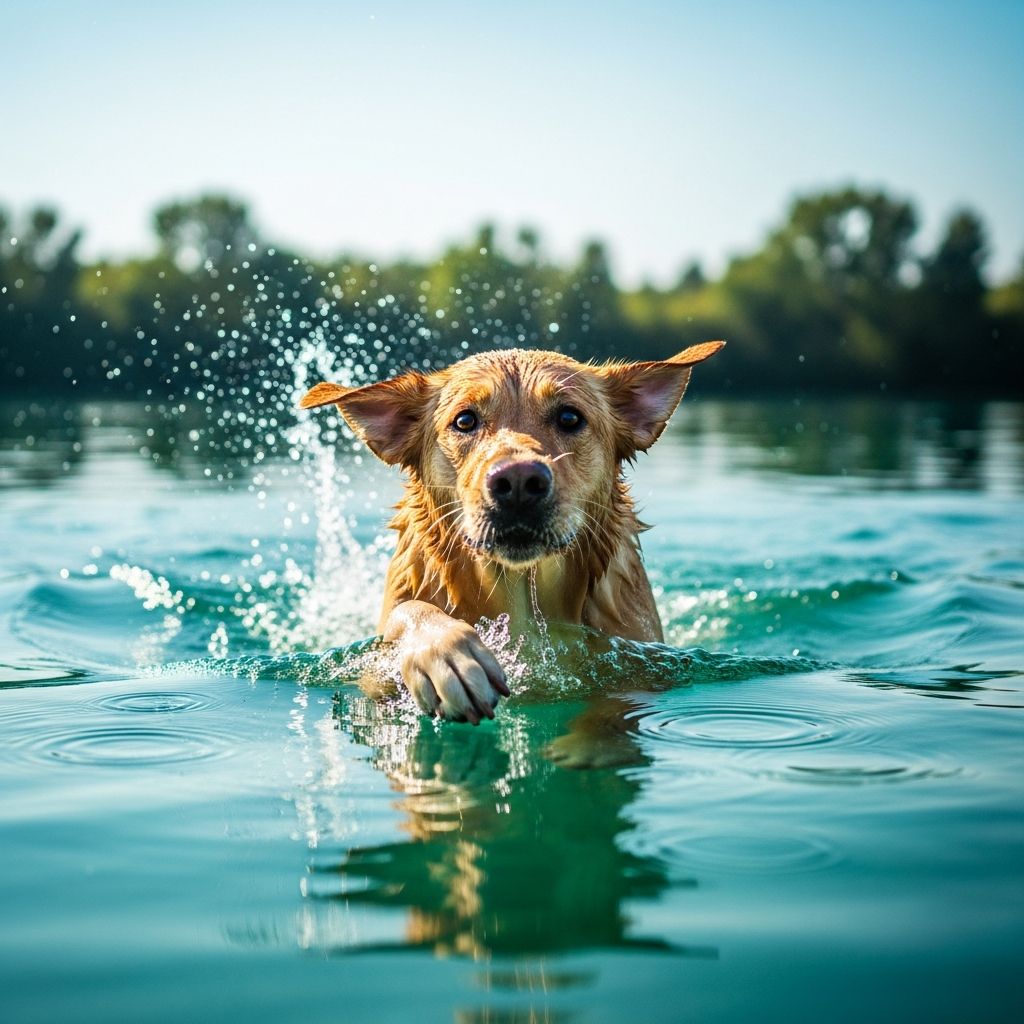
The doggy paddle is more than a playful term—it’s the instinctive swimming style most dogs use, resembling an underwater trot that propels them through water efficiently. This motion, characterized by limbs moving in arcs beneath the body, allows dogs to navigate pools, lakes, and oceans with surprising coordination.
The Science Behind the Doggy Paddle Motion
Research reveals that what we call the “doggy paddle” is actually a modified terrestrial trot adapted for buoyancy. In a study of eight dogs from six breeds, swimming at speeds of 0.4-1.1 m/s, scientists observed a stereotypic gait where forelimbs sweep posteriorly during the power phase, with digits abducted for maximum drag. Unlike land gaits that vary by breed, this aquatic pattern remains consistent across sizes, from tiny Yorkshire Terriers (3.6 kg) to massive Newfoundlands (63.5 kg).
Stroke frequency decreases with body size, enabling larger dogs to maintain propulsion without exhaustion. The cycle divides into power and recovery phases: paws push back powerfully, then recover forward underwater. This drag-based propulsion differs from fish-like undulation, highlighting dogs’ evolutionary tie to land movement even in water.
Why Do Dogs Naturally Take to Water?
Most dogs possess an innate survival instinct for swimming, holding their heads above water while paddling with motions akin to walking on land. Strong front legs provide primary lift and thrust, keeping the body afloat. Enthusiastic water lovers, like Retrievers, dive in voluntarily, paddling purposefully around obstacles.
- Instinctive buoyancy: Flexible spines and webbed feet in water breeds aid flotation.
- Survival thrashing: Even panicked dogs can reach shore through frantic paddling, though it’s exhausting.
- Breed heritage: Water rescue dogs like Newfoundlands combine bravery, strength, and affection for aquatic tasks.
However, not all dogs are born swimmers. Denser breeds struggle against their body composition, turning swimming into a learned skill rather than instinct.
Breeds That Shine and Struggle in the Water
Swimming prowess varies widely by anatomy and genetics. Here’s a comparison:
| Breed Type | Strengths | Challenges | Examples |
|---|---|---|---|
| Water Lovers | Webbed feet, oily coats, love of retrieval | None significant | Labrador Retriever, Newfoundland, Portuguese Water Dog |
| Average Swimmers | Decent paddling, needs encouragement | Moderate stamina | Golden Retriever, Border Collie |
| Strugglers | Short legs, heavy build | Sinks easily, tires fast | Bulldog, Pug, Dachshund, Corgi |
Breeds with short muzzles or stocky bodies expend extra energy just staying afloat, making life jackets essential. Conversely, those bred for fishing or rescue excel naturally.
Health Benefits of Swimming for Dogs
Beyond fun, canine swimming builds muscle, improves joint health, and aids weight management without joint stress. The resistance of water strengthens core and limbs during the paddle stroke, mimicking low-impact therapy.
- Arthritis relief: Buoyancy reduces gravity’s load by up to 90%.
- Cardio boost: Full-body workout elevates heart rate safely.
- Mental stimulation: New environments reduce anxiety.
For seniors or post-surgery pups, supervised swims accelerate recovery. Always consult a vet first to rule out contraindications like open wounds or heart issues.
Essential Safety Gear for Dog Swimming
Even strong swimmers benefit from protection. Prioritize:
- Life Jacket: With grab handles and neck support for head-lifting breeds.
- Floats: Rear flotation encourages all-leg paddling.
- Harness Leash: For control in open water.
Avoid rawhide toys or heavy collars that could drag them down. Rinse chlorine or lake muck post-swim to prevent skin irritation.
Step-by-Step Guide to Teaching Your Dog to Swim
Patience is key—rushing breeds fear. Follow this progression:
Preparation Phase
- Assess comfort: Let them sniff water edges calmly.
- Teach “come” command on land first for recall.
Entry Training
- Shallow Start: Use leashed walks into knee-deep water, praising lavishly.
- Support Hold: Cradle belly, guiding gentle paddles. Encourage hind legs.
- Release Gradually: Reduce support as confidence grows.
Advanced Skills
Introduce fetch games or ramps for exits. Sessions: 5-10 minutes max for beginners, building to 20-30. Watch for fatigue signs like heavy panting or clawing.
Pro Tip: Use cheerful tones; never force entry, as it cements phobia.
Common Swimming Mistakes and How to Avoid Them
Owners often overlook these pitfalls:
| Mistake | Risk | Solution |
|---|---|---|
| Front-leg only paddling | Quick exhaustion | Lift rear to engage all legs |
| No supervision | Drowning in currents | Stay within arm’s reach |
| Ignoring breed limits | Panicked sinking | Fit life jacket always |
| Overlong sessions | Hypertension | Short bursts with breaks |
Recognizing Trouble in the Water
Body language signals distress:
- Frantic splashing or whining.
- Clawing at air/owner.
- Rapid head bobbing or side-to-side lurching.
- Refusal to paddle hind legs.
Act fast: Grab collar/life jacket, guide to shore. Provide fresh water—salt/chlorine dehydrates.
FAQs: Dog Swimming Essentials
Can all dogs learn to swim?
Yes, with proper introduction. Strugglers improve via training and gear, though some prefer splashing over full swims.
Is a pool or lake better for beginners?
Calm pools with ramps suit novices; lakes add currents—start supervised.
How often should dogs swim?
2-3 times weekly for fitness, 10-20 minutes. Adjust for age/stamina.
What if my dog hates water?
Respect boundaries. Try sprinklers or consult behaviorists for desensitization.
Do puppies swim instinctively?
They paddle but tire fast—life jackets until 12-16 weeks.
Turning Water into Playtime Paradise
Enhance sessions with toys, agility ramps, or group swims. Track progress: From hesitant dips to joyful laps, celebrate milestones with treats. Swimming fosters bonds, health, and joy—safely mastered, the doggy paddle becomes a lifelong thrill.
References
- Stereotypic swimming gait pattern in different dog breeds — PubMed/NCBI. 2020-04-01. https://pubmed.ncbi.nlm.nih.gov/32243718/
- New Dog Swimming Study Surprises Canine Community — Pet Health Network. 2019-01-15. https://www.pethealthnetwork.com/news-blogs/a-vets-life/new-dog-swimming-study-surprises-canine-community
- Why Dogs Know How To Swim — WagWalking. 2023-05-10. https://wagwalking.com/behavior/why-dogs-know-how-to-swim
- Dog Swimming 101 & Expert Doggy Paddle Tips for Beginners — Chewy. 2024-02-20. https://www.chewy.com/education/dog/training-and-behavior/dog-swimming-101
- Doggy Paddle 101: How to Teach Your Dog to Swim — Barkwells. 2023-07-12. https://barkwells.com/dog-blog/doggy-paddle-101-how-to-teach-your-dog-to-swim
Similar Articles








Read full bio of Sneha Tete




