

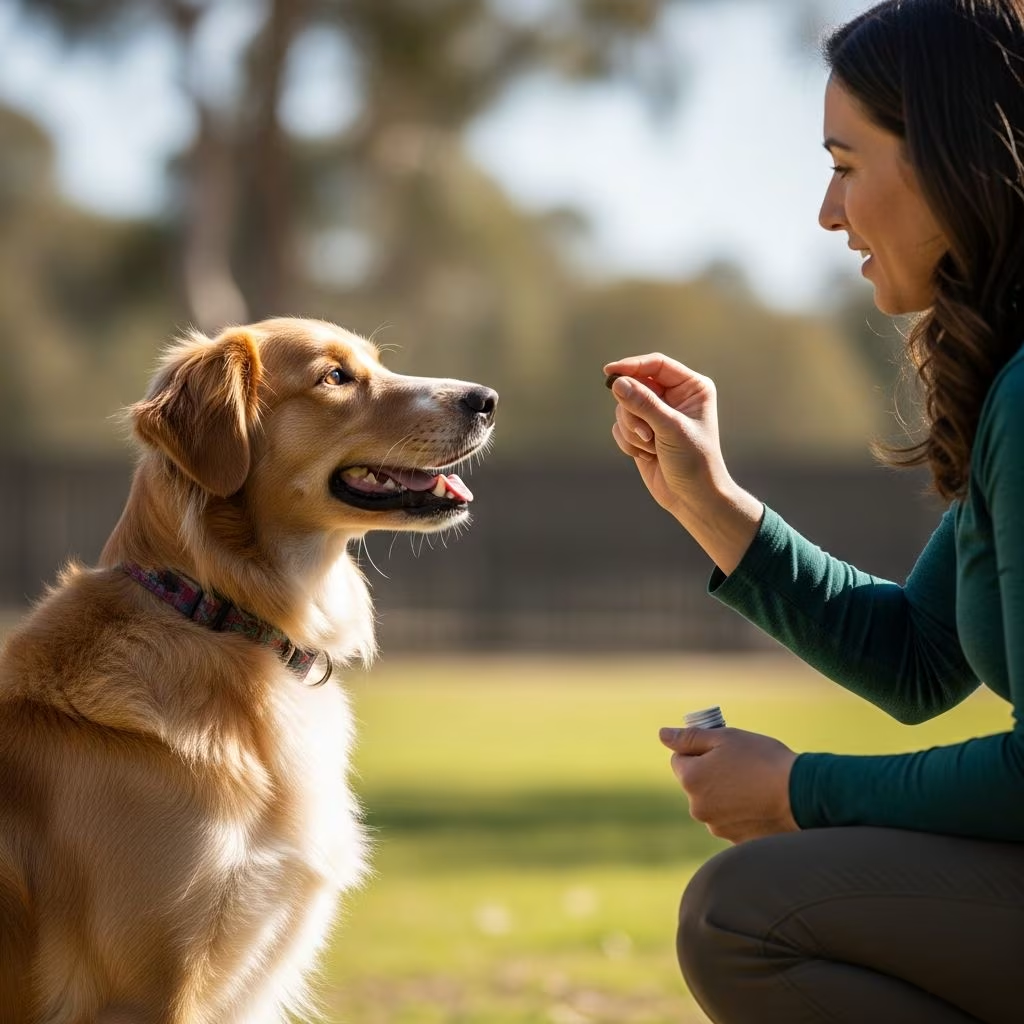
Training your dog is one of the most rewarding aspects of pet ownership, fostering a harmonious relationship built on trust and clear communication. This guide delves into practical, science-backed approaches to address everyday challenges, emphasizing positive reinforcement to encourage desired behaviors without fear or punishment. Whether you’re welcoming a new puppy or refining skills with an adult dog, these strategies promote mental stimulation, physical activity, and emotional well-being.
Foundations of Effective Dog Training
Successful training begins with understanding how dogs learn. Dogs respond best to consistent, reward-based methods that associate good behavior with positive outcomes like treats, praise, or play. Positive reinforcement strengthens neural pathways, making commands more reliable over time.
Key principles include:
- Consistency: Use the same cues and rewards every time to avoid confusion.
- Patience: Progress varies by breed, age, and temperament; short, frequent sessions work best.
- Socialization: Early exposure to diverse environments builds confidence and reduces anxiety.
- Timing: Reward within seconds of the behavior to create clear connections.
Start in low-distraction settings, gradually increasing complexity to help your dog generalize skills.
Essential Commands Every Dog Should Know
Mastering core commands forms the bedrock of obedience. Begin with simple ones to build momentum.
| Command | Training Technique | Benefits |
|---|---|---|
| Sit | Lure with a treat above the nose, moving it back until hips drop; reward immediately. | Impulse control; foundation for stay and wait. |
| Stay | From sit, raise hand like a stop sign, step back, return and reward. | Safety in distracting environments. |
| Come (Recall) | Use a happy tone, high-value rewards; practice on a long leash. | Essential for off-leash reliability. |
| Down | Lure from sit by lowering treat to ground between paws. | Calming behavior for anxious dogs. |
| Leave It | Place treat in fist; reward from other hand when dog ignores. | Prevents ingesting hazards. |
Practice 5-10 minutes daily. Tools like clickers mark exact moments of success, speeding learning.
Tackling Common Behavior Challenges
Many dogs exhibit problematic behaviors due to boredom, lack of exercise, or unclear boundaries. Address them proactively with redirection and prevention.
Stopping Excessive Jumping
Dogs jump to seek attention. Turn away, fold arms, and ignore until all paws are on the ground, then reward calmly. Teach an alternative like ‘sit for greeting.’ Consistency from all household members is crucial.
Managing Leash Reactivity
Pulling strains walks. Stop moving when the leash tightens; resume only when slack. Pair with treats for loose-leash walking. For reactivity toward others, create distance and reward focus on you.
Reducing Nuisance Barking
Identify triggers: alarm, demand, or excitement barking. Desensitize by exposing at low levels, rewarding quiet. Provide mental outlets like puzzle toys to combat boredom-induced noise.
Preventing Destructive Chewing
Puppies explore with mouths; adults chew from stress. Offer appropriate chew items, tether toys to furniture, and supervise. Bitter sprays deter inappropriate targets.
Advanced Training for Enrichment
Once basics are solid, elevate training with engaging activities that challenge mind and body.
- Trick Training: Teach ‘spin,’ ‘roll over,’ or ‘play dead’ using shaping—reward successive approximations.
- Agility Basics: Use household items for tunnels, jumps, and weaves to boost coordination and confidence.
- Scent Games: Hide treats in boxes or rooms; encourages natural sniffing instincts for mental fatigue.
- Impulse Control Exercises: ‘Wait’ at doors or for food; builds self-regulation.
These keep high-energy breeds like Border Collies or Labs engaged, reducing mischief.
Training Puppies vs. Adult Dogs
Puppies (8-16 weeks) absorb quickly but have short attention spans—limit sessions to 3-5 minutes. Focus on housebreaking, bite inhibition, and socialization.
Adult rescues may carry baggage like fear or poor habits. Rebuild trust slowly with force-free methods. Certified trainers using LIMA (Least Intrusive, Minimally Aversive) principles excel here.
Compare approaches:
| Aspect | Puppy | Adult |
|---|---|---|
| Session Length | Short, frequent | 10-15 minutes |
| Focus | Foundation skills | Habit correction |
| Tools | Toys, treats | Clicker, management |
Recommended Resources for Deeper Learning
Books provide structured guidance. Top picks include:
- “Don’t Shoot the Dog” by Karen Pryor: Explains reinforcement science accessibly.
- “Control Unleashed” by Leslie McDevitt: Builds focus for reactive dogs.
- “Zak George’s Dog Training Revolution”: Step-by-step positive methods with videos.
Seek trainers with CPDT-KA or KPA-CTP certifications adhering to positive, force-free philosophies.
Health and Nutrition’s Role in Trainability
A tired dog is a good dog, but so is a healthy one. Regular exercise (30-60 minutes daily) enhances focus. Balanced diets support brain function; omega-3s aid cognition. Consult vets for breed-specific needs.
FAQs
What if my dog ignores commands?
Return to basics in a distraction-free zone. Increase reward value and ensure consistency.
Is crate training cruel?
No, when done positively as a safe den. Use for short periods with toys.
How long until results?
Basics in weeks with daily practice; advanced skills months. Every dog progresses differently.
Can I train multiple dogs together?
Yes, but master individuals first to avoid confusion.
What about shock collars?
Avoid; they risk fear and aggression. Positive methods yield reliable, joyful obedience.
Integrating these solutions transforms challenges into opportunities for bonding. Commit to humane, rewarding training for a lifetime companion.
References
- Ultimate Guide to Dog Training: Puppy Training to Advanced Techniques — Dogwise. Accessed 2026. https://www.dogwise.com/ultimate-guide-to-dog-training-puppy-training-to-advanced-techniques-plus-25-problem-behaviors-solved-companionhouse-books-manners-house-training-tricks-and-more-with-positive-reinforcement/
- Best Dog Training Books — Woofz. Accessed 2026. https://www.woofz.com/blog/dog-training-books/
- Basic Dog Training Foundations — K-9 Companions. Accessed 2026. https://k-9companions.com/blog/basic-dog-training/
- Dog Training 101: A Beginner’s Guide — Sniffspot (Haley Young). 2025-05-05. https://www.sniffspot.com/blog/dog-training/dog-training-101-how-to-train-your-dog
- Dog Training Manuals That You Can Trust — Crimson Hound. 2021-08-03. https://www.crimsonhound.com/2021/08/03/dog-training-manuals-that-you-can-trust/



