

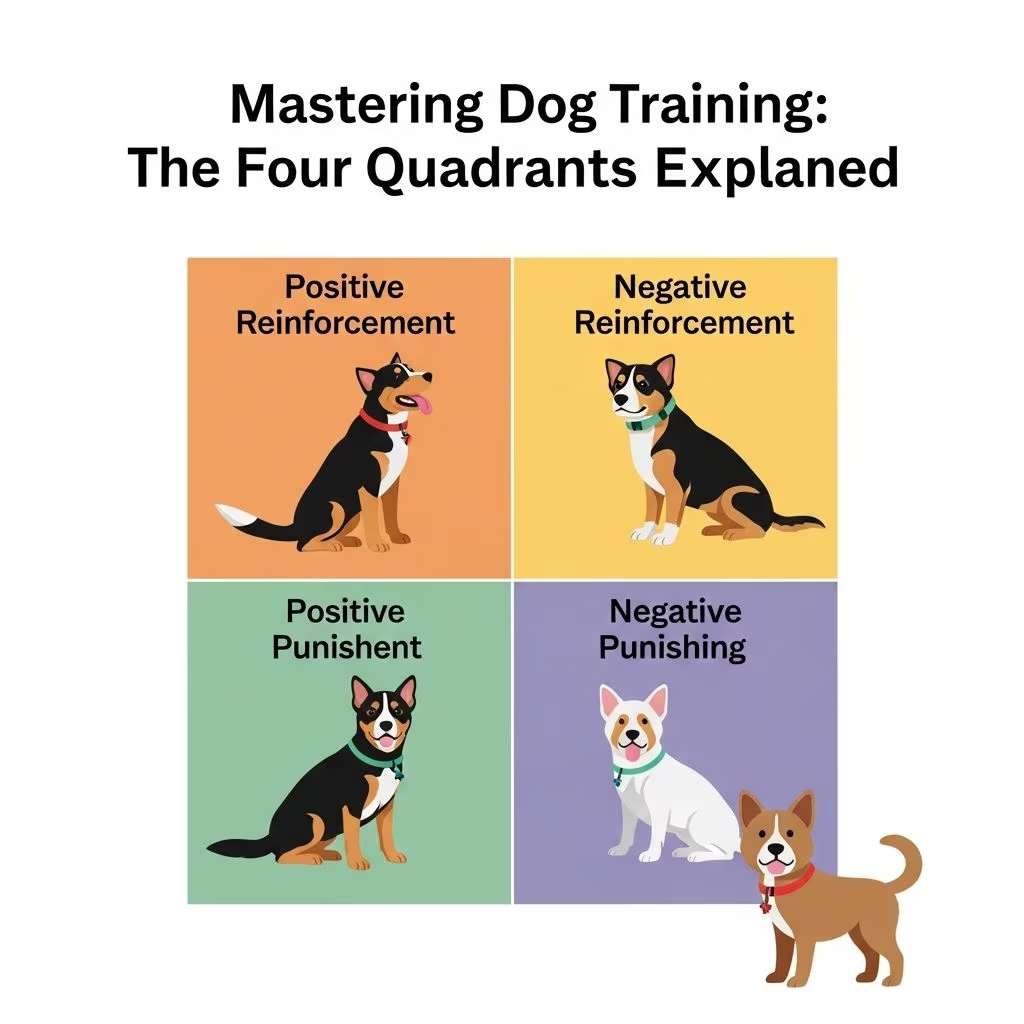
Operant conditioning forms the backbone of modern dog training, enabling pet owners and professionals to shape behaviors through strategic consequences. Developed by psychologist B.F. Skinner, this learning process hinges on how dogs associate their actions with outcomes, either increasing desirable behaviors or reducing unwanted ones. By understanding its four quadrants—positive reinforcement, negative reinforcement, positive punishment, and negative punishment—trainers can create balanced programs that foster obedience, confidence, and strong bonds.
Foundations of Operant Conditioning in Canine Behavior
At its core, operant conditioning differs from classical conditioning by focusing on voluntary actions and their direct results. Dogs actively choose behaviors based on what follows, such as rewards or corrections, making it ideal for teaching commands like sit, stay, or heel. Unlike reflexive responses in classical conditioning, operant methods empower dogs to influence their environment, promoting thoughtful decision-making.
Key principles include timing, consistency, and clarity. Consequences must occur within seconds of the behavior to build strong associations. Inconsistent application confuses dogs, while clear signals ensure they understand expectations. This approach suits all breeds and ages, from energetic puppies to senior dogs with ingrained habits.
Quadrant 1: Positive Reinforcement – Building Desired Habits
Positive reinforcement adds a pleasant stimulus after a good behavior, boosting its repetition. For instance, offering a treat when your dog sits on cue makes sitting more likely next time. Praise, toys, or play serve equally well, tailored to what motivates your dog—food-driven pups thrive on treats, while fetch enthusiasts prefer balls.
This quadrant shines in daily training. During walks, reward loose-leash walking with verbal cheers to encourage calm strolling. Sessions should be short, 5-10 minutes, ending on successes to keep enthusiasm high. Over time, behaviors solidify into reliable responses without constant treats, transitioning to variable rewards for lasting results.
- Benefits: Boosts confidence, strengthens owner-dog bond, minimizes stress.
- Tips: Use high-value rewards initially; vary them to prevent boredom.
- Common Mistake: Delaying rewards, weakening the link.
Quadrant 2: Negative Reinforcement – Removing Discomfort
Negative reinforcement removes an unpleasant stimulus upon desired action, increasing behavior frequency. Picture a dog pulling on the leash; slackening it when they ease up teaches polite walking. This isn’t about harm but mild pressure, like gentle collar tension or verbal nudges, released instantly on compliance.
Applied ethically, it clarifies boundaries. For door-dashing, apply light leash pressure until the dog waits, then release for calm entry. Dogs learn quickly that compliance ends discomfort, associating good choices with relief. Combine with positive methods for balance, avoiding over-reliance that could build tension.
| Scenario | Negative Stimulus | Desired Behavior | Outcome |
|---|---|---|---|
| Leash Pulling | Tension on collar | Stop pulling | Immediate slack |
| Bed Recall | Mild verbal cue | Return to spot | Cue cessation |
| Jump Prevention | Step back pressure | Paws on ground | Approach allowed |
Quadrant 3: Positive Punishment – Discouraging Bad Actions
Positive punishment introduces an aversive after unwanted behavior to reduce it. A firm “no” and gentle push when jumping on guests signals disapproval. Intensity must match the dog—subtle for sensitive breeds, firmer for bold ones—always aiming to stop, not scare.
Use sparingly in balanced training. For counter-surfing, a startling clap or barrier addition interrupts and deters. Pair with reinforcement for alternatives, like rewarding floor-staying. Monitor stress signals like lip-licking; adjust to prevent fear.
- Pros: Quick suppression of dangerous habits like chasing cars.
- Cons: Risk of fallout if misapplied, like aggression.
- Best Practice: Follow with positive reinforcement for correct choices.
Quadrant 4: Negative Punishment – Withholding Privileges
Negative punishment withdraws something enjoyable post-misbehavior, decreasing its occurrence. Ignore attention-seeking nips by turning away, removing your engagement. Toys or play halt similarly for roughhousing.
This gentle method teaches self-control. For begging, remove food access during meals until sitting calmly. Dogs soon link misbehavior to loss, choosing better paths. Ideal for social pups, as it leverages their desire for interaction without force.
Integrating Quadrants for Balanced Training Success
Balanced training blends all quadrants for comprehensive results. Reward sits (positive reinforcement), ease leash pressure (negative reinforcement), correct jumps (positive punishment), and ignore whines (negative punishment). This mirrors real life, where actions yield varied outcomes.
Start sessions with clear goals: one behavior per 10-minute drill. Track progress in a journal, noting effective rewards/punishments. Professional input helps stubborn cases, ensuring humane application.
Practical Training Routines Using the Quadrants
Build a loose-leash walker: Reward slack (R+), release tension (R-), block lunges (P+), withdraw play (P-). Repeat across environments for generalization.
For recall: Treat returns (R+), end chase games on ignores (P-), use check-cord pressure (R-), interrupt distractions (P+). Consistency across family members prevents mixed signals.
Advanced: Chain behaviors like sit-stay-come, layering quadrants progressively. Puppies benefit from play-based quadrants; adults from structured drills.
Common Pitfalls and How to Avoid Them
Mistiming consequences confuses dogs—practice rapid delivery. Emotional trainers risk escalation; stay calm. Ignoring breed traits, like herding dogs needing outlets, undermines efforts.
Over-punishing erodes trust; prioritize reinforcement 80% of sessions. If progress stalls, assess motivation—switch treats or consult vets for health issues.
Science and Evidence Backing Operant Methods
B.F. Skinner’s experiments proved consequences drive learning across species, validated in canine studies. Modern trainers report 90% success rates with balanced quadrants versus single-method approaches. Humane application enhances welfare, per animal behavior experts.
FAQs
What is the most effective quadrant for beginners?
Positive reinforcement builds foundations quickly and positively.
Can I use punishment without harming my dog?
Yes, when mild, timed, and balanced with rewards.
How long until results show?
1-4 weeks with daily 10-minute sessions.
Does it work for aggressive dogs?
Professionally guided, yes, addressing root causes.
Positive vs. negative: Which is better?
Balanced use outperforms either alone.
Conclusion: Empower Your Dog Today
Harnessing operant conditioning’s quadrants transforms chaotic pups into responsive companions. Commit to consistent, informed practice for lifelong harmony.
References
- Operant Conditioning In Dog Training: Explained With EXAMPLES! — Matt Covey, YouTube. 2023. https://www.youtube.com/watch?v=oXWf8bA_kWc
- What Is the Difference Between Operant Conditioning and Classical Conditioning? — The Dog Wizard. 2024. https://thedogwizard.com/blog/difference-between-operant-and-classical-conditioning/
- Teaching Dogs – Operant Conditioning — Canine Principles. 2023. https://www.canineprinciples.com/blog/operant-conditioning-dogs-1
- How it Works: Operant Conditioning and Classical Conditioning — Fenzi Dog Sports Academy. 2024. https://www.fenzidogsportsacademy.com/blog/operant-conditioning-and-classical-conditioning
- Dog & Puppy Operant Conditioning Training — Canine Scholars. 2025. https://www.caninescholars.com/learning-principles/operant-conditioning/
- Positive Reinforcement Dog Training: The Science Behind Operant Conditioning — American Kennel Club (AKC). 2025-01-15. https://www.akc.org/expert-advice/training/operant-conditioning-positive-reinforcement-dog-training/
- The Four Principles of Operant Conditioning for Dogs — Whole Dog Journal. 2024. https://www.whole-dog-journal.com/training/the-four-principles-of-operant-conditioning-for-dogs/



