

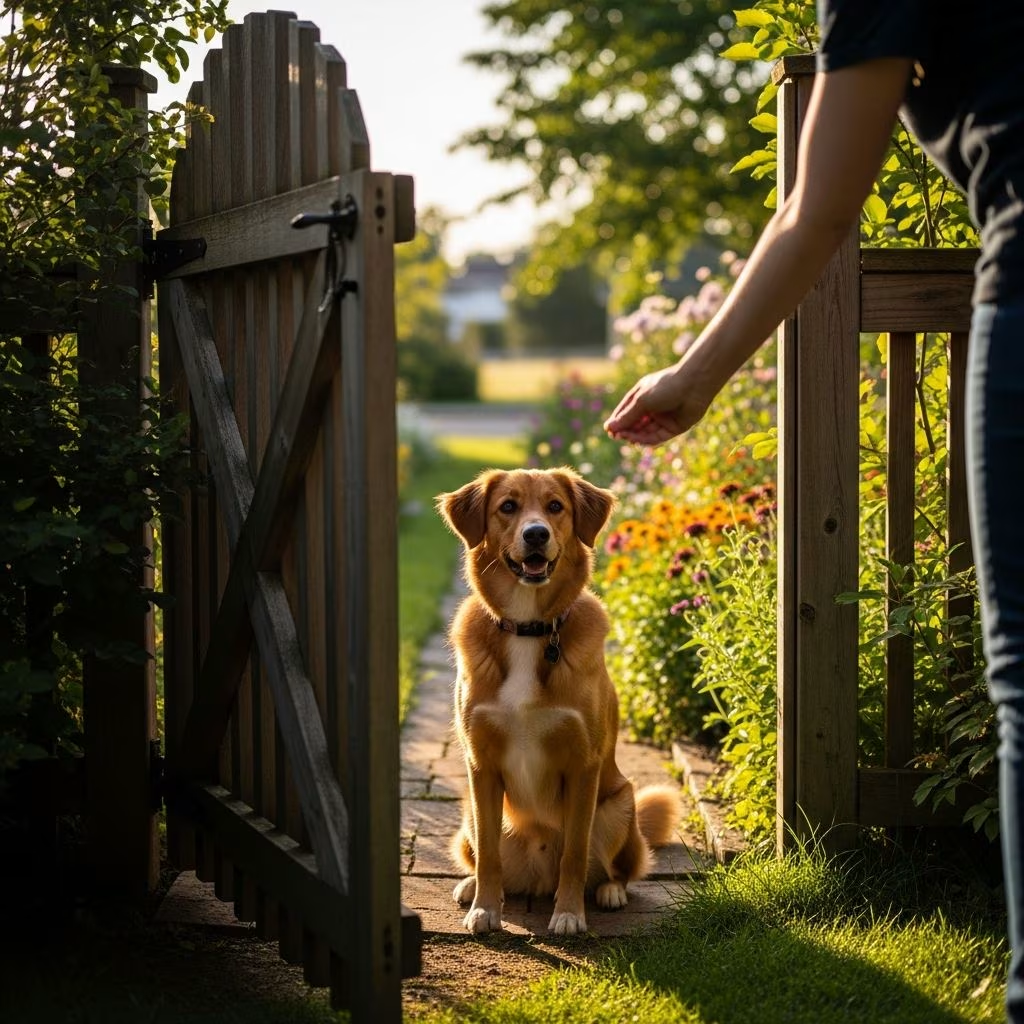
Every dog owner encounters moments when their pet shifts from relaxed to reactive. This pivotal shift happens at the dog’s threshold, a critical boundary in canine behavior where rational responses give way to instinctual reactions. Grasping this concept empowers owners to anticipate issues, intervene early, and foster lasting improvements in their dog’s conduct.
Defining the Canine Threshold
The threshold represents the exact moment a dog transitions from a composed, attentive state to one dominated by overwhelming emotions like fear, excitement, or frustration. Below this line, dogs remain engaged with their handlers, accepting treats and following commands. Above it, they fixate on triggers, ignoring cues and displaying unwanted actions such as barking, lunging, or freezing.
Triggers vary widely: other animals, unfamiliar people, loud noises, or even playful children can push a dog over. Unlike a simple on-off switch, thresholds fluctuate based on context, making observation key to management.
Spotting Early Warning Signs
Recognizing approaching thresholds prevents escalation. Dogs communicate discomfort through subtle body language changes before full reactions emerge.
- Attention fixation: Ears perk, eyes lock on the stimulus, ignoring owner or toys.
- Physical tension: Stiffening body, raised hackles, or slowed movements signal rising stress.
- Treat refusal: High-value rewards lose appeal as arousal builds.
- Displacement behaviors: Yawning, lip licking, or self-grooming indicate internal conflict.
- Vocal cues: Soft growls or whines precede louder outbursts.
These indicators form a progression. For instance, a dog spotting another canine might first glance away (perception threshold), then stare intently (behavior threshold), culminating in lunging if unchecked.
Types of Threshold Crossings
Thresholds manifest differently depending on the emotion involved. Not all over-threshold states are negative; excessive joy can overwhelm too.
| Type | Examples | Common Triggers |
|---|---|---|
| Fear-Based | Barking, cowering, snapping | Strangers, loud sounds |
| Excitement-Based | Zoomies, jumping, mouthing | Guests, play sessions |
| Frustration-Based | Lunging on leash, barrier aggression | Restricted access to stimuli |
Understanding these distinctions guides tailored interventions. Fear responses often require distance, while excitement might need calming protocols.
Factors Influencing Threshold Levels
No dog’s threshold remains static. Multiple elements lower resilience, hastening crossovers.
- Trigger intensity and quantity: A single distant dog poses less threat than a group approaching quickly.
- Physical state: Hunger, fatigue, thirst, or pain erode self-control.
- Stress accumulation: Back-to-back events, like a busy weekend, elevate baseline arousal for days.
- Proximity and duration: Closer stimuli or prolonged exposure amplify impact.
- Handler dynamics: Inconsistent cues or tension from owners can compound issues.
Tracking patterns reveals vulnerabilities. A journal noting incidents helps pinpoint patterns, like post-walk reactivity from built-up energy.
Practical Management Techniques
Staying under threshold demands proactive strategies. Prevention trumps correction.
Increase Distance
Maintain space from triggers until your dog refocuses. On walks, cross streets or pivot away at early signs. This ’emergency distance’ buys time for de-escalation.
Focus and Engagement Exercises
Use games like ‘look at me’ or emergency U-turns to recapture attention. Reward heavily in sub-threshold zones to associate handlers with positivity.
Environmental Control
Anticipate challenges: muzzle train for safety, use baby gates at home, or schedule quiet times post-excitement.
For over-threshold episodes, prioritize safety: remove the dog calmly without punishment, as stressed states impair learning.
Building Threshold Resilience Through Training
Long-term change raises thresholds via systematic desensitization and counterconditioning (DS/CC). Start sub-threshold, pairing triggers with rewards to rewire associations.
- Assess baseline: Find distances where engagement persists.
- Gradual exposure: Incrementally close gaps as responses improve.
- High-reward pairing: Treats or toys during exposures create positive links.
- Monitor progress:
Track via body language and response reliability.
Consistency across handlers accelerates gains. Professional guidance benefits complex cases.
Real-World Applications
Walks with Reactive Dogs
Spot another dog? Increase distance at stare onset, cue ‘watch me,’ and reward focus. Over time, walks become enjoyable.
Home Visitor Protocols
Meet guests outside, leash the dog, feed treats for calm sits. Gradually reduce management as thresholds rise.
Playdate Management
Monitor puppy energy; intervene at nipping or fixation. Short, structured sessions prevent overarousal.
Common Mistakes to Avoid
- Forcing interactions: Pushing past thresholds reinforces reactivity.
- Ignoring subtleties: Missing early cues leads to surprises.
- Punitive responses: Corrections in over-threshold states heighten fear.
- Inconsistent management: Variable approaches confuse dogs.
FAQs
What if my dog is always over threshold?
Evaluate basics: vet check for pain, ensure rest/exercise balance, simplify environments. Consult a certified trainer.
How long until training raises thresholds?
Weeks to months, depending on case severity and consistency. Patience yields results.
Can puppies have thresholds?
Yes; early intervention prevents entrenched habits. Teach calm foundations young.
Is threshold the same as aggression?
No; it’s any reactive state. Aggression is one outcome.
What tools help measure thresholds?
Body language apps, training logs, video reviews of sessions.
Advanced Insights: Multiple Threshold Layers
Experienced trainers distinguish perception (initial notice) from behavior (discomfort) thresholds. Intervene at perception for sensitive dogs, behavior for others. This precision optimizes training windows.
The ‘interactive zone’—where dogs split attention—ideal for learning. Too far under: no stimulus engagement. Too close: fixation dominates.
Physiologically, over-threshold triggers cortisol spikes, elevated heart rates, impairing cognition. Recovery demands time, underscoring prevention.
References
- The Very Important Concept of Threshold in Dog Training — Puppy Tutor. 2023. https://puppytutor.me/concept-of-threshold-in-dog-training/
- Crossing the Dog Behavior Threshold in Two Steps — Aggressive Dog. 2024-09-15. https://aggressivedog.com/2024/09/15/crossing-the-dog-behavior-threshold-in-two-steps/
- 5 Things to Know About A Dog’s Threshold — Whole Dog Journal. 2024. https://www.whole-dog-journal.com/behavior/5-things-to-know-about-a-dogs-threshold/
- Understanding Thresholds: It’s More than Under or Over — Suzanne Clothier. 2023. https://suzanneclothier.com/article/understanding-thresholds-its-more-than-under-or-over/
- Threshold Management: Helping your dog successfully navigate stressful or high-energy situations — Five Freckle K9. 2024. https://fivefrecklek9.com/threshold-management-helping-your-dog-successfully-navigate-stressful-or-high-energy-situations/



