

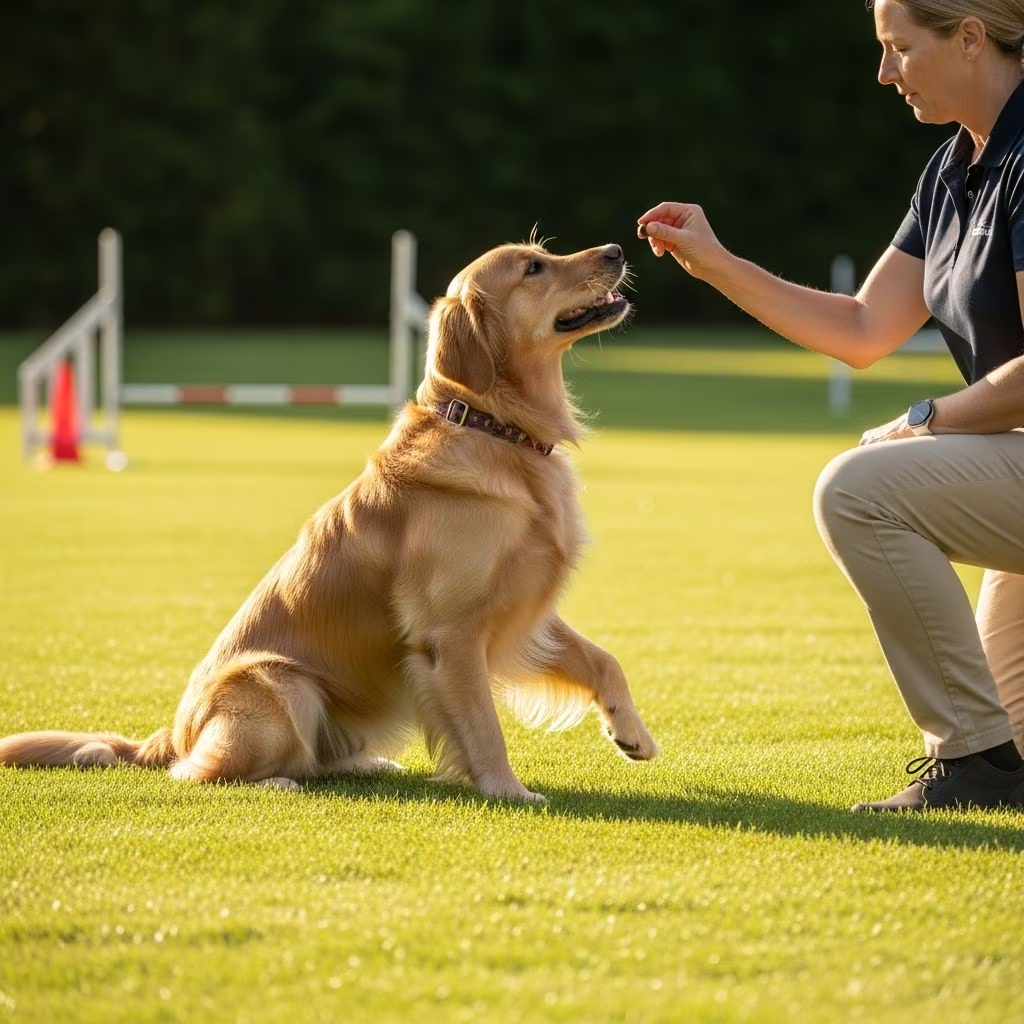
Obedience training forms the cornerstone of a fulfilling relationship between dogs and their owners. It equips canines with essential skills to navigate daily life safely and enjoyably, reducing behavioral issues and enhancing mutual understanding. Whether you have a energetic puppy or a mature dog, structured training promotes discipline, confidence, and joy for both parties.
Why Invest in Obedience Training?
Dogs thrive when they comprehend expectations, leading to fewer accidents, better socialization, and safer interactions in public spaces. Training prevents common problems like excessive barking, pulling on leashes, or ignoring calls, which can strain the human-animal bond. Early intervention yields the best outcomes, but adult dogs can learn rapidly with consistent effort. Positive methods build trust, unlike outdated punishment-based approaches that may foster fear or aggression.
Benefits extend beyond basics: obedient dogs participate in family activities, travel more easily, and even compete in events. Owners report higher satisfaction and reduced stress when their pets respond reliably to cues.
Core Principles of Effective Training
Success hinges on **positive reinforcement**, rewarding desired actions with treats, praise, or play to encourage repetition. This technique outperforms aversive methods, as studies confirm it strengthens learning without emotional harm. Key elements include:
- Consistency: Use the same commands and rewards every time to avoid confusion.
- Short Sessions: Limit to 5-10 minutes for puppies and 10-15 for adults to maintain focus and fun.
- Timing: Reward immediately after the behavior to link action with consequence.
- Patience: Progress varies by breed, age, and temperament; celebrate small victories.
Avoid common pitfalls like over-training in distractions or mixing methods, which dilute progress. Start in low-distraction environments and gradually increase challenges.
Essential Commands Every Dog Should Master
Focus on foundational skills that form the bedrock of advanced obedience. Practice daily for habit formation.
The Sit Command
Sit is the easiest entry point, akin to a foundational drill in sports—versatile for greetings, meals, and calming hyperactivity. Hold a treat above your dog’s nose, move it back until hips drop, then say “sit” and reward. Repeat 10-20 times per session, fading the lure over weeks.
| Step | Action | Tips |
|---|---|---|
| 1 | Lure with treat | Use high-value treats like cheese. |
| 2 | Add verbal cue | Say “sit” just before motion. |
| 3 | Practice off-leash | Test in new rooms. |
Mastering Stay and Down
Stay builds impulse control: Command sit, extend a palm, and step back one step, rewarding while still. Gradually increase distance and duration. For down, lure from sit by lowering a treat to the ground between paws, praising the full lie-down. These prevent jumping and promote relaxation.
Heel and Loose Leash Walking
Heel keeps dogs at your side without pulling, essential for walks. Start with treats at thigh level, rewarding position as you move. Jerk corrections are outdated; use stops and rewards instead. Aim for a loose leash loop.
Recall: The Lifesaver Command
Coming when called is vital for safety, yet often the toughest. Use a happy tone, back away while calling, and reward lavishly. Practice in safe areas, never punishing arrivals to preserve enthusiasm.
Training Tools and Setup
Equip yourself with a clicker for precise marking, treat pouch for quick access, and martingale collar for gentle control. High-value rewards motivate reluctant learners. Create a “training bubble”—a distraction-free zone—to build confidence before real-world application.
Group Classes vs. Private Sessions
Group obedience classes mirror real-life distractions, teaching focus amid dogs and people. Beginners start with Level 1 fundamentals over 5 weeks, covering sit, down, leave-it, and heel. Private lessons suit reactive dogs or customized needs, offering one-on-one depth.
Compare options:
| Format | Pros | Cons | Best For |
|---|---|---|---|
| Group | Socialization, cost-effective | Less individualized | Social puppies |
| Private | Tailored pace, focused | Higher cost | Problem behaviors |
| Home | Convenient, flexible | No distractions | Maintenance |
Tailoring Training to Age and Breed
Puppies under 6 months absorb quickly but tire fast—keep sessions playful. Adults may need refresher on old habits. High-energy breeds like Border Collies demand mental challenges; laid-back ones like Bulldogs prefer short bursts. Adapt cues for size: smaller dogs heel lower.
Overcoming Training Challenges
Dogs ignoring cues? Revert to basics in quiet spots. Anxiety signals like yawning mean pause and reassess. For stubbornness, boost rewards or vary routines. Track progress in a journal to stay motivated.
Advanced Obedience: Beyond the Basics
Once fundamentals click, introduce go-to-mat for settling, advanced recalls with finishes to heel, and figure-8 heeling for precision. Competition prep includes off-leash reliability and speed control.
Building a Lifelong Training Habit
Obedience isn’t one-and-done; integrate cues into routines like pre-meal sits. Annual refreshers maintain skills. Programs blending theory, demos, and practice accelerate mastery.
Frequently Asked Questions
How long does obedience training take?
Basics in 4-6 weeks with daily practice; full reliability takes months.
Can older dogs learn new tricks?
Yes, adults respond well to positive methods, often faster than puppies.
What’s the best age to start?
As early as 8 weeks, but any age works with patience.
Are treats always necessary?
Initially yes, then phase to praise for real-world proofing.
How to handle setbacks?
Shorten sessions, increase rewards, and avoid frustration.
Incorporate these strategies for a polite, responsive dog that enriches your life. Consistent effort yields a confident companion ready for any adventure.
References
- Dog Obedience Training for Every Breed, Size or Age — Wags and Wiggles. 2023. https://wagsandwiggles.com/dogobedience/
- The Basics of Training Your Dog — Wisconsin 4-H Extension. 2021-05-01. https://4h.extension.wisc.edu/files/2021/05/The-Basics-of-Training-Your-Dog.pdf
- Your Essential Guide to Basic Dog Obedience Training — Chewy. 2024. https://www.chewy.com/education/dog/training-and-behavior/sit-stay-and-beyond-weve-got-the-essential-guide-to-basic-dog-obedience-training
- How To Train Your Dog? The Three Pillars of Dog Obedience Training — Dog Bone Hunter. 2023. https://dogbonehunter.com/journal/71/how-to-train-your-dog-the-three-pillars-of-dog-obedience-training
- Dog Training 101: How to Train ANY DOG the Basics — YouTube (Robert Cabral). 2023. https://www.youtube.com/watch?v=jFMA5ggFsXU



