

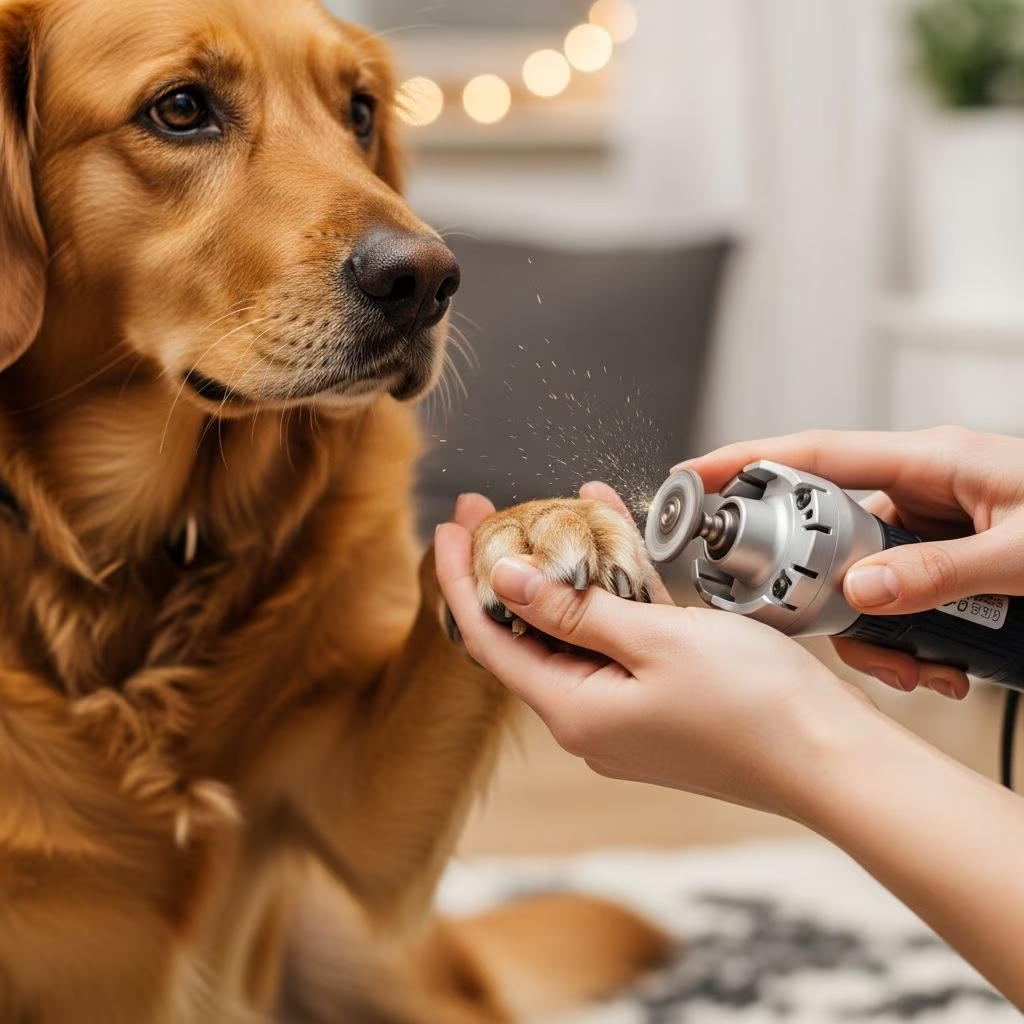
Regular nail maintenance is essential for your dog’s mobility and comfort. Overgrown nails can lead to pain, poor posture, and joint issues, while proper grinding keeps paws healthy. This guide focuses on using rotary grinders, offering a gentle alternative to clipping for smooth results.
Why Grinding Beats Traditional Clipping
Grinders, like those designed for pets, rotate at high speeds to file down nails gradually, reducing the risk of splitting or hitting the sensitive quick—the blood vessel inside the nail. This method is ideal for dogs with dark nails where the quick is hard to see. Unlike clippers, grinders create a tapered edge that wears naturally on surfaces, minimizing sharp regrowth.
- Safer for anxious dogs: Low noise and vibration options prevent fear responses.
- Precise control: Work in small increments to avoid over-grinding.
- Long-term benefits: Promotes even wear and healthier nail beds.
Understanding Your Dog’s Nail Anatomy
Dog nails consist of a hard outer layer and an inner quick containing nerves and blood supply. In light nails, the quick appears pink; in dark ones, look for a chalky center or slight give under pressure. The dewclaws, higher on the leg, often grow faster and need separate attention. Grinding preserves the nail’s natural curve while shortening it safely.
| Nail Type | Quick Indicators | Grinding Tip |
|---|---|---|
| Clear/White | Pink area visible | Stop 2-3mm before pink |
| Dark/Black | Chalky white ring or center dot | Grind tiny bits, feel for warmth |
| Dewclaw | Often hidden | Expose fully, grind from side |
Selecting the Right Grinding Tool
Choose pet-specific rotary grinders with variable speeds (5,000-25,000 RPM) and safety guards. Models with multiple ports accommodate various nail sizes, and rechargeable batteries allow cordless use for wiggly pups. Pair with fine sanding bands for finishing touches. Avoid human tools—they overheat or snag fur.
- Entry-level: Quiet motors under 50dB.
- Pro features: Dust ports, ergonomic grips.
- Accessories: Extra bands, storage cases.
Preparing Your Dog for Successful Sessions
Desensitization prevents resistance. Start young or with adults by associating tools with positives. A 7-day plan builds tolerance.
- Day 1-2: Let dog sniff grinder off. Reward heavily.
- Day 3-4: Touch paws with powered-on tool (no contact). Treats follow.
- Day 5: Grind one nail tip briefly. Praise lavishly.
- Day 6-7: Add nails daily, practicing weekly maintenance.
Handle paws daily during play to normalize touch. Use elevated surfaces for better control.
Step-by-Step Grinding Process
Work in a quiet space with good lighting. Have styptic powder (or cornstarch/flour) ready for mishaps. Sessions last 10-15 minutes max.
- Secure position: Sit dog calmly; use lap or counter. Hold paw firmly, thumb on pad, finger above nail.
- Expose nail: Push pad gently to extend fully. Clear fur away.
- Start low speed: Hold grinder perpendicular, contact tip first for 1-2 seconds.
- Grind incrementally: Across bottom, then sides. Pause to check progress.
- Monitor quick: Stop if nail warms or dog flinches. Dark nails: Tiny passes until center shows.
- Repeat per paw: Fronts first, then rears. Include dewclaws.
- Finish smooth: Light final pass for polish.
If bleeding occurs, press styptic-dipped cotton firmly for 30 seconds.
Frequent Challenges and Fixes
Not all dogs cooperate immediately. Address issues proactively.
- Fear of noise/vibration: Use muffled covers or lowest speed. Pair with calming music.
- Wiggly paws: Two-person team—one distracts with treats.
- Dust mess: Grind outdoors or use vacuum attachment.
- Overheating tool: Let cool 5 minutes between nails.
- Quick nicks: Less common with grinding; treat promptly to build trust.
Frequency and Maintenance Schedule
Grind every 3-4 weeks, or when nails tap floors or curl. Active dogs on rough terrain need less; indoor pups more. Puppies: Monthly tips. Track in a grooming log.
Advanced Techniques for Pros
Once basic skills master, angle grinds for natural shape—45 degrees from top and bottom. For thick nails, pre-soak paws in warm water 5 minutes. Combine with filing for ultra-smoothness.
FAQs
Can puppies use grinders?
Yes, from 8 weeks with tiny tips. Desensitize early.
What if my dog hates it?
Revert to 7-day training. Consider pro groomer initially.
Grinder vs. clipper?
Grinders safer for quick avoidance, especially dark nails.
How short is too short?
Leave 2mm beyond quick; nails should not touch ground.
Signs of overgrown nails?
Limping, splayed toes, reluctance to walk on hard floors.
Benefits Beyond Aesthetics
Proper nails improve gait, reduce arthritis risk, and prevent infections from cracks. Invest time now for lifelong ease.
References
- Trim Your Dog’s Nails Safely — American Kennel Club. 2023-01-15. https://www.akc.org/expert-advice/health/how-to-trim-dogs-nails-safely/
- How To Trim Dog Nails Safely — YouTube (Insider). 2022-05-10. https://www.youtube.com/watch?v=VnJafu_NMoQ
- Trim Your Dog’s Nails — Wake Veterinary Medical Center. 2024-03-22. https://wakeveterinarymedicalcenter.com/trim-your-dogs-nails/
- How to Clip Dog Nails — Dr. Chuck Books (Veterinary Resource). 2023-07-08. https://drchuckbooks.com/pet-information-sheets/how-to-clip-dog-nails
- ASPCA Grooming 101 – Trimming Nails for Dogs — YouTube (ASPCA). 2021-11-03. https://www.youtube.com/watch?v=sccDR8n3yOY



