

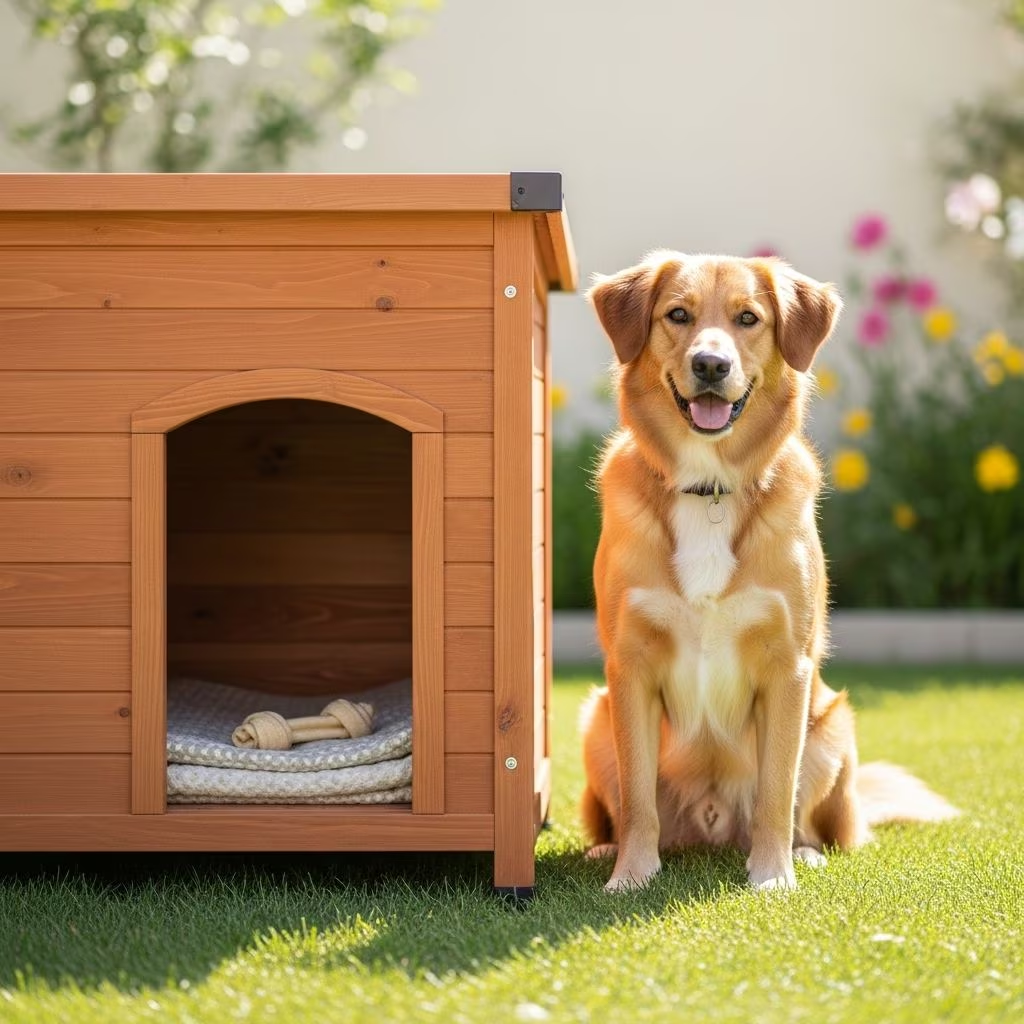
House training your dog establishes essential habits for a harmonious home life. This process relies on understanding canine instincts, consistent routines, and positive reinforcement to teach dogs where and when to eliminate.
Understanding the Foundations of Canine Elimination Habits
Dogs naturally avoid soiling their sleeping areas due to an innate instinct to keep dens clean. This biological drive forms the basis for effective house training methods. Puppies typically hold their bladder for hours equal to their age in months, meaning a 3-month-old pup can manage about 3 hours.
Adult dogs or rescues may regress in new environments from stress or confusion. Establishing a preferred elimination spot outdoors or on designated indoor pads conditions them to repeat desirable behaviors. Consistency from day one prevents confusion and speeds learning.
Essential Tools and Setup for Success
Gather key supplies before starting: a properly sized crate, high-value treats like meat or cheese, enzymatic cleaners for accidents, a leash, and optionally puppy pads or bells for signaling needs.
- Crate: Size allows standing, turning, and lying down comfortably—nothing larger to avoid indoor soiling.
- Leash: For supervised outdoor trips to the exact spot.
- Treats: Reserve special rewards solely for elimination successes.
- Cleaner: Removes odors that attract repeat accidents.
Designate one door for all potty exits to build routine. For indoor options, place pads or potties consistently.
Building a Strict Daily Schedule
Structure revolves around feeding, potty breaks, and crate time. Feed on a fixed schedule—typically twice daily for adults, three for puppies—and remove uneaten food to predict elimination times.
| Age | Feedings/Day | Potty Breaks/Hour | Max Alone Time |
|---|---|---|---|
| 8-12 weeks | 3-4 | Every 30-60 min | 2 hours |
| 3-6 months | 3 | Every 1-2 hours | 3-4 hours |
| 6+ months | 2 | Every 2-4 hours | 4-6 hours |
| Adult | 2 | After meals, play, sleep | 6-8 hours |
Take dogs out immediately after waking, eating, drinking, playing, or showing signs like sniffing or circling. Accompany them leashed to the spot, wait patiently, then reward instantly upon completion.
Positive Reinforcement: The Core Training Method
Reward-based training outperforms punishment by associating outdoor elimination with joy. Use verbal cues like “go potty” as they begin, followed by immediate praise, treats, and play. Timing matters—rewards within 1-2 seconds link action to outcome.
After success, extend outdoor time with walks or romps to prevent holding until indoors. For reluctant outdoor dogs, returning inside becomes the reward post-elimination.
Crate Training Integration for Reliability
Crate training leverages the den instinct. Introduce positively: toss treats inside, praise entry, and gradually close the door while nearby. Use for naps, nights, and absences.
- Start sessions short (5-10 minutes) with you present.
- Build to leaving the room, returning with treats.
- Crate when away until proven reliable.
- Never use as punishment.
Enhance with toys like stuffed Kongs. Puppies accept crates within days despite initial protests.
Supervision Strategies to Prevent Mishaps
Constant monitoring blocks indoor accidents. Tether dog to you via leash, confine to crate/pen, or gate small areas. Watch for pre-elimination cues: pacing, whining, sniffing.
Attach bells to collars or doors for alerts. Pair new dogs with trained ones as models, but supervise closely.
Handling Indoor Accidents Correctly
Never punish post-accident—dogs can’t connect it to the act. If caught mid-stream, interrupt with noise, rush outside to finish, then reward. Clean thoroughly with enzymatic products.
Punishment fosters fear and hiding. Focus on prevention and positives.
Special Considerations for Adult and Rescue Dogs
Adults housetrain faster but may need resets. Use heavier rewards, restrict access to high-risk rooms, and increase outings. Recent adoptions benefit from structured downtime for adjustment.
Medical issues like UTIs mimic training failures—consult vets if persistent.
Advanced Techniques: Bells and Cues
Teach door bells: guide paw to ring before outings, rewarding outdoor success. Consistent cues like “outside” or “potty” build communication.
Common Challenges and Solutions
- Stubborn Holders: More frequent, rewarding trips; ensure spot appeals.
- Night Accidents: Last water by 8 PM, crate nearby.
- Multi-Dog Homes: Train separately first.
- Apartment Living: Balcony pots or frequent walks.
Long-Term Maintenance and Troubleshooting
Once reliable, fade constant supervision but maintain schedules. Praise successes lifelong. Regressions from changes (moves, illness) require temporary intensification.
Frequently Asked Questions (FAQs)
How long does house training take?
Typically 4-6 months for puppies, quicker for adults with consistency.
What if my dog soils the crate?
Check size, clean meticulously, shorten absences, rule out health issues.
Can I use puppy pads long-term?
Yes for apartments, but transition outdoors as they mature.
Is punishment ever okay?
No—positive methods yield better, lasting results.
What treats work best?
High-value like chicken, cheese—small pieces, meal-adjusted.
Final Tips for Lasting Success
Patience and uniformity across household members accelerate progress. Track progress in a journal. Celebrate milestones. With dedication, most dogs master house training seamlessly.
References
- House Training for Puppies and Dogs — VCA Animal Hospitals. 2023. https://vcahospitals.com/know-your-pet/house-training-your-puppy
- How to Potty Train a Puppy: A Comprehensive Guide — American Kennel Club (AKC). 2024. https://www.akc.org/expert-advice/training/how-to-potty-train-a-puppy/
- How To Toilet Train Your Puppy or Dog — RSPCA. 2025. https://www.rspca.org.uk/adviceandwelfare/pets/dogs/training/toilettraining
- House Training Puppies or Older Rescue Dogs — Leerburg. 2022. https://leerburg.com/housebrk.htm
- Teaching the Basics: House Training & Crate Training — Arizona Animal Welfare League & SPCA. 2024. https://aawl.org/house-manners



