

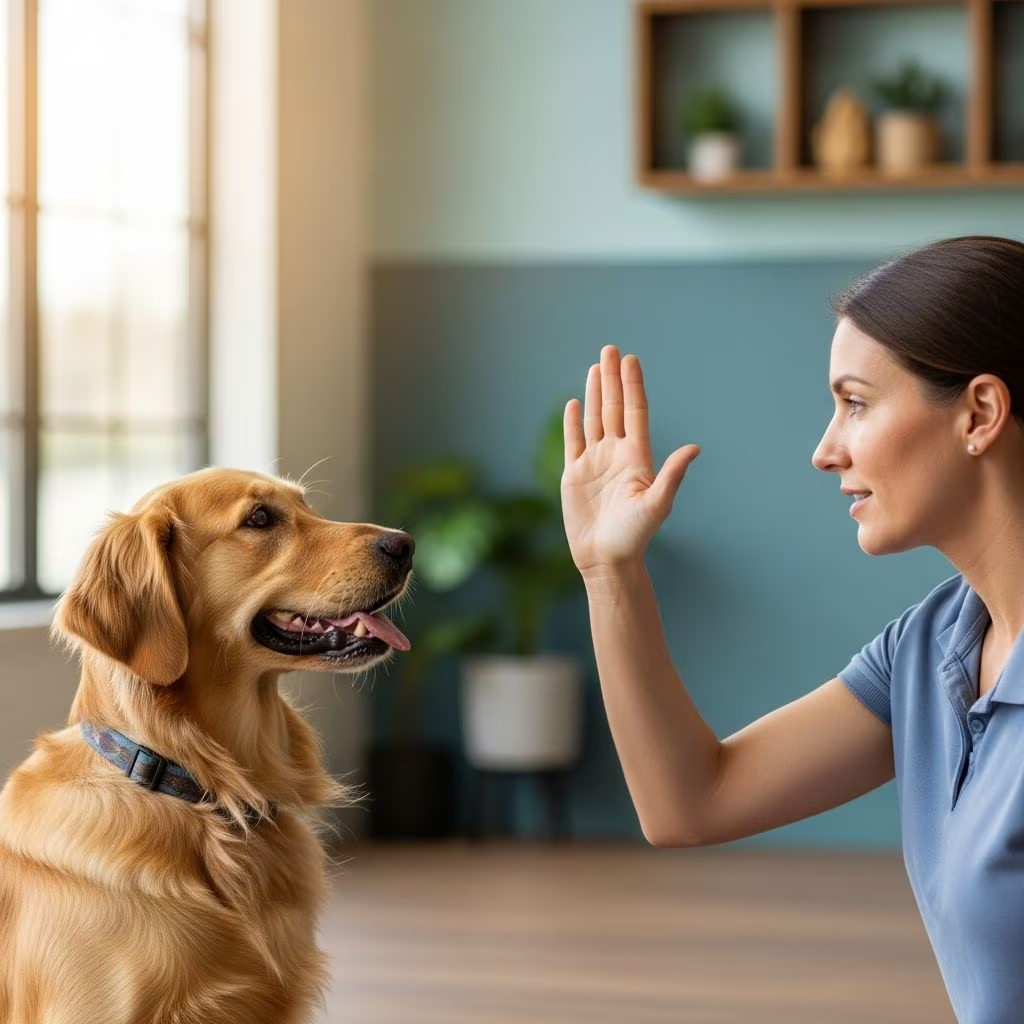
Hand signals offer a powerful way to communicate with dogs, especially when verbal commands fall short due to distance, noise, or hearing challenges. These visual cues build on natural dog instincts, fostering quicker learning and stronger bonds between pet and owner.
Why Visual Cues Trump Verbal Commands
Dogs primarily interpret the world through sight, making hand signals highly effective. In environments like parks or busy streets where shouts get lost, a simple gesture ensures clear instruction. Studies from canine behavior experts note that visual signals often elicit faster responses than words alone, as they mimic natural body language dogs already understand.
For hearing-impaired dogs, hand signals become essential, transforming training into an accessible process. Owners report improved compliance rates when pairing signals with rewards, creating reliable obedience without reliance on voice.
Essential Hand Signals for Everyday Training
Begin with foundational commands that form the basis of obedience. Consistency in motion and positioning is key to success.
- Sit: Raise your palm-up hand from your side to shoulder level in a scooping arc, guiding the dog’s gaze upward as their rear lowers.
- Down: From shoulder height, flick your palm-down hand toward the ground, encouraging the dog to drop fully.
- Stay: Extend your arm forward with palm out like a stop sign, holding steady to signal immobility.
- Come: Pat your chest or sweep your hand inward from the side, palm up, drawing the dog toward you.
These core signals cover 80% of daily interactions, from preventing door dashes to calming excited greetings.
Advanced Tricks to Boost Engagement
Once basics are solid, introduce fun maneuvers that sharpen focus and entertain.
| Signal | Description | Motion |
|---|---|---|
| Spin | Encourages a full circle, ideal for redirecting attention. | Circular finger motion at eye level. |
| High Five | Paw-to-palm contact for interaction. | Outstretched palm at dog’s height. |
| Roll Over | Full body roll for playfulness. | Arm arc mimicking the roll path. |
| Crawl | Low belly scoot from down position. | Low hand pull parallel to ground. |
Tricks like these not only impress but reinforce impulse control and body awareness.
Proven Step-by-Step Teaching Methods
Training hinges on positive reinforcement. Use high-value treats like dehydrated meat to motivate.
Phase 1: Pairing with Known Verbal Cues
If your dog knows ‘sit’ verbally, add the signal simultaneously. Lure with a treat following the hand path, mark success with a clicker or ‘yes!’, and reward immediately. Repeat 5-10 times per session.
Phase 2: Fading the Lure
Introduce the signal without food in hand but reward from your other palm. Gradually reduce verbal prompts, relying solely on the gesture. Sessions should last 5-10 minutes to maintain focus.
Phase 3: Proofing in Real Scenarios
Test in low-distraction areas first, then add movement, distance, and mild distractions like toys. Reward heavily for compliance under challenge.
Pro tip: Always secure eye contact before signaling by crouching or using a gentle touch.
Overcoming Common Training Hurdles
Dogs may confuse similar gestures, so select distinct motions—avoid overlapping ‘sit’ and ‘down’ paths. If progress stalls, revert to easier successes and end positively to build confidence.
For stubborn pups, shorten sessions or increase treat value. Patience yields results; most dogs master basics in 1-2 weeks with daily practice.
Special Considerations for Service and Working Dogs
Service dogs benefit immensely from precise signals for tasks like alerting or retrieving. Directional cues, such as pointing left/right for navigation, require advanced drills with bumpers or toys to ingrain directionality. Steady practice ensures reliability in high-stakes environments.
Tools and Accessories for Success
- Clickers for precise timing.
- Treat pouches for quick access.
- Training charts for reference (printable PDFs available online).
- High-visibility gloves for low-light training.
Incorporate these to streamline sessions and track improvement.
Frequently Asked Questions
Can any dog learn hand signals?
Yes, all breeds and ages respond well, though puppies pick up faster due to plasticity.
What if my dog ignores signals?
Revisit basics, ensure rewards motivate, and eliminate distractions.
Are hand signals better than verbal?
They’re complementary; use both for versatility.
How long until fluency?
Basics in days, fluency in weeks with consistency.
Ideal for deaf dogs?
Perfect—start from scratch with luring techniques.
Long-Term Benefits of Signal Training
Beyond obedience, hand signals enhance mutual understanding, reduce frustration in communication gaps, and prepare dogs for competitions or therapy work. Owners notice calmer, more attentive companions overall.
Integrate signals into daily routines: signal ‘sit’ before meals or ‘down’ during TV time. This repetition solidifies habits effortlessly.
Sample Weekly Training Schedule
| Day | Focus Signals | Duration | Tips |
|---|---|---|---|
| Monday-Wednesday | Sit, Down | 5 min x 2 | Quiet room, high treats. |
| Thursday-Saturday | Stay, Come | 7 min x 2 | Add distance. |
| Sunday | Review + Trick | 10 min | Fun park outing. |
This plan balances learning and prevents burnout.
References
- Dog Hand Signals for Training: How to Use + PDF Chart — Pupford. 2023-05-15. https://pupford.com/blogs/all/dog-training-hand-signals
- How to Train a Dog With Hand Signals — Service Dog Training School. 2024-02-10. https://www.servicedogtrainingschool.org/blog/dog-hand-signals-training
- Dog Training Hand Signals: Learn to Speak Dog with Your Hands — K9 Connoisseur. 2023-11-20. https://k9connoisseur.com/blogs/news/dog-training-hand-signals
- 12 Hand Signals for Dog Training – Free Chart — Woofz. 2024-01-05. https://www.woofz.com/blog/hand-signals-for-dogs/
- How to Teach Hand Signals and Hand Casting Drills to a dog — D.T. Systems (YouTube). 2022-08-12. https://www.youtube.com/watch?v=gh5Va9v7Pa0



