

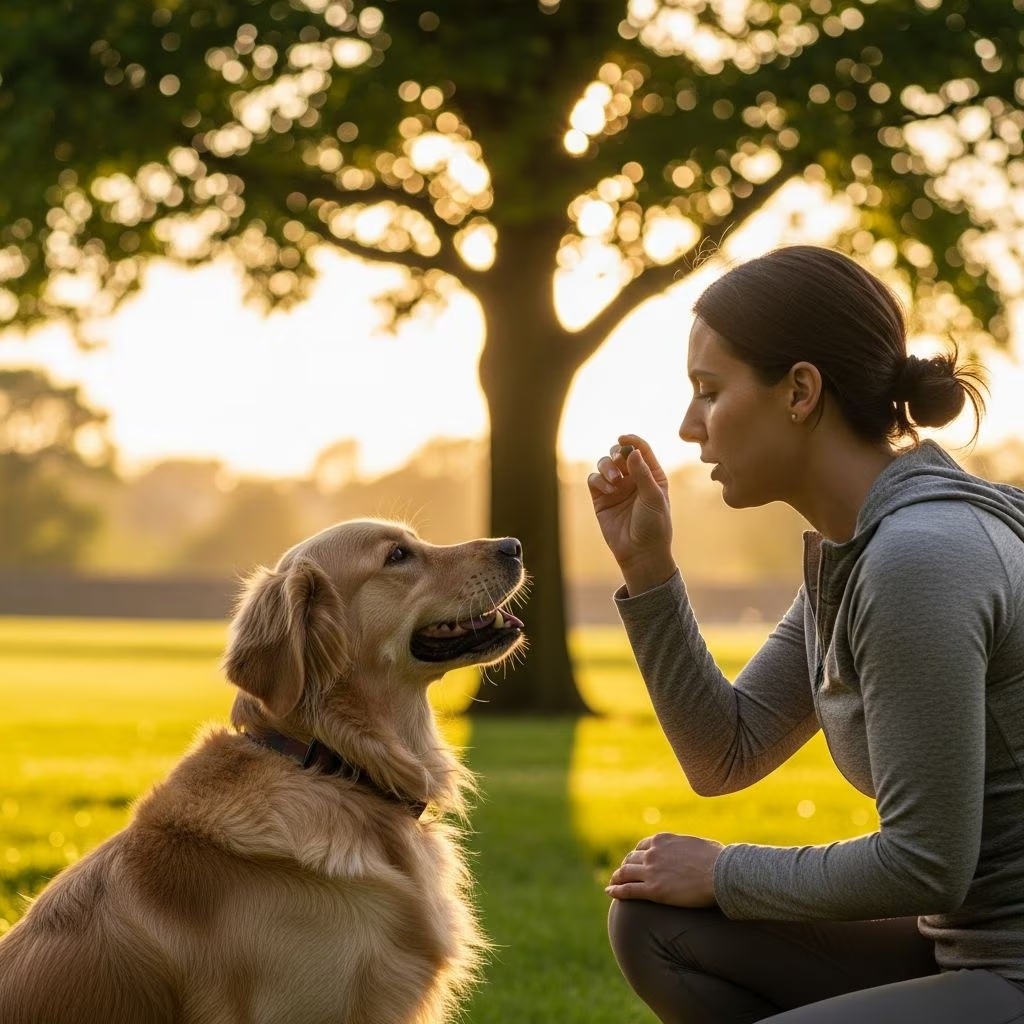
Teaching your dog to focus on a cue is foundational for effective training and everyday harmony. This skill ensures your pet responds reliably, even in stimulating environments, fostering a deeper partnership through clear communication and rewards.
Why Focus Matters in Canine Behavior
A dog’s ability to concentrate on you amid distractions directly impacts obedience and safety. Without it, basic commands falter in parks, homes, or busy streets. Focus training builds impulse control, reduces reactivity, and enhances learning speed by making your dog eager to engage voluntarily.
Research from animal behavior studies shows that dogs with strong attention spans exhibit fewer problem behaviors, as they learn to prioritize handler cues over environmental temptations. This voluntary attention, rather than forced compliance, leads to enthusiastic responses and long-term retention.
Foundational Principles of Attention Cues
Start with understanding cues as gentle prompts rather than strict orders. They signal expected behaviors, creating a shared language. Common starters include name recognition for initial eye contact, evolving into specific “look” or “watch” signals.
- Name Response: Say your dog’s name; reward immediate head turns.
- Eye Contact Hold: Gradually extend duration before rewarding.
- Verbal Markers: Use a consistent “yes” or clicker to bridge cue and reward.
Consistency across family members prevents confusion. Short, distinct words work best, paired with hand signals for reinforcement, especially for hearing-impaired or high-energy dogs.
Step-by-Step Guide to Building Focus
Begin in quiet settings to establish the behavior chain: cue, response, reward.
- Capture Natural Attention: When your dog looks at you spontaneously, mark and treat immediately. Repeat until they offer eye contact frequently.
- Introduce the Cue: Just before they look away, say “watch” and reward sustained gaze. Click precisely before breaks to teach duration.
- Increase Duration: Extend eye contact from 1 second to 10, rewarding in position to discourage movement.
- Add Distance: Step back slightly, cueing focus; return to reward high-value treats.
Practice 5-minute sessions multiple times daily. Sessions end on success to maintain motivation.
Proofing Against Distractions
Once basic focus solidifies in low-distraction zones, introduce real-world challenges systematically. This “proofing” ensures cues generalize across contexts.
| Distraction Level | Examples | Training Tips |
|---|---|---|
| Low | Quiet room, mild toys | Practice sequences: watch, sit, watch. |
| Medium | Family members moving, low noise | Use higher-value rewards; stay close. |
| High | Park with dogs/people, sudden sounds | Short bursts; regress if failure rate exceeds 20%. |
Key: Incremental progression prevents frustration. If success dips below 80%, reduce difficulty. Pattern games, like alternating cues while tossing toys nearby, build resilience.
Integrating Focus with Core Commands
Layer focus onto basics like sit, stay, and recall for seamless obedience.
- Sit-Stay Focus: Cue sit, then watch; release with “okay.” Reward in position.
- Recall Chain: Call name, cue watch upon approach, then treat.
- Relax Integration: Pair with down-stay for calm in stimulating spots.
Use targeting cues like “touch” (nose to hand) to redirect attention during walks or emergencies, boosting recall reliability.
Advanced Techniques for Reliability
For competition or high-distraction lifestyles, employ variable reinforcement schedules. Randomize rewards to mimic real life, increasing persistence.
Incorporate environmental cues: Leash tension or door opening signals focus need. Games like “spot work”—performing at marked locations—enhance location-independent responses.
Address common pitfalls:
- Overuse: Reserve cues for key moments to preserve value.
- Poor Timing: Mark within 0.5 seconds of desired behavior.
- Motivation Lags: Rotate rewards (food, toys, play) to sustain interest.
Tools and Rewards for Success
High-value treats (chicken, cheese) drive initial learning; fade to life rewards like walks. Clickers provide precise feedback; charge by pairing with treats 20-30 times first.
Hand targets build focus independently of food, useful for non-motivated dogs. Toys or praise suit play-driven breeds.
Troubleshooting Focus Challenges
Breed traits influence ease: Herding dogs focus quicker; scent hounds need more proofing.
- Dog Breaks Early: Lure back, reward longer holds.
- Ignores in Public: Practice micro-sessions; up rewards.
- Hyper Arousal: Insert relaxation exercises pre-training.
Patience yields results; most dogs master basics in 2-4 weeks with daily practice.
Benefits Beyond Obedience
Focus training strengthens bonds, reduces anxiety, and improves socialization. Dogs learn self-control, translating to fewer vet visits from mishaps and calmer households.
FAQs
What age is best for focus training?
Puppies from 8 weeks; adults benefit anytime with adjusted pacing.
How often should I train?
3-5 short sessions daily; quality over quantity.
Can I train without treats?
Yes, via toys/praise, but food accelerates learning.
What if my dog has separation anxiety?
Build gradual independence; consult pros for severe cases.
Does breed affect focus ease?
Yes, but all improve with consistent methods.
References
- Teach Your Dog to Stay on Cue Step by Step — Delta Tails. 2023-05-15. https://www.deltatails.com/blog/teach-your-dog-to-stay-on-cue
- Cue Proofing & Distraction Training for Real-World Obedience — Laylo Pets. 2024-02-10. https://www.laylopets.com/blogs/barkives/mastering-real-world-dog-obedience-cue-proofing-distraction-training-for-dogs
- Teach Your Dog to Focus On Cue! — Whole Dog Journal. 2023-11-20. https://www.whole-dog-journal.com/training/teach-your-dog-to-focus-on-cue/
- Implementing Effective Training Cues in Dog Training Lessons — The Training of Dogs. 2024-08-05. https://www.thetrainingofdogs.com/post/implementing-effective-training-cues-in-dog-training-lessons
- Using Cues And Markers To Be A More Effective Dog Trainer — So Much Petential. 2023-09-12. https://somuchpetential.com/using-cues-and-markers-to-be-a-more-effective-dog-trainer/



