

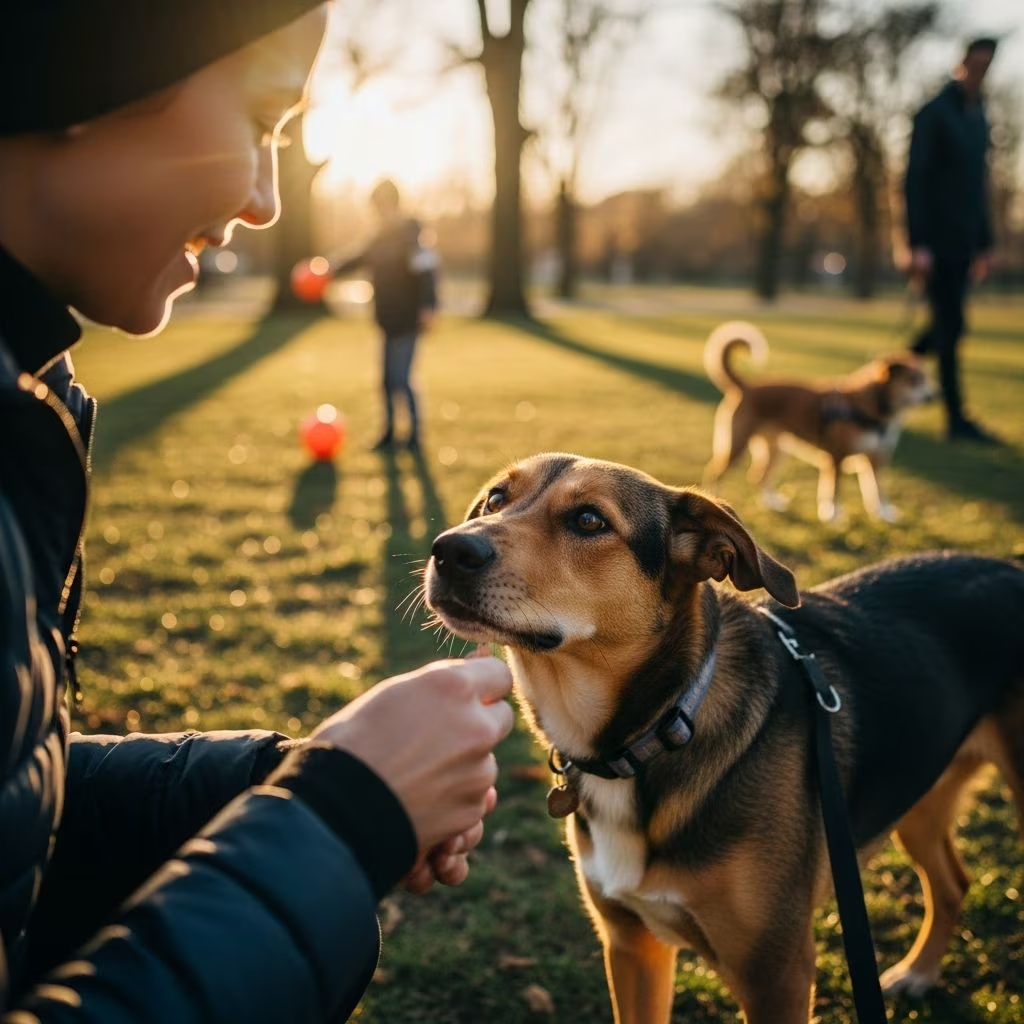
Every dog owner faces the challenge of a pet that zones out when exciting things happen nearby. Whether it’s a squirrel darting across the yard or the chaos of a busy sidewalk, teaching your dog to prioritize your cues over temptations is essential for safety and harmony. This guide draws from proven positive reinforcement methods to build a rock-solid focus that holds up anywhere.
Understanding Why Dogs Get Distracted
Dogs live in a world bursting with stimuli. Their keen senses pick up scents, sounds, and movements that we might overlook. Distractions aren’t defiance; they’re natural instincts kicking in. For service dogs or everyday pets, learning to filter these out means associating your commands with greater rewards than the environment offers.
Common culprits include other animals, food smells, loud vehicles, or even friendly strangers reaching out. Recognizing these helps you prepare training sessions that mimic real life, gradually building your dog’s ability to choose focus over fixation.
Building a Strong Foundation Indoors
Before tackling the outside world, solidify basics in a calm space. Commands like sit, stay, and watch me form the bedrock. Practice these without any interference to create muscle memory.
- Start sessions short: 5-10 minutes to keep engagement high.
- Use a consistent marker like a clicker to pinpoint exact good behavior.
- Pair cues with immediate rewards to forge strong links.
Once proficient indoors, introduce mild distractions like a rolling toy. Reward heavily for compliance, teaching that listening pays off even with novelties present.
Gradual Exposure: The Key to Proofing Behaviors
Rush into high-distraction zones, and failure is guaranteed. Instead, layer challenges systematically. Begin far from the stimulus where your dog can still respond.
| Distraction Level | Distance | Reward Frequency | Example |
|---|---|---|---|
| Low | 20+ feet | Every response | Quiet room with toy on floor |
| Medium | 10-15 feet | Every 2-3 responses | Backyard with distant dog |
| High | 5 feet or less | High-value treats | Park with passing joggers |
This table outlines progression. At each stage, ensure success rates above 80% before advancing. Distance shrinks the stimulus’s pull, allowing desensitization—your dog notices but stays engaged.
Boosting Rewards for Maximum Engagement
Ordinary kibble won’t cut it against a squirrel. Switch to high-value motivators: bits of chicken, cheese, or favorite toys. Temporarily ramp up delivery—reinforce every correct action instead of spacing them out.
For leash walking, if your dog manages 20 steps cleanly in quiet areas, drop to every 4-5 in busier spots. This higher rate keeps their brain locked on you, outcompeting distractions. Gradually stretch intervals as proficiency grows.
Attention Cues That Regain Control Instantly
A powerhouse tool is the “watch me” or “look” cue. Hold a treat near your eyes, say the word when they connect, and reward. Practice until eye contact happens on verbal cue alone.
In distractions, use it proactively: spot a potential puller-of-focus, cue watch me, reward focus. This interrupts impulses and redirects to you as the ultimate good thing.
Incorporating Play and Permission into Training
Make sessions fun to compete with environmental excitement. Intersperse commands with quick games of tug or fetch. After compliance, release with “okay” for brief exploration—sniffing or greeting—but recall and reward promptly.
This Premack principle leverages high-value activities (exploring) to reinforce focus. Your dog learns good things flow from you, not random stimuli.
Real-World Application: From Park to Store
Transition indoors to outdoors mirrors life. In parks, practice recalls amid romping dogs. At stores, work heel amid carts and smells. Scan ahead—situational awareness lets you preempt issues by cuing focus before distractions hit.
Vary locations: trails, urban walks, backyards. Repetition in diverse spots cements reliability. For service prospects, simulate public access tests with crowds and noises.
Common Roadblocks and Fixes
- Too fixated? Back up distance immediately; don’t push through failure.
- Losing interest? Up reward value or add play bursts.
- Regression in new spots? Reset criteria lower, rebuild gradually.
- Pulling toward people? Teach polite greetings on cue only after sits.
Patience is vital. Sessions end on wins to build confidence.
Advanced Techniques for Ironclad Obedience
Once basics stick, layer the three Ds: distance, duration, distraction—but one at a time. Toss rewards as distractions themselves to teach impulse control. Use known behaviors as chains: sit leads to watch, to stay amid movement.
Track progress in a journal: environments, success rates, adjustments. Consistency across family members prevents confusion.
FAQs: Quick Answers to Top Questions
How long until my dog ignores distractions fully?
Weeks to months, depending on breed, age, and practice frequency. Daily short sessions yield fastest results.
What if my adult dog is super stubborn?
Revert to puppy-level basics with ultra-high rewards. Motivation trumps age; persistence pays.
Are clickers necessary?
Not essential but precise markers speed learning by clarifying timing.
Can puppies start this training?
Yes, from 8 weeks, keeping sessions playful and criteria easy.
What about shock collars?
Positive methods build willing focus without fear; they’re outdated for most.
Long-Term Maintenance for Lifelong Focus
Distraction training never fully ends—it’s ongoing. Weekly refreshers in tough spots keep skills sharp. As bonds deepen, your presence alone becomes the top reward.
Owners report transformed walks: loose leashes, prompt recalls, calm public behavior. Invest now for a lifetime of reliable partnership.
References
- What Squirrel? 10 Techniques for Training with Distractions — Clickertraining.com. Accessed 2026. https://clickertraining.com/what-squirrel-10-techniques-for-training-with-distractions/
- Training a Distracted Dog: How Service Dogs Learn to Stay Focused — Putnam Service Dogs. Accessed 2026. https://www.putnamservicedogs.org/blog/training-a-distracted-dog/
- Six Tips To Use Distractions In Dog Training — So Much PETential. Accessed 2026. https://somuchpetential.com/six-tips-to-use-distractions-in-dog-training/
- Keeping Your Dog Focused, Not Distracted from People — Alan’s K9 Academy. Accessed 2026. https://www.alansk9academy.com/blogs/keeping-your-dog-focused-not-distracted-from-people-tips-for-better-attention-and-obedience
- 6 Simple Steps for Effective Dog Distraction Training — Dogtra. Accessed 2026. https://dogtra.com/blogs/training-blog/6-simple-steps-for-effective-dog-distraction-training
- Training Your Dog to Ignore Distractions — American Kennel Club (AKC). Accessed 2026. https://www.akc.org/expert-advice/training/training-dogs-to-ignore-distractions/



