

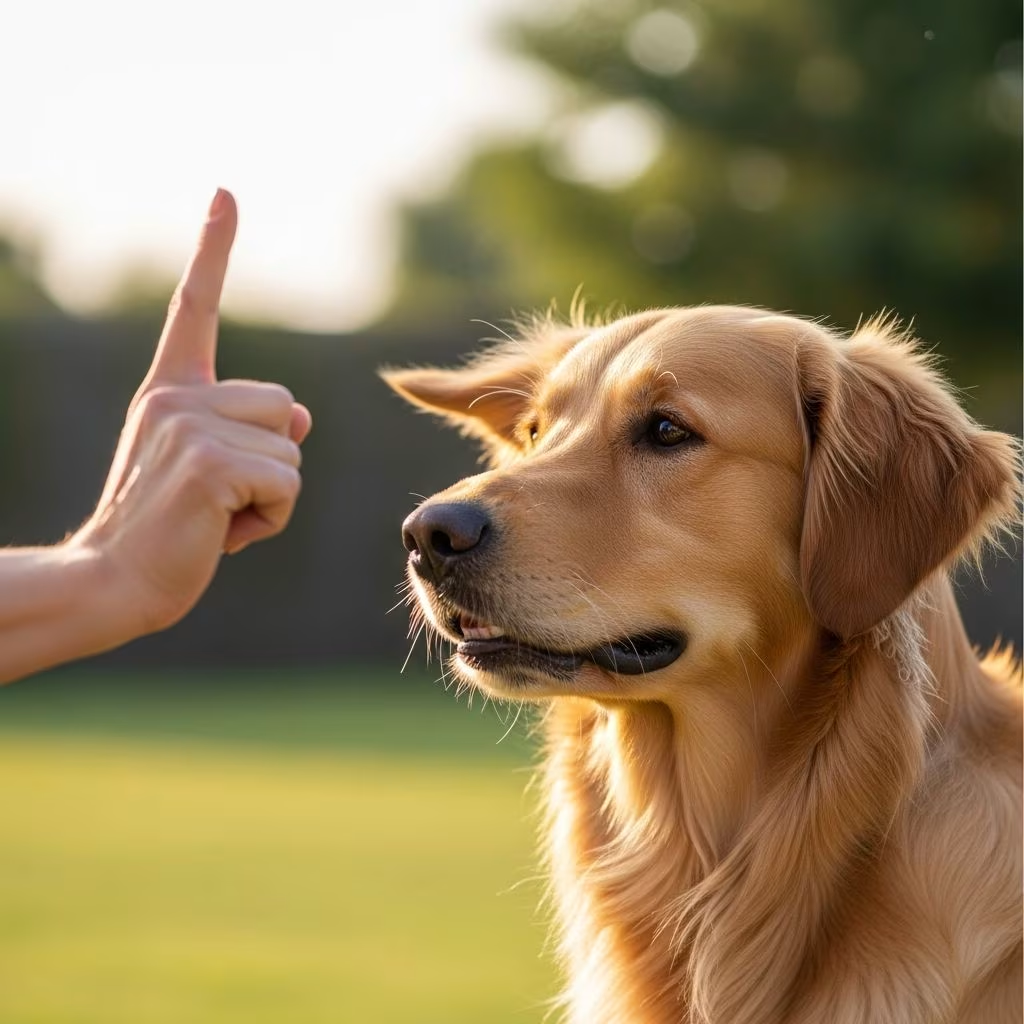
Effective dog training hinges on clear communication between handler and canine. Adding a cue—whether verbal or visual—to a behavior transforms random actions into reliable responses. This process requires patience, precise timing, and consistent reinforcement. By following structured methods, owners can teach dogs to respond promptly in various environments, enhancing obedience and strengthening the human-animal bond.
Understanding Cues in Modern Dog Training
Cues serve as signals prompting specific actions from dogs. Unlike commands implying force, cues invite voluntary performance, often paired with rewards. Positive reinforcement, using markers like clickers, conditions dogs to associate cues with positive outcomes. Research from animal behavior studies emphasizes that well-timed cues build fluency, allowing dogs to discriminate between behaviors reliably.
Key principles include starting without cues to shape behaviors naturally, then layering signals. This avoids confusion and dependency on lures. Trainers recommend waiting until a behavior occurs 80-90% reliably before introducing cues, ensuring the dog understands the action independently.
Preparing Behaviors for Cue Integration
Before adding cues, solidify the target behavior through shaping or luring. Shaping involves rewarding successive approximations, while luring uses food to guide the dog into position. Once fluent—meaning the dog offers the behavior without prompts—it’s cue-ready.
- Assess reliability: Bet on the behavior succeeding nine out of ten times.
- Eliminate lures: Ensure no food or gestures prompt the action.
- Use a marker: A clicker or verbal ‘yes’ bridges behavior and reward precisely.
For stationary behaviors like sit or down, reset the dog by tossing treats to encourage repetition. This maintains momentum without physical intervention.
Core Method: Timing the Cue Introduction
The golden rule: Deliver the cue just before the dog performs the behavior. This links the signal directly to the action in the dog’s mind. Practice in short sessions of 5-10 minutes to keep engagement high.
- Observe the dog’s natural offering.
- Say the cue or signal subtly one second prior.
- Mark success immediately with a click, followed by a treat.
- Repeat 5-10 times, pausing briefly between to prevent anticipation.
If the dog anticipates prematurely, withhold the mark and wait for a natural pause. This teaches patience and cue dependency. For dynamic behaviors like ‘come,’ incorporate movement: Step back while cuing to prompt approach, then reverse for sits.
Fading Lures and Transitioning Signals
Many start with lures, but dogs can become cue-dependent. Fade them gradually:
| Step | Action | Purpose |
|---|---|---|
| 1. Full Lure | Use food to guide position | Teach initial behavior |
| 2. Verbal Addition | Say cue during lure | Pair word with action |
| 3. Hand Signal | Replace food with gesture | Reduce food dependency |
| 4. Minimize Signal | Shrink gesture to subtle motion | Promote independence |
After 10 repetitions of the old signal, introduce the new one first: New cue + old cue + mark + reward. Gradually phase out the old, ensuring the dog responds to the new alone.
Building Cue Fluency Across Environments
Initial training often occurs in low-distraction settings. Generalize by progressing through scenarios:
- Home rooms: Kitchen, living room.
- Outdoors: Yard, park.
- Distractions: People, dogs, noises.
Practice ‘two-fers’—chaining cues like sit-touch—for efficiency. Reward generously in novel spots to boost confidence. Aim for three solid cues before expanding; dogs then grasp the cue concept faster.
Advanced Techniques for Multiple Cues
For dogs knowing several behaviors without cues, add them pairwise. Train opposites simultaneously: Cue ‘come’ while stepping back, then ‘sit’ advancing. This efficiency yields two cues in minutes. For cue changes, use the ‘What did you do last?’ game: Repeat old cue 10 times, then insert new before old.
Visual learners benefit from hand signals first, transitioning to verbal. Ensure signals are distinct to avoid overlap—e.g., palm up for sit, flat hand for stay.
Common Pitfalls and Fixes
Trainers often err by cuing too early or inconsistently. Fixes include:
Anticipation: Ignore premature offers; cue only during natural pauses.
Distraction Failure: Return to basics in quieter areas; rebuild gradually.
Cue Confusion: Use unique words/signals; proof discriminatively.
Track progress with a journal: Note success rates per session and location.
Benefits of Strong Cue Training
Well-cued dogs exhibit calmer demeanors, quicker learning, and safer public behavior. Owners report reduced frustration and deeper bonds. Studies from veterinary behaviorists confirm positive methods like these yield longer-lasting results than aversive ones.
FAQ
Q: When is a behavior ready for a cue?
A: When it occurs reliably without prompts, succeeding 90% of the time.
Q: Verbal or hand signal first?
A: Hand signals often precede verbals for visual dogs; test preference.
Q: How long until real-world use?
A: 1-2 weeks of daily practice across environments.
Q: What if my dog ignores the cue?
A: Revert to shaping; ensure high-value rewards and low distractions.
Q: Can I train multiple cues daily?
A: Limit to 1-2 per session to avoid overload.
Sample Training Plan
Week 1: Shape sit/down without cues.
Week 2: Add verbal cues indoors.
Week 3: Introduce signals; practice chains.
Week 4: Generalize outdoors.
References
- Adding the Cue: A Unique Approach — Karen Pryor Clicker Training. 2023-05-15. https://clickertraining.com/adding-the-cue-a-unique-approach/
- Training How-To: Adding a Cue — Crossbones Dog Academy. 2024-02-10. https://crossbonesdog.com/training-how-to-adding-a-cue/
- Dog Training Question ~ When Do I Add a Cue? — Susan Garrett Dog Agility. 2018-09-01. https://susangarrettdogagility.com/2018/09/when-do-i-add-a-cue/
- Adding a verbal cue or changing a cue — Dogmantics Dog Training. 2022-11-20. https://dogmantics.com/adding-a-verbal-cue-or-changing-a-cue/
- Dog Training Basics: How to Teach a Cue — Whole Dog Journal. 2023-08-12. https://www.whole-dog-journal.com/behavior/dog-training-basics-how-to-teach-a-cue/



