

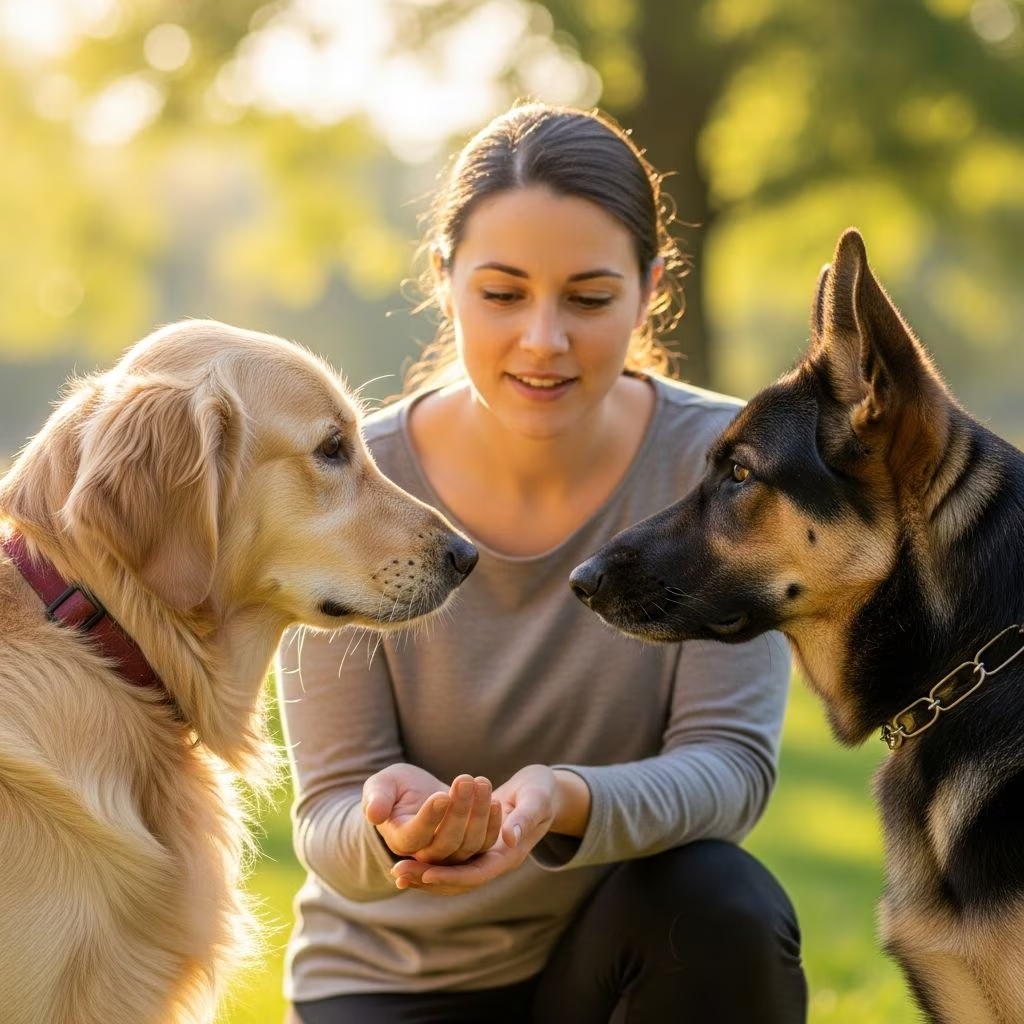
Effective communication forms the foundation of a successful relationship between humans and dogs. Dogs primarily interpret the world through visual cues, sounds, and scents rather than complex verbal language. By aligning our interactions with their natural modes of understanding, pet owners can foster trust, reduce misunderstandings, and enhance training outcomes. This guide explores proven methods to bridge the species gap, drawing on canine behavior principles to help you convey intentions clearly.
Understanding Canine Perception Basics
Dogs process information differently from humans. While people rely heavily on spoken words, canines prioritize body posture, facial expressions, and olfactory signals. Vocalizations like barks or whines supplement these, but they rarely convey precise details. Humans, as listeners, often overlook this, leading to confusion during interactions. Recognizing that dogs are watchers helps owners adjust their approach for clearer exchanges.
Key differences include the emotional focus of dog signals versus the specificity of human speech. A dog’s raised tail or lowered ears expresses feelings like excitement or fear, not step-by-step instructions. Adapting to this promotes more intuitive bonds.
The Power of Consistent Verbal Commands
Delivering commands once establishes reliability. Repeating instructions teaches dogs that compliance is optional, weakening the cue’s impact—especially in urgent scenarios like recalls near traffic. Use a distinct, high-pitched tone for critical commands to grab attention immediately.
Introduce verbal elements gradually after physical mastery. Consult trainers on timing to avoid overwhelming the dog. Clarity prevents mixed messages, building a pattern where the first utterance prompts action.
Harnessing Marker Signals for Reinforcement
Marker signals pinpoint exact moments of correct behavior, bridging timing gaps since dogs associate rewards with precise actions. Options include a sharp “yes,” clicker sound, or visible hand gestures—ideal for deaf dogs. Follow the marker with treats within 1-3 seconds to solidify the link.
Clickers provide unwavering consistency, unaffected by voice fluctuations. Observe subtle responses like ear flicks to confirm engagement. This technique accelerates learning by making successes unmistakable.
Benefits of Marker Training
- Precise timing enhances association speed.
- Consistency builds dog confidence.
- Versatile for various skills and environments.
Combining Words with Visual Cues
Dogs excel at decoding body language, mirroring pack dynamics. Pair spoken words with gestures for reinforced messaging. For “sit,” extend an open palm alongside the cue; over time, the signal alone suffices. This leverages their innate visual prowess.
All human movements influence perception—from posture to gaze. Soft facial expressions signal safety, while direct stares can intimidate. Integrate these holistically for comprehensive communication.
Mastering Tone and Volume Variations
Tone conveys intent powerfully. High pitches excite and encourage, suiting play or praise. Lower registers assert calm corrections without aggression. Volume amplifies: loud highs energize, while soft lows soothe.
| Tone Type | Effect on Dog | Best Uses |
|---|---|---|
| High Pitch | Excitable, friendly | Praise, invitations to play |
| Low Pitch | Calm, corrective | Settling, boundaries |
| High Volume High Pitch | Highly arousing | Urgent recalls |
| Quiet Low Pitch | Focused, sincere | Training corrections |
Strategic Use of Body Language
Body orientation speaks volumes. Turn sideways to appear less threatening, averting eyes to de-escalate tension. Lean away during corrections to signal displeasure without confrontation. Happy, soft faces invite interaction, while stiff postures warn of discomfort.
Movement direction guides focus: forward leans engage, retreats disengage. Dogs synthesize these with voice for full context, interpreting holistic intent.
Proactive Behavior Shaping Techniques
Prevent issues by demonstrating desired actions preemptively. Interrupt unwanted behaviors with neutral sounds like “eh-eh,” then guide to alternatives, such as sitting for greetings. Leash control during guest arrivals sets calm precedents, rewarding four-on-the-floor composure.
Teach polite offerings proactively. This success-oriented method minimizes errors, reinforcing positive habits efficiently.
Gradual Progression in Skill Building
Introduce complexities incrementally. Master basics in distraction-free zones like quiet rooms before advancing to busier areas—porches, yards, then streets. Regression during setbacks ensures solid foundations, preventing frustration.
Clear, baby-step communication respects cognitive limits. Dogs grasp concepts through repetition in escalating challenges, not rushed overloads.
Minimizing Verbal Clutter
Dogs filter out extraneous chatter, focusing on key cues. Initiate sessions with a start signal, then silence follows. Avoid mid-training conversations, as they dilute attention via shifting posture and tone.
Post-compliance, lavish concise praise. Brevity maintains clarity, trusting the dog’s comprehension without over-explaining.
Reading and Reciprocating Dog Signals
Effective dialogue requires mutuality. Watch for stress indicators like lip licks or yawning versus calm signals such as play bows. Pheromones and scents also factor, though subtler to humans. Mirror back understanding to affirm connection.
Common Communication Pitfalls to Avoid
- Repeating commands, eroding authority.
- Ignoring body language precedence over words.
- Inconsistent tones confusing intent.
- Over-talking, creating noise overload.
- Rushing progress, leading to failures.
FAQs on Dog Communication
How do I teach my dog a new command?
Start with luring or capturing the behavior using treats and markers, adding verbal cues later. Pair with gestures and practice in low-distraction settings.
Why does my dog ignore me sometimes?
Often due to unclear signals, distractions, or inconsistent training. Refine single-command delivery and body alignment.
Can deaf dogs be trained effectively?
Yes, emphasizing visual hand signals and vibrations. Markers like lights or touches work well.
What’s the best tone for calming a dog?
A steady, low-pitched voice conveys security without excitement.
How long until my dog understands cues?
Varies by breed and consistency; basics take days to weeks with daily short sessions.
Advanced Tips for Lifelong Bonding
Observe pack interactions for insights—dogs prioritize hierarchy and cooperation signals. Incorporate scent games to engage olfactory strengths. Regular, positive exchanges build resilience against stressors.
Track progress in a journal, noting effective cues per context. Adapt as your dog ages, prioritizing comfort signals.
References
- How to Communicate With Your Dog — AKC Pet Insurance. 2023-05-15. https://www.akcpetinsurance.com/blog/7-tips-for-better-communication-with-your-canine
- Canine Communication – Interpreting Dog Language — VCA Animal Hospitals. 2024-01-10. https://vcahospitals.com/know-your-pet/canine-communication—interpreting-dog-language
- How Do I Communicate With My Dog — Beyond The Dog Training. 2023-08-22. https://beyondthedogtraining.com/dog-training/how-do-i-communicate-with-my-dog/
- Dog Communication: Calm vs. Stress Signals — SPCANevada. 2024-02-05. https://spcanevada.org/services/pet-education/animal-ally/dog-communication/
- How to Effectively Communicate with Your Dog — Off The Beaten Trail VT. 2023-11-12. https://www.otbtvt.com/how-to-effectively-communicate-with-your-dog



