

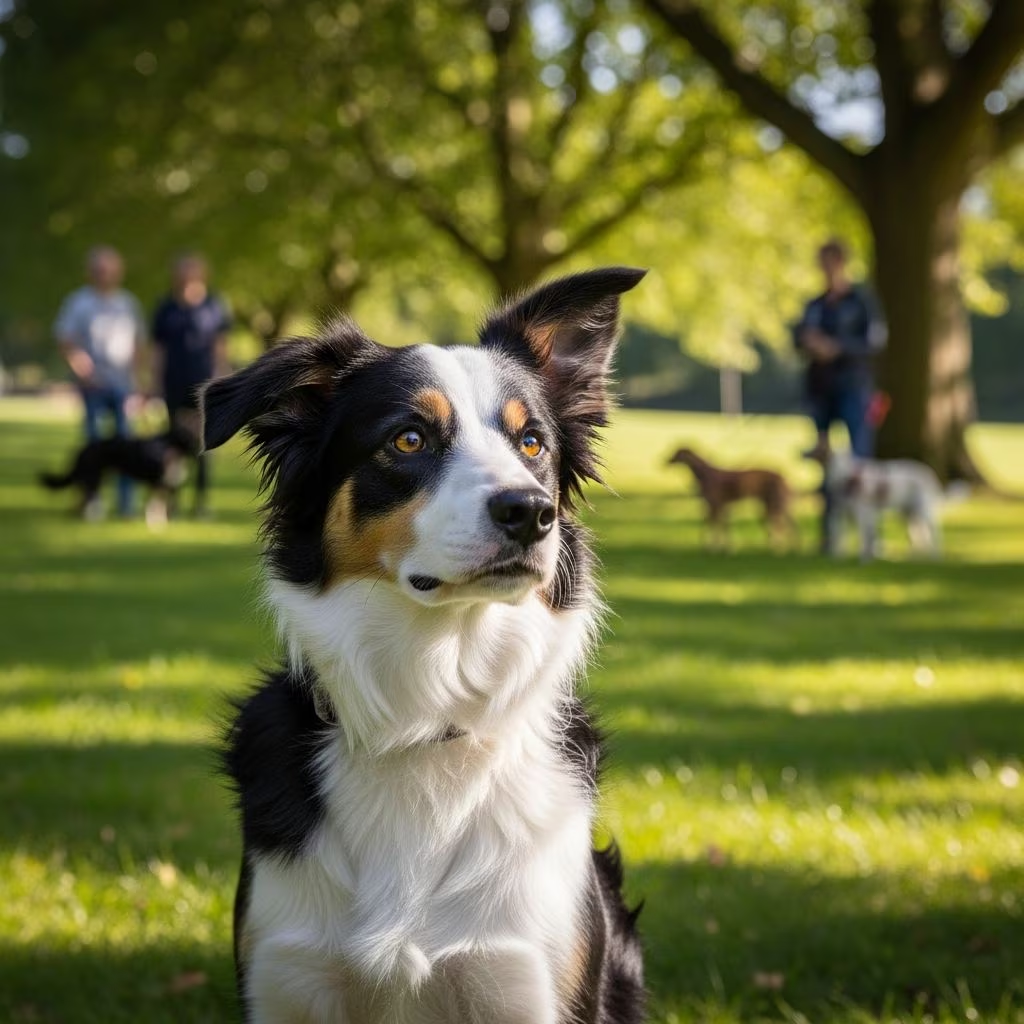
The check-in behavior is a foundational skill that encourages your dog to regularly look to you for guidance, creating a stronger bond and enhancing overall obedience. This simple yet powerful habit makes training other commands easier and ensures safer experiences during walks or in distracting environments.
Why Check-Ins Transform Dog Training
At its core, a check-in occurs when your dog voluntarily turns their attention to you, often through eye contact or orienting their body toward you, without any prompt. This voluntary focus builds self-control and attentiveness, which are crucial for commands like recall, heel, and sit in real-world scenarios.
Owners who prioritize check-ins report fewer pulling issues on leashes, quicker responses to cues, and reduced reactivity to distractions. It’s particularly valuable for high-energy breeds or dogs new to training, as it establishes you as the reliable source of rewards and direction.
Essential Tools and Preparation
Before starting, gather a few key items: high-value treats like small pieces of chicken or cheese, a 6-foot leash, and a marker word such as “yes” or a clicker. Choose quiet indoor spaces initially to minimize distractions.
- Treats: Soft, pea-sized pieces that your dog loves but won’t overfill their stomach.
- Leash: Standard length for control without tension.
- Marker: Precise timing tool to signal the exact moment of desired behavior.
Timing is critical—reward within one second of the check-in to help your dog connect the action with the payoff.
Building the Foundation Indoors
Begin in a low-stimulation room like your living area. Clip the leash to your dog’s collar and stand still. Allow them to explore briefly, then watch for any glance your way.
- Mark the glance immediately with your marker word.
- Deliver the treat promptly.
- Repeat for every voluntary look, increasing frequency over sessions.
Most dogs catch on quickly once they associate glances with rewards. Sessions should last 5-10 minutes, 3-5 times daily, to build the habit without fatigue.
Transitioning to Doorways and Thresholds
Excitement often peaks at doors, making it an ideal training spot. Leash your dog, approach the door calmly, and pause before opening.
| Step | Action | Goal |
|---|---|---|
| 1. Pause at Door | Stand still, ignore pulling | Prevent anticipatory lunging |
| 2. Reward Glance | Mark and treat eye contact | Shift focus from door to you |
| 3. Brief Release | Allow door peek after check-in | Balance training with progress |
| 4. Repeat Cycles | Enter/exit multiple times | Build reliability |
This method teaches patience and refocuses energy on you, reducing door-dashing risks.
Outdoor Practice in Controlled Areas
Once indoor check-ins are consistent, move to a fenced yard or quiet porch. Let your dog sniff and observe, intervening only with rewards for attention.
Stand motionless, rewarding spontaneous check-ins. Gradually introduce mild distractions like distant sounds. If focus wanes, return indoors—no punishment, just reset.
Consistency turns sporadic glances into automatic behavior, even amid birds or passersby.
Integrating Check-Ins into Walks
On leash walks, say your dog’s name cheerfully when they drift. Mark the response and treat. Avoid repeating the name; wait patiently.
- Start in low-traffic areas.
- Progress to busier streets as reliability grows.
- Fade treats over time, using praise or play.
This establishes leadership subtly, as your dog learns to seek your cues before proceeding.
Advanced Applications for Real-Life Scenarios
Beyond basics, check-ins enhance recall training. Pair with a long line in open spaces: call, reward check-in, then release to play.
In multi-dog households, practice one-on-one to ensure individual attention. For reactive dogs, use check-ins to interrupt fixation on triggers.
Recall Enhancement
During play, pause and reward check-ins before resuming. This makes you the fun focal point.
Distraction Proofing
Introduce controlled distractions like toys or squeaks, rewarding returns to you.
Common Mistakes and Fixes
Avoid these pitfalls for faster progress:
- Overusing the Name: Limits voluntary check-ins; use sparingly.
- Poor Timing: Late rewards confuse; practice marker precision.
- Ignoring Setbacks: If regression occurs, downshift to easier settings.
- Inconsistent Rewards: Variable schedules maintain interest long-term.
Progress Tracking and Milestones
Monitor with a simple journal:
| Week | Indoor Success Rate | Outdoor Check-Ins/Min | Notes |
|---|---|---|---|
| 1 | 80% | 2-3 | Strong starts |
| 2 | 95% | 5+ | Walk integration |
| 4 | Automatic | Continuous | Minimal treats |
Celebrate milestones with extra play to reinforce positivity.
Frequently Asked Questions
What if my dog ignores me during training?
Reduce distractions and increase treat value. Be patient—some dogs need 20-30 reps per session.
Can puppies as young as 8 weeks learn this?
Yes, start gently with short sessions to match short attention spans.
How do I fade out treats?
Shift to 1:3 ratio (reward every third check-in), then praise or life rewards like continuing the walk.
Does this work for fearful or rescue dogs?
Absolutely; it builds trust through positive association without pressure.
What’s the difference between check-in and ‘watch me’?
Check-in is voluntary and ongoing; ‘watch me’ is a prompted cue.
Long-Term Benefits for You and Your Dog
Consistent check-in training leads to a more attentive, confident companion. Walks become cooperative adventures, vet visits smoother, and off-leash reliability higher. Invest time now for a lifetime of harmonious partnership.
References
- Train Your Dog to “Check In” — Whole Dog Journal. 2023. https://www.whole-dog-journal.com/training/train-your-dog-to-check-in/
- A List of Dog Commands & Hand Signals for Beginners — Taste of the Wild Pet Food. 2024-03-15. https://www.tasteofthewildpetfood.com/articles/training-and-behavior/list-of-dog-commands-hand-signals-for-beginners/
- Using “The Check-In Method” To Make Walking Your Dog A Breeze — All Things Pups. 2023-08-10. https://allthingspups.com/using-the-check-in-method-to-make-walking-your-dog-a-walk-in-the-park/
- Automatic Check-Ins with Your Dog for Self-Control & Focus — Summit Dog Training (YouTube). 2024-01-22. https://www.youtube.com/watch?v=_PVhI58DUwM



