

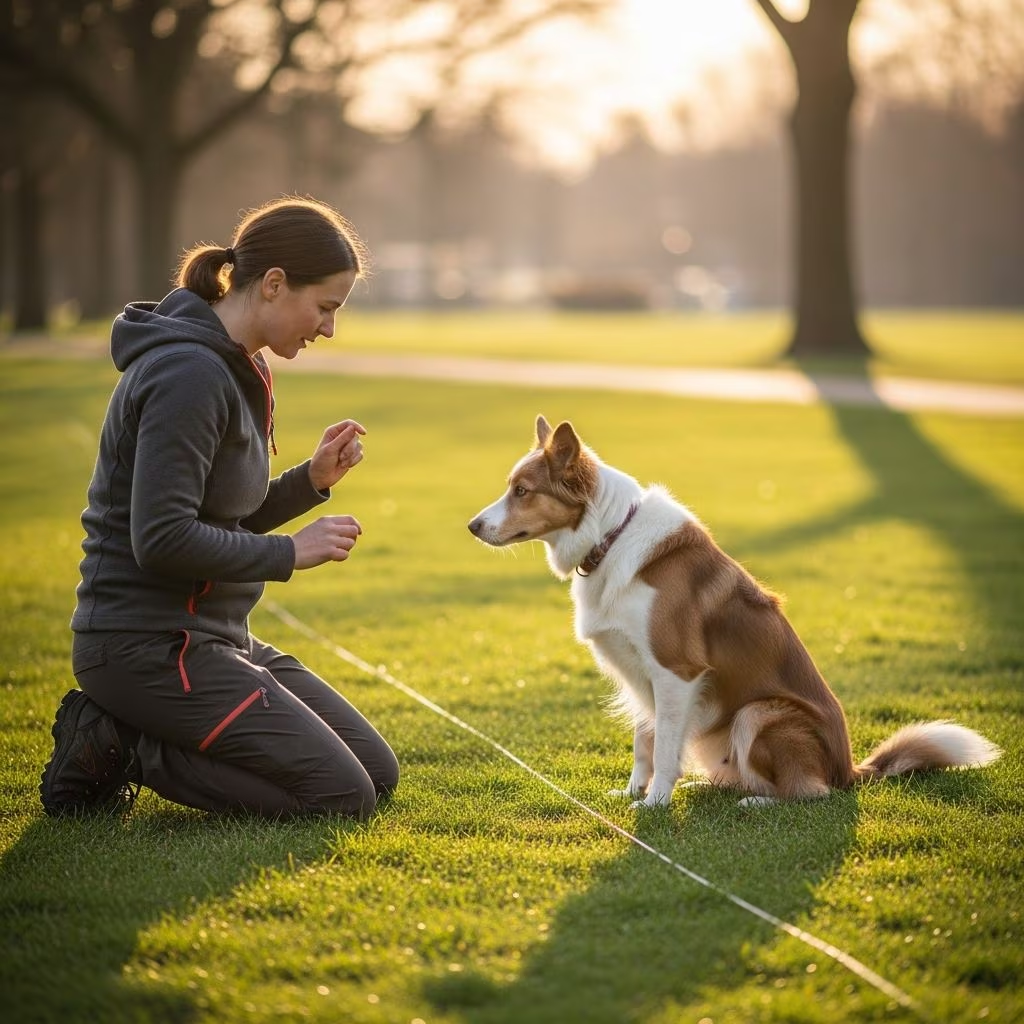
Boundary training empowers dogs to understand and respect designated areas, promoting safety and harmony in shared spaces. This approach uses positive reinforcement to create clear limits without punishment, applicable to homes, yards, and beyond.
Why Boundary Training Matters for Dogs and Owners
Establishing boundaries prevents dogs from accessing hazardous zones like kitchens during cooking or roads beyond yards. It fosters independence while reducing supervision needs, vital for busy households. Reliable boundaries minimize escapes, protecting pets from traffic or wildlife encounters.
Owners benefit from peace of mind; trained dogs self-regulate, decreasing behavioral issues like counter-surfing or fence-jumping. Studies from animal behavior experts highlight how consistent limits enhance dog-owner bonds through trust-building rewards.
Core Principles of Effective Boundary Training
Positive reinforcement forms the foundation: reward desired behaviors to encourage repetition. Tools like clickers mark exact moments of success, pairing sounds with treats for clarity. Consistency across family members ensures dogs generalize rules universally.
- Clarity: Use visual cues like flags or mats for initial learning.
- Patience: Progress gradually to avoid confusion.
- High-Value Rewards: Employ meat or favorite toys outdoors for motivation.
Timing is critical—reward within seconds of compliance to link action with outcome.
Setting Up for Indoor Boundary Success
Begin indoors for controlled environments. Identify off-limits areas like baby rooms or furniture. Place visual markers: mats, tape lines, or low barriers to define edges.
Step-by-Step Indoor Protocol
- Introduce the Marker: Position a treat on the safe side near the boundary. Lure dog to approach but stop at the line, clicking and treating for hesitation.
- Leash Guidance: Walk dog parallel to boundary on leash, rewarding stops or turns away. Repeat 10-15 times per session.
- Test Compliance: Step over boundary; if dog follows, gently block and retreat, rewarding stays behind line.
- Build Duration: Increase time dog holds position, fading markers over weeks.
For multi-sided zones like play areas, approach from all angles. Sessions last 5-10 minutes, twice daily.
| Challenge | Solution |
|---|---|
| Dog ignores line | Shorten distance, use higher rewards |
| Crosses impulsively | Block calmly, reset from afar |
| Loses interest | Incorporate toys or play breaks |
Transitioning to Outdoor Yard Boundaries
Outdoors demand higher distractions, so solidify indoor skills first. Mark yard perimeter with flags spaced 8-10 feet apart, using durable plastic or fabric stakes.
Phased Outdoor Training Plan
Phase 1: Flag Familiarization (1-2 Weeks)
- Indoors: Teach nose-touch to flag for click/treat.
- Outdoors on 15-20 ft leash: Walk perimeter, rewarding flag touches and returns.
Use premium meats like chicken to counter outdoor temptations.
Phase 2: Boundary Respect (Weeks 3-4)
- Approach flags; stop dog at line with “wait” cue, reward heavily.
- Cross slightly; lure back if needed, praising retreats.
Phase 3: Distraction Proofing (Weeks 5+)
- Extend leash to 50 ft; introduce squirrels or passersby.
- Practice recalls from boundary edges.
Daily walks reinforce territorial instincts, conditioning flags as “return now” signals.
Advanced Techniques for Reliable Results
Once basics stick, layer commands: “sit-stay” at boundaries or “place” on mats. For invisible fences, pair with electronic systems after behavioral foundation—never rely solely on shocks.
Incorporate recall drills: Call dog from boundary mid-approach, jackpot rewarding (multiple treats). Vary sessions to prevent boredom, mixing short/long leashes.
Common Pitfalls and Fixes
- Inconsistent Enforcement: All household members must reward equally.
- Rushing Phases: Minimum 8 weeks for conditioning.
- Low Motivation: Rotate reward types; hungry training times optimal.
Monitor progress: Video sessions to spot subtle crossings.
Tools and Equipment Recommendations
| Tool | Purpose | Tips |
|---|---|---|
| Clicker | Precise marking | Charge with treats first |
| Long Leashes (15-50 ft) | Safe control | Nylon or biothane for durability |
| Boundary Flags | Visual cues | 8-10 ft spacing, bright colors |
| High-Value Treats | Motivation | Meat, cheese; small pieces |
Optional: Harnesses for pullers, treat pouches for efficiency.
Real-World Applications Beyond Home
Adapt for cars (stay in back), parks (off-trail), or visitor zones. Teach “boundary” as universal cue. Puppies start at 8 weeks; adults refresh basics.
For multi-dog homes, train separately then together, rewarding group compliance.
Frequently Asked Questions (FAQs)
How long until my dog masters boundaries?
4-12 weeks with daily practice; varies by age, breed, prior training.
Can I use punishment?
Avoid; it creates fear. Positive methods yield lasting respect.
What if my yard has no fence?
Flags and long-line work; consider visuals like landscaping.
Does this work for reactive dogs?
Yes, but start low-distraction; consult pros for aggression.
Age limits?
All ages; puppies learn fastest, seniors need gentler pacing.
Troubleshooting Persistent Issues
If dog bolts: Revert to shorter leash, increase rewards 10x. Track triggers like doors or guests. Professional help if fear-based defiance appears.
Success metrics: Dog hesitates at lines 90% unprompted, ignores mild distractions.
References
- How to Clicker Train Your Dog to Stay in the Yard — Clickertraining.com. Accessed 2026. https://clickertraining.com/how-to-clicker-train-your-dog-to-stay-in-the-yard/
- Establishing an Off Limits Area with Dog Boundary Training — Mydoglikes.com. Accessed 2026. https://mydoglikes.com/dog-boundary-training/
- Easy Lesson on How to Teach a Dog Personal Boundaries — Doggoneproblems.com. Accessed 2026. https://www.doggoneproblems.com/jagger-zeppelin/
- Boundary Training for Your Dog — Baxterandbella.com. Accessed 2026. https://www.baxterandbella.com/post/boundary-training-for-your-dog
- How to Train Your Dog to Stay in the Yard — Petsafe.com. Accessed 2026. https://www.petsafe.com/blog/boundary-training-101/



