

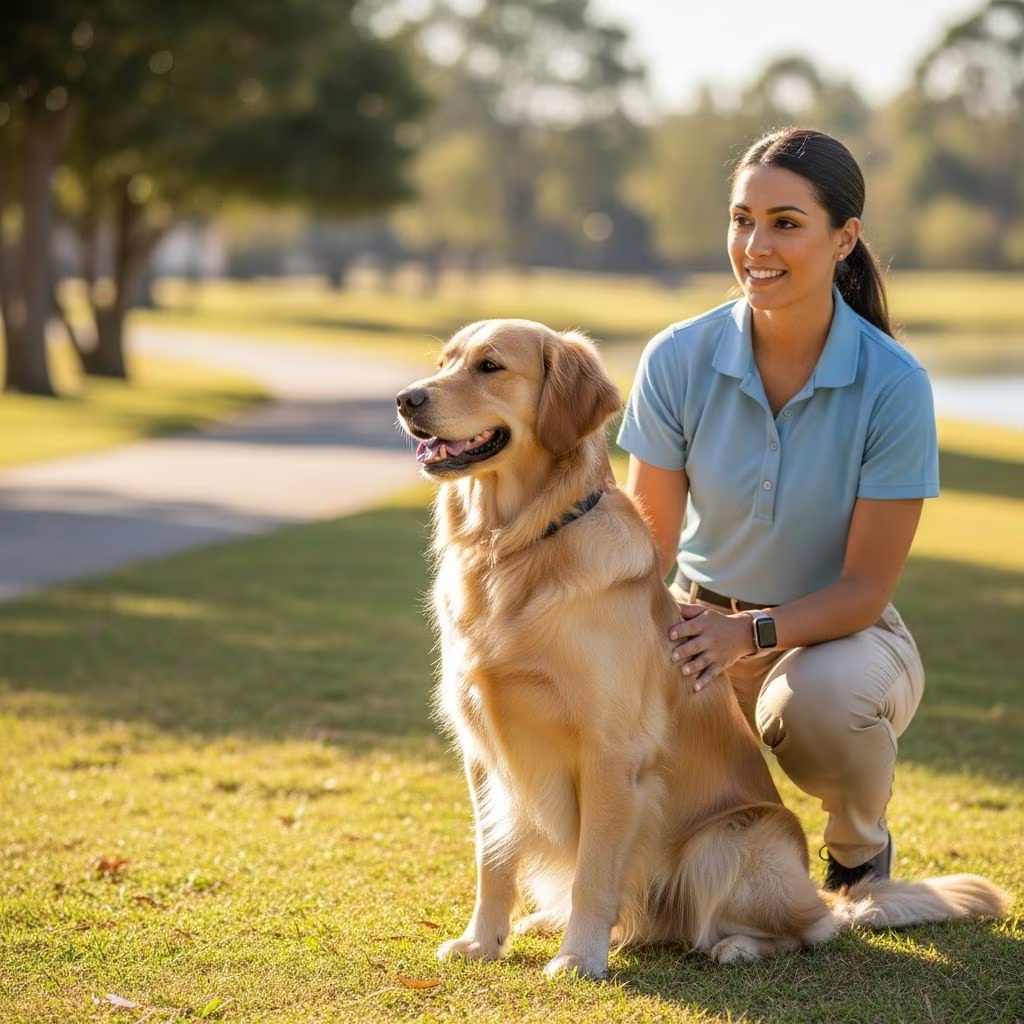
Teaching a dog to exhibit desirable behaviors requires patience, understanding, and the right approach. Positive reinforcement stands out as the most reliable method, focusing on rewarding good actions rather than punishing mistakes. This guide delves into foundational principles, practical techniques, and advanced strategies to help you foster a well-behaved canine companion.
Understanding the Foundations of Canine Learning
Dogs learn through association and repetition, drawing from principles like operant conditioning where behaviors followed by rewards increase in frequency. Thorndike’s law of effect underpins this: actions yielding positive outcomes repeat more often. Start by meeting basic needs—food, water, exercise, and rest—before sessions to ensure focus.
Interpreting body language is crucial. A wagging tail with relaxed ears signals contentment, while tucked tails indicate stress. Use this to tailor training, avoiding force that can erode trust.
Core Principles for Success
- Consistency: Apply the same cues and rewards every time to build clear expectations.
- Timing: Reward within seconds of the behavior to link it correctly.
- Short Sessions: Limit to 5-15 minutes to maintain engagement.
- Fun Environment: Incorporate play to keep motivation high.
These elements create a positive feedback loop, strengthening the dog-owner bond.
Positive Reinforcement: The Gold Standard
Positive reinforcement involves adding a pleasant stimulus after a desired action, such as treats or praise. Vets and trainers widely endorse it for effectiveness and welfare. Unlike punishment, it avoids fear, preserving confidence.
| Method | Description | Pros | Cons |
|---|---|---|---|
| Lure and Reward | Guide with food into position, then treat | Quick results for basics like sit | Fading lure can be tricky |
| Clicker Training | Click marks exact moment, followed by reward | Precise communication | Dog must learn click meaning |
| Shaping | Reward successive approximations to goal | Builds complex behaviors | Requires patience |
For example, to teach “sit,” hold a treat above the nose, moving it back until hips drop, then reward immediately. Gradually phase out lures.
Science-Based Approaches to Behavior Change
Rooted in ethology and psychology, these methods customize plans using learning theory. Classical conditioning pairs cues with rewards; operant handles voluntary behaviors.
Address unwanted actions via:
- Extinction: Withhold attention for attention-seeking jumps.
- Incompatible Behaviors: Teach “sit” to counter pulling.
- Environmental Management: Remove triggers like counter-surfing temptations.
Research shows these outperform punishment, which risks anxiety and shutdown.
Relationship-Centered Training Dynamics
View training as partnership. Provide praise for successes and calm redirection for errors, mimicking child education. Progress from low-distraction home settings to parks, building mastery gradually.
If stress appears—yawning, lip-licking—pause and reassess. Fun sessions yield faster learning.
Innovative Social Learning Techniques
Model-rival leverages pack instincts: dogs observe peers succeeding, imitating without direct rewards. Effective for retrieval or herding, excitement aids retention if not anxious.
Combine with clickers for hybrid efficacy, associating sounds with achievements.
Navigating Common Behavioral Challenges
Leash Reactivity: Use counter-conditioning: pair approaching dogs with treats from distance, closing gap as tolerance grows.
Barking Excess: Teach “quiet” by rewarding silence post-bark, ignoring triggers initially.
Chewing Issues: Redirect to toys, enriching environment with puzzles.
Consistency across household members prevents confusion.
Advanced Strategies for Reliability
Once basics solidify, add “proofing”: practice in varied locations with distractions. Use variable rewards—like slot machines—to sustain motivation.
Incorporate play: fetch reinforces recall joyfully. For reliability off-leash, start long-line in safe areas.
Tools and Rewards Selection
Choose high-value treats (cheese, chicken) for tough tasks, praise/toys for easy ones. Clickers provide clarity; avoid over-reliance.
High-drive dogs thrive on tug; food-motivated ones on kibble bits. Rotate to prevent boredom.
Warnings on Aversive Methods
Punishment-based like shock collars or dominance theory risks harm. Studies confirm rewards superior for long-term obedience and bonds. Opt humane paths endorsed by RSPCA.
Building Lasting Habits
End sessions on highs, fading rewards to real-life reinforcers like walks. Lifelong practice maintains skills.
Frequently Asked Questions
What if my dog ignores commands?
Boost value of rewards, reduce distractions, ensure clear cues.
How long until results?
Basics in days; habits weeks with daily practice.
Multiple dogs?
Train separately first, then together for social cues.
Puppy vs. Adult?
Puppies learn fast; adults may need habit-breaking first.
Rescue Dog Tips?
Patience key; address fears with counter-conditioning.
References
- Training Methods | Positively.com — Positively.com. 2023. https://positively.com/dog-training/article/foundations-training-methods
- Common Dog Training Methods and Their Pros and Cons — Astro Loyalty. 2024. https://www.astroloyalty.com/common-dog-training-methods-and-their-pros-and-cons/
- Dog training – Wikipedia — Wikipedia. 2026-03-28. https://en.wikipedia.org/wiki/Dog_training
- Top 10 Dog Training Tips — Small Door Veterinary. 2024. https://www.smalldoorvet.com/learning-center/behavior/top-10-dog-training-tips
- How to Train Your Dog & Top Training Tips — RSPCA. 2025. https://www.rspca.org.uk/adviceandwelfare/pets/dogs/training



