

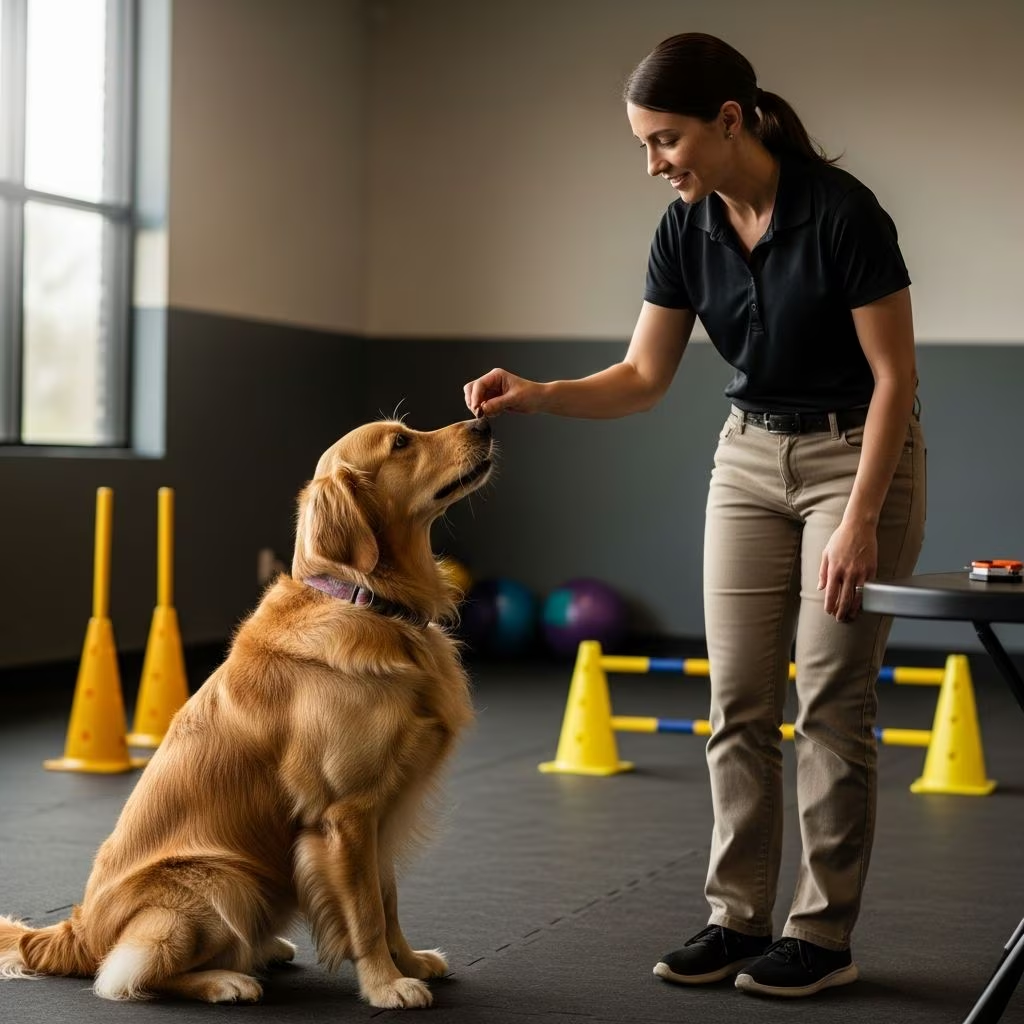
Dog behavior management empowers owners to address problematic actions through science-backed methods, fostering a harmonious relationship with their pets. These approaches prioritize understanding root causes and implementing humane strategies over punitive measures.
Understanding the Roots of Canine Misbehavior
Many dog behaviors stem from instinct, past experiences, or environmental factors. For instance, leash reactivity often arises from fear or frustration during walks, while resource guarding protects valued items like food or toys. Separation anxiety manifests as destructive actions when owners leave, and fear phobias trigger panic around thunderstorms or strangers. Recognizing these patterns is the first step toward effective intervention.
Owners should conduct a thorough behavioral assessment, noting triggers, frequency, and context. This analysis reveals whether issues like obsessive tail-chasing or inappropriate elimination link to stress, boredom, or medical conditions. Consulting a veterinarian rules out health problems before training begins.
Core Principles of Modern Behavior Modification
Effective techniques rely on operant conditioning’s four quadrants: positive reinforcement adds rewards to boost desired actions; negative reinforcement removes discomfort to encourage repetition; positive punishment introduces aversives (rarely recommended); and negative punishment withholds rewards. Positive reinforcement stands out for building trust without fear.
The Premack Principle leverages high-probability behaviors to reinforce low-probability ones. For example, allowing access to play only after a calm sit prevents bolting out doors. Consistency across household members ensures predictable outcomes, minimizing confusion.
Positive Reinforcement: Building Good Habits
Positive reinforcement rewards desired behaviors immediately with treats, praise, or toys, increasing their recurrence. Identify target actions like loose-leash walking, then mark them precisely—using a clicker for timing—followed by rewards. Ignore or redirect unwanted actions to avoid accidental reinforcement.
- Clicker Training: The click sound bridges behavior and reward, speeding learning for skills like recalls or stays.
- Treat Luring: Guide the dog into positions like sits with food, fading the lure over time.
- Praise and Play: Use verbal cues and tug games for high-drive dogs, strengthening bonds.
For counter-surfing, remove access to counters and reward four-on-the-floor positions. Impulse control games like mat training teach patience, reducing begging.
Desensitization and Counterconditioning: Overcoming Fears
Desensitization gradually exposes dogs to triggers at sub-threshold levels, building tolerance. Counterconditioning pairs these with positive associations, replacing fear with calm. For doorbell excitement, play recordings at low volumes while rewarding relaxation, slowly increasing intensity.
| Trigger | Desensitization Step | Counterconditioning Pairing |
|---|---|---|
| Thunderstorms | Soft storm sounds | Treats and calm petting |
| Strangers | Distant passersby | High-value rewards |
| Leash Reactivity | Far-off dogs | Food rewards for focus |
Progress only when the dog remains relaxed; regress if arousal spikes. This duo takes patience but yields lasting calm.
Environmental Management and Prevention Strategies
Modify surroundings to prevent rehearsals of bad habits. For destructive chewing, crate during absences and provide chew toys. Supervised tie-outs reward calm outdoor behavior without escape risks. Head collars manage pulling, enabling controlled exposures.
- Confinement: Use gates or pens to limit access to problem areas.
- Enrichment: Puzzle toys combat boredom-induced issues like pacing.
- Calming Aids: Pheromone diffusers ease anxiety during transitions.
Track progress in a journal, adjusting based on responses. Routine predictability reinforces learning.
Addressing Specific Behavioral Challenges
Leash Reactivity and Aggression
Start walks in low-distraction areas, rewarding focus on you. Gradually introduce triggers at distance, using counterconditioning. Avoid forcing proximity, which worsens fear.
Resource Guarding
Trade valuables for better treats during approaches, teaching giving up items predicts rewards. Never punish, as it escalates guarding.
Separation Anxiety
Practice short departures with toys, building duration. Desensitize departure cues like key jingles.
Barking and Destructive Behaviors
Teach “quiet” via reinforced pauses. Increase exercise and mental games to curb boredom barking.
Tools and Aids for Enhanced Training
Incorporate tech like apps for session tracking and reminders. Interactive feeders provide mental work, redirecting compulsions. No-pull harnesses support physical control during modification.
- Behavior Apps: Log sessions and set goals.
- Anxiety Wraps: Apply gentle pressure for comfort.
- Professional Help: Certified trainers tailor complex cases.
Step-by-Step Modification Blueprint
- Assess: Log behaviors and triggers.
- Goal-Set: Define measurable outcomes.
- Plan: Select techniques like DS/CC.
- Implement: Train daily with consistency.
- Monitor: Adjust via records.
- Maintain: Fade aids gradually.
This framework applies to most issues, with professional input for aggression.
Common Pitfalls and How to Avoid Them
Inconsistent rules confuse dogs; align family efforts. Rushing desensitization heightens fears—proceed slowly. Punishment suppresses symptoms temporarily, risking fallout. Focus on prevention and positives.
FAQs
What if my dog regresses?
Return to easier levels, ensuring foundational calm before advancing.
How long until results?
Weeks to months, depending on issue severity and consistency.
Is professional help necessary?
For aggression or deep fears, yes—seek certified behaviorists.
Can puppies learn these?
Early intervention prevents issues; adapt for short sessions.
What about multi-dog homes?
Train individually, manage interactions separately.
References
- Behavior Modification in Dogs – Dog Owners — Merck Veterinary Manual. 2023. https://www.merckvetmanual.com/dog-owners/behavior-of-dogs/behavior-modification-in-dogs
- Effective Dog Behavior Modification Techniques for Owners — Insight K9 Solutions. 2024. https://insightk9solutions.com/dog-behavior-modification/
- Mastering Dog Behavior Modification: A Step-by-Step Training Guide — World of Dog Training. 2024. https://worldofdogtraining.com/mastering-dog-behavior-modification-a-step-by-step-training-guide/
- Understanding Dog Behavior: Insights and Tips for Pet Owners — Corona Do Pet Hospital. 2023. https://coronadopethospital.com/understanding-dog-behavior-insights-and-tips-for-pet-owners/
- Dog Management Techniques — Academy of Canine Behavior. 2024. https://www.aocb.com/training/dog-training-tools-tips/dog-management-techniques/



