Doberman Training: Expert Strategies For Positive Results
Unlock your Doberman's potential with proven, positive training strategies for obedience, recall, and calm behavior.
Mastering Doberman Training
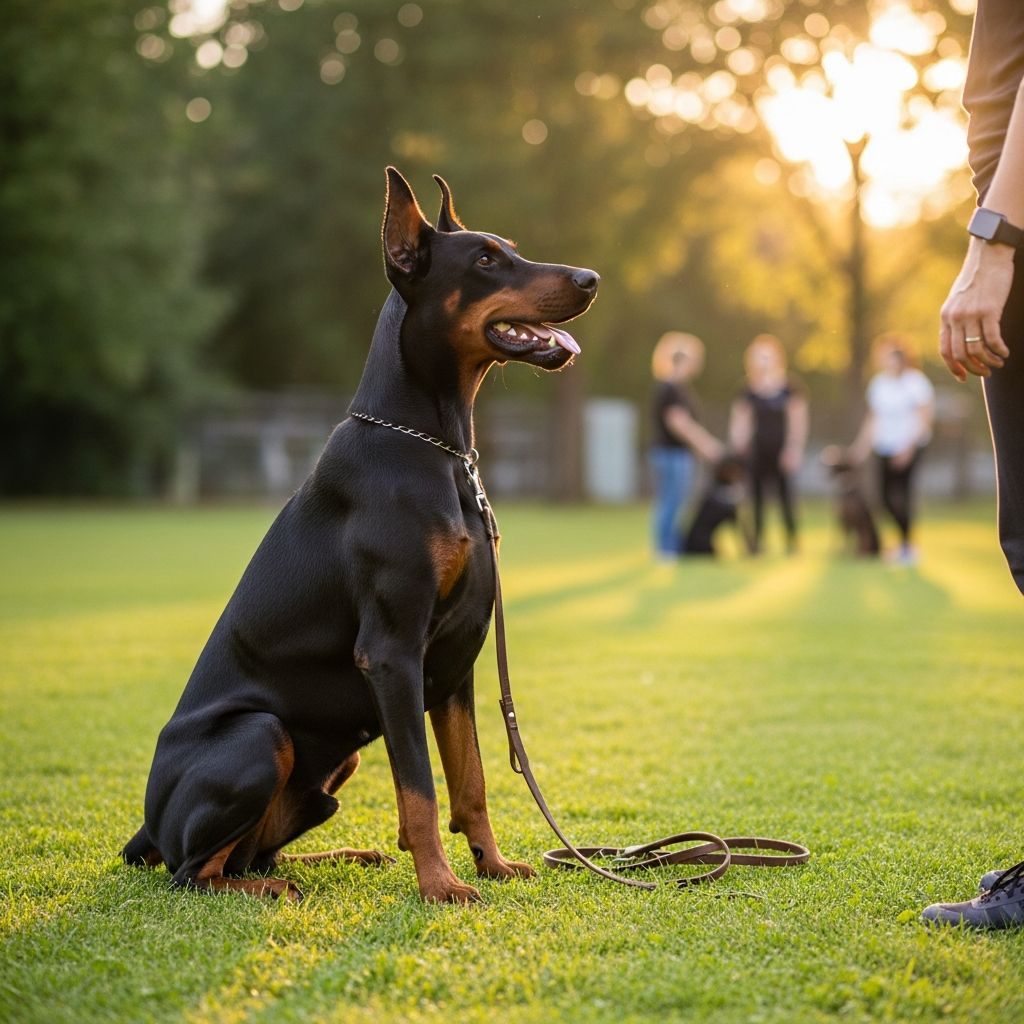
Doberman Pinschers are intelligent, loyal dogs renowned for their protective instincts and athletic prowess. Effective training harnesses their sharp minds and energy, fostering a strong bond while ensuring good behavior in various settings. This guide outlines key strategies tailored to their unique traits, emphasizing positive methods over harsh corrections.
Understanding the Doberman Temperament
Dobermans thrive on structure and mental challenges, responding best to confident, consistent leadership. Their sensitivity means they pick up on owner emotions, making calm, firm guidance essential. High energy levels demand outlets like exercise and puzzles to prevent boredom-driven issues.
- Intelligence: Quick learners who excel in obedience and protection work.
- Loyalty: Deep bonds form with fair, rewarding handlers.
- Energy: Needs daily activity to stay balanced.
Early exposure builds confidence, reducing reactivity in new situations.
Starting with Puppy Foundations
Begin training at 8 weeks, focusing on housetraining, crate acclimation, and basic cues. Consistency accelerates progress, with breeders often prepping puppies for new homes. Use short sessions to match short attention spans.
Housetraining Essentials
Establish a routine: frequent potty breaks after meals, play, and naps. Crate training leverages their den instinct, minimizing accidents. Praise successes immediately to reinforce the habit.
| Age Milestone | Training Focus |
|---|---|
| 8-12 weeks | Crate intro, potty schedule |
| 12-16 weeks | Basic sit/stay, name response |
| 4-6 months | Recall in low-distraction areas |
Commit to supervision and rewards for rapid results.
Building Attention and Name Recognition
Call their name in engaging tones during play. Reward eye contact with treats or toys, gradually adding distractions. This foundation supports all future commands.
Core Obedience Commands
Teach sit, down, stay, and loose-leash walking progressively. Dobermans grasp concepts fast but need repetition for reliability.
- Sit: Lure with a treat above the nose, praise on contact.
- Down: From sit, guide to ground with treat; release with a cue.
- Stay: Build duration and distance slowly.
Incorporate games for engagement, like hiding treats for ‘find it’.
Perfecting Recall Training
Recall prevents escapes and ensures safety. Start indoors: say name + “come” in an excited voice, reward lavishly. Progress to yards, then parks.
- Use high-value rewards like favorite toys.
- Never call for negatives like baths.
- Practice daily in varied spots.
Avoid punishment for slow responses; patience builds trust.
Promoting Calmness and Mental Fatigue
Physical exercise alone isn’t enough; mental work tires Dobermans deeply. Opt for calm-focused activities over hype-inducing tricks.
Introduce a ‘settle’ spot: mat or bed where relaxation earns praise. Pair with routines for meals and rest to reduce anxiety.
| Activity | Benefit | Duration |
|---|---|---|
| Puzzle feeders | Problem-solving | 15-20 min |
| Mat training | Relaxation cue | 5-10 min builds |
| Obedience drills | Focus building | 10 min sessions |
Socialize gradually to boost confidence.
Discipline Without Harshness
Set household rules early, enforced uniformly. Redirect chewing to toys, rewarding appropriate choices. Use firm tones for ‘no’, avoiding yells.
Common pitfalls: Leash tightening fuels reactivity; yelp methods fail for mouthing. Praise trumps over-reliance on treats long-term.
Advanced Training for Working Dogs
Once basics solidify, explore agility or protection sports. Adaptive methods match their drive, using praise as primary reward.
Leash walking: Reward slack leads, ignore pulls. Stay emotionally neutral to model control.
Common Challenges and Solutions
Addressing Reactivity
Counter-condition with treats at sight of triggers, from distance. Build tolerance gradually.
Reducing Puppy Mouthing
Redirect to toys; direct praise for gentle play. Skip yelp-and-ignore for Dobermans.
Daily Routine for Success
A structured schedule prevents issues:
- Morning: Walk + obedience (30 min)
- Midday: Puzzle toy or settle practice
- Evening: Recall games + calm time
- Bed: Crate rest
Adjust for age and energy.
Frequently Asked Questions
How long until a Doberman puppy is housetrained?
With consistency, 4-6 months, aided by crate training.
Are treats necessary for Doberman training?
Useful initially, but phase to praise for independence.
Can Dobermans be trained off-leash reliably?
Yes, with solid recall foundation and practice.
What if my Doberman ignores commands?
Shorten sessions, increase value of rewards, ensure exercise.
Is professional help needed?
For reactivity or advanced goals, yes.
Consistent, positive training yields a devoted Doberman partner. Adapt to your dog’s pace for lasting results.
References
- Doberman Pinscher Dog Training — PetCareRx. Accessed 2026. https://www.petcarerx.com/article/doberman-pinscher-dog-training/469
- 5 Training Techniques NEVER to Use on a Doberman — YouTube (Doberman Planet). 2026. https://www.youtube.com/watch?v=cgicIHWpPX8
- How to Train a Doberman Pinscher Puppy: Milestones & Timeline — American Kennel Club (AKC). Accessed 2026. https://www.akc.org/expert-advice/training/how-to-train-a-doberman-pinscher/
- A Realistic, Honest Doberman Training Guide — Best Mate Dog Training. Accessed 2026. https://www.bestmatedogtraining.co.nz/training-dobermans
- Training a Doberman to Understand Your Commands — YouTube (Doberman Planet). 2020-05-17. https://www.youtube.com/watch?v=nTfIjrGZiwM
Similar Articles








Read full bio of medha deb