

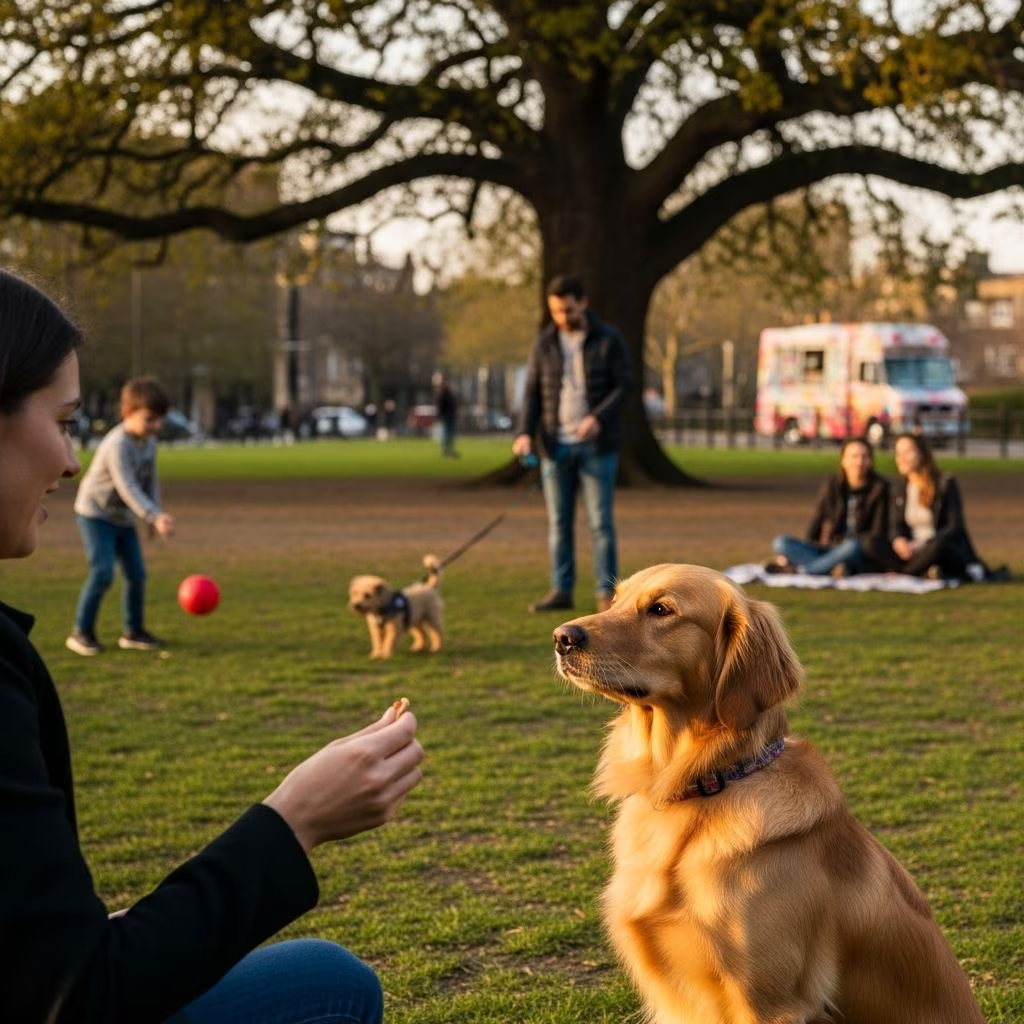
Every dog owner faces the challenge of a pet that fixates on squirrels, passersby, or intriguing scents during walks or training sessions. Distraction training transforms this common issue into an opportunity to build a stronger bond and reliable behavior. By systematically introducing distractions while rewarding focus, dogs learn to prioritize their handler over environmental temptations. This approach not only improves obedience but also enhances safety and enjoyment in daily life.
Understanding Why Dogs Get Distracted
Dogs are naturally curious explorers, driven by instincts to investigate novel stimuli. Overwhelming environments can overload their senses, making it hard to process cues from their owner. Rather than defiance, distraction often stems from excitement or sensory overload. Recognizing this helps shift training from punishment to positive reinforcement, setting the foundation for success.
Key factors include breed predispositions—herding or hunting breeds may chase movement more readily—and age, with puppies showing shorter attention spans. Adult dogs might regress in high-stimulation settings if not proofed early. Addressing these through structured methods ensures progress across all life stages.
Building a Strong Foundation at Home
Before tackling outdoor chaos, solidify basics indoors where control is easiest. Start with simple commands like sit or down in a quiet room, gradually layering mild distractions such as a rolling toy or background noise. This controlled progression teaches dogs that focus yields rewards, creating a habit of checking in with you.
- Use high-value treats like small pieces of chicken or cheese to outcompete mild interruptions.
- Practice short sessions of 5-10 minutes to maintain engagement without fatigue.
- End every session with praise and play to associate training with positivity.
Once home success is consistent, transition to your backyard or a quiet hallway, introducing variables like family members moving nearby. This gradient build-up prevents overwhelm and fosters confidence.
Distance: The Key to Initial Success
One of the most effective strategies involves starting far from the distraction. Position yourself at a distance where your dog notices the stimulus but remains responsive to your cue. The instant they glance back at you, mark the behavior with a cheerful “Yes!” or clicker and deliver a reward.
This method leverages desensitization, exposing the dog to sub-threshold levels of distraction while pairing attention with positivity. If fixation occurs—staring, lunging, or ignoring—increase the distance until success returns. Over sessions, close the gap incrementally, perhaps by a few feet each time.
| Distraction Level | Starting Distance | Reward Frequency |
|---|---|---|
| Low (e.g., toy on floor) | 10-15 feet | Every check-in |
| Medium (e.g., person walking by) | 20-30 feet | Every 2-3 check-ins |
| High (e.g., squirrel) | 50+ feet | High-value treats |
Track progress in a journal to monitor improvements and adjust pacing, ensuring steady advancement without setbacks.
Boosting Reinforcement for Tough Environments
In higher-distraction zones, elevate your rewards. Switch to jackpot treats—multiple pieces or a favorite toy—and increase the delivery rate. If your dog typically earns a treat every 10 steps on a quiet walk, reduce to every 2-3 steps amid mild chaos.
This higher reinforcement schedule maintains motivation, temporarily easing other criteria like perfect heeling. Gradually stretch intervals as focus strengthens, fading treats to verbal praise. Consistency across family members prevents confusion and solidifies the behavior.
Focus Cues: Redirecting Attention Instantly
Essential verbal tools like “Watch me,” “Leave it,” and “Let’s go” provide clear redirection. Teach “Watch me” by holding a treat near your eyes, rewarding eye contact, then adding distractions.
- Watch me: Builds direct eye contact to snap focus back.
- Leave it: Signals off-limits items, progressing from hands to ground temptations.
- Let’s go: Encourages forward movement past fixed distractions on walks.
Practice these in sequence: spot distraction, cue “Watch me,” reward, then “Leave it” if approaching. Repetition in varied settings embeds them as automatic responses.
Games That Make Training Fun and Effective
Turn lessons into play to keep energy high. The 1-2-3 game, for food-motivated dogs, counts aloud during walks: “One, two…” pausing expectantly. On “three,” reward for maintained attention. This builds predictability and excitement around focus.
Another is permission-based exploration: require a sit before allowing brief sniffing. Release with “Okay!” then recall and reward heel position. These games teach that attentiveness grants access to fun, flipping the dynamic where you become the ultimate reward source.
Proofing Behaviors in Real-World Scenarios
Proofing means testing commands amid escalating real-life distractions. Rank potential interrupters—barking dogs (level 4), food drops (level 5)—and tackle low first. Use the three Ds wisely: manipulate only distraction while holding distance and duration steady initially.
For walks, start in low-traffic areas, cue alternative behaviors like targeting your hand to occupy the nose. Progress to parks, rewarding check-ins amid joggers or other dogs. Sessions of 15 minutes, multiple times daily, yield fastest results.
Common Pitfalls and How to Avoid Them
Avoid overloading with too many challenges at once, like demanding a long stay near a tossed ball. Corrections for distraction erode trust; instead, prevent failure by managing environment and distance.
Regression is normal—celebrate small wins and persist with calm consistency. If progress stalls, revert to easier levels and rebuild. Patience prevents frustration for both dog and owner.
Advanced Techniques for Service and Working Dogs
For service dogs, auto-leave-it trains automatic handler glances upon spotting ground temptations, crucial for public access. Engagement drills make you more compelling than surroundings, using toys or movement games to draw voluntary check-ins.
These methods ensure reliability in unpredictable settings, from busy streets to medical tasks, emphasizing handler as the constant reward.
Long-Term Maintenance and Troubleshooting
Once proficient, maintain with random reinforcement schedules and surprise distractions during routines. If distractions resurface, analyze triggers—fatigue, hunger—and adjust. Professional help from certified trainers benefits complex cases like reactivity.
Track metrics like successful check-ins per walk to measure gains, adjusting as needed for lifelong focus.
Frequently Asked Questions
How long does distraction training take?
Typically 4-8 weeks with daily practice, varying by dog age, breed, and consistency. Patience yields permanent results.
What if my dog ignores high-value rewards when distracted?
Start farther away or use even better motivators like play. Build value through home association first.
Can puppies as young as 8 weeks handle this?
Yes, with short, gentle sessions focused on positive check-ins. Keep it fun to match short attention spans.
Is a clicker necessary?
No, but it provides precise timing for marking desired behaviors, speeding learning.
What about leash reactivity?
Use distance, counter-conditioning with treats for calm exposure, and focus cues to interrupt fixation.
References
- Training a Distracted Dog: How Service Dogs Learn to Stay Focused — Putnam Service Dogs. 2023. https://www.putnamservicedogs.org/blog/training-a-distracted-dog/
- What Squirrel? 10 Techniques for Training with Distractions — Clicker Training. 2022. https://clickertraining.com/what-squirrel-10-techniques-for-training-with-distractions/
- Dealing with Distractions: How to Keep Your Dog Focused on Walks — OVRS. 2024. https://www.ovrs.com/blog/dealing-with-distractions-how-to-keep-your-dog-focused-on-walks/
- Training Your Dog to Ignore Distractions—No Matter Where You Are — American Kennel Club (AKC). 2023-05-15. https://www.akc.org/expert-advice/training/training-dogs-to-ignore-distractions/
- Overcoming Distractions — Chasing the Tale Academy. 2024. https://chasingthetaleacademy.com/overcoming-distractions/



