

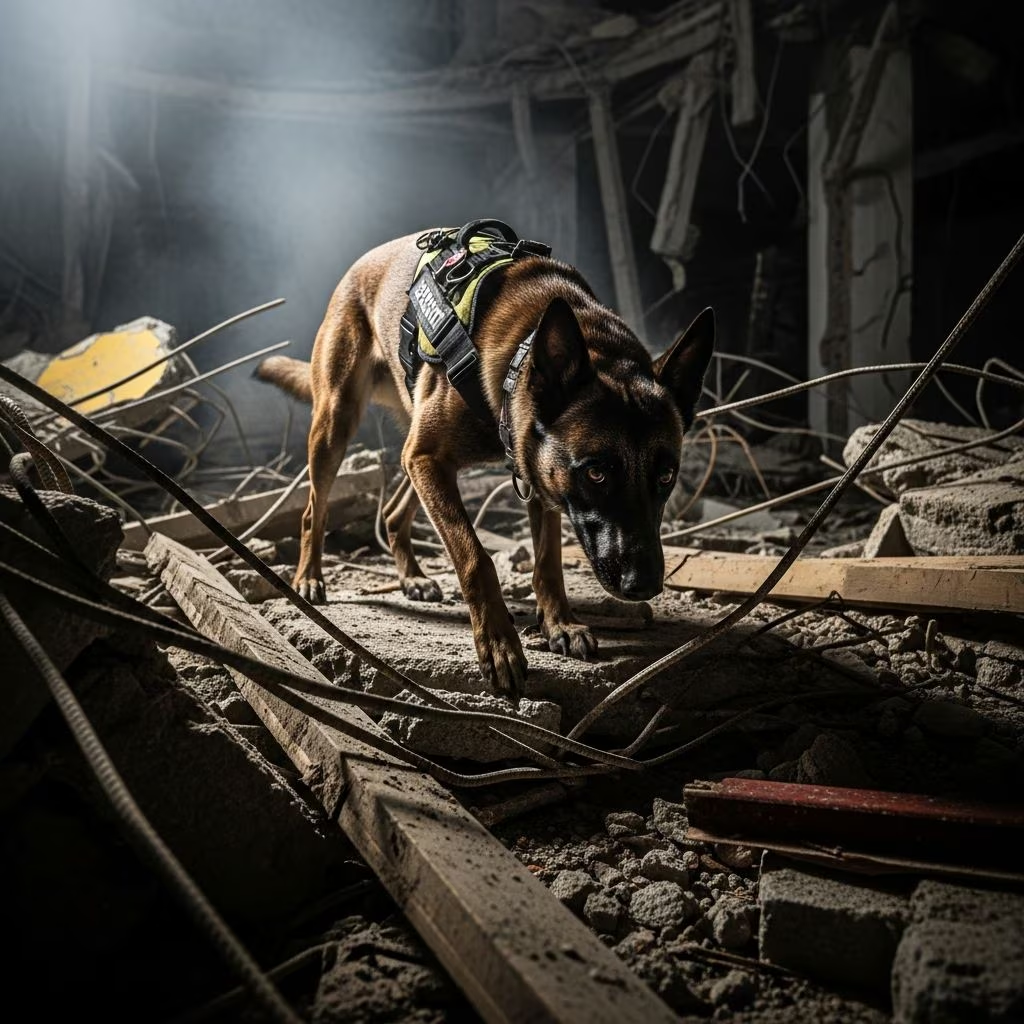
Training dogs for disaster search and rescue (SAR) demands a structured approach that leverages their innate abilities while building reliability under pressure. These canine heroes detect survivors in rubble, track lost hikers in wilderness, and navigate chaotic environments, saving lives through precision and endurance. This guide outlines a complete pathway, drawing from established practices to equip handlers with actionable steps for developing top-tier disaster response dogs.
Selecting the Ideal Canine Candidate
Choosing the right dog sets the foundation for successful disaster training. High-drive breeds like German Shepherds, Labrador Retrievers, and Belgian Malinois often excel due to their energy, intelligence, and scent prowess, but any motivated dog with strong genetics can thrive. Look for puppies or young adults (ideally under 2 years) showing curiosity, playfulness, and resilience to stress.
- Key Traits: High prey drive for scent pursuit, confidence in novel situations, and physical soundness without joint issues.
- Temperament Test: Expose prospects to loud noises, crowds, and uneven surfaces; select those that remain eager rather than fearful.
- Health Screening: Vet checks for hips, elbows, and eyes ensure long-term durability for demanding fieldwork.
Early assessment prevents wasted effort; partner with SAR groups for evaluations to match dogs to handler styles.
Establishing Core Obedience Foundations
Before scent or agility work, ironclad obedience ensures dogs respond amid distractions like sirens or debris. Begin in low-stimulation home settings, progressing to urban chaos.
| Command | Purpose in SAR | Training Progression |
|---|---|---|
| Sit/Stay | Maintain position during alerts | 5 seconds → 5 minutes with distractions |
| Down/Recall | Safe extraction from hazards | Off-leash at 50+ yards |
| Leave It | Ignore food/decoys in search zones | High-value temptations in motion |
Use high-value rewards like toys or tug games to fuel motivation. Sessions last 10-15 minutes daily, emphasizing consistency across handlers for team reliability.
Developing Superior Scent Detection Skills
Dogs possess 300 million olfactory receptors versus humans’ 6 million, enabling odor discrimination at parts-per-trillion levels. Disaster training harnesses this for air-scenting (detecting airborne plumes) or trailing (ground disturbance scents).
- Imprinting Phase: Introduce human scent articles (worn clothing) in sterile boxes; reward nose touches.
- Hide-and-Seek Drills: Progress to concealed hides in rooms, then vehicles, building problem-solving.
- Alert Training: Teach precise indicators like aggressive barking or pawing on source location.
Environmental variables—wind dispersing scents upward, rain diluting trails—require adaptive drills. Practice night searches to mimic low-visibility disasters.
Building Physical Prowess and Agility
SAR dogs endure 8+ hour shifts over rugged terrain, demanding peak conditioning. Integrate fitness from day one to prevent injuries.
- Cardio Regimen: Weekly 5-10 mile hikes with elevation; swim sessions for low-impact stamina.
- Agility Apparatus: A-frames, seesaws, tunnels simulate collapse structures; start low-speed, increase complexity.
- Strength Work: Hill sprints, weight-pulling harnesses for core power.
Monitor for overexertion; rest days and professional physio maintain longevity, targeting 8-10 year careers.
Specialized Training for Diverse Scenarios
Wilderness and Trailing Expertise
In vast forests or mountains, dogs follow footprint scents fading over hours. Train on aged trails (24-72 hours old) using ‘runners’ who lay deliberate paths. Introduce cross-tracks from other humans/animals to sharpen discrimination.
Urban Disaster Rubble Mastery
Post-earthquake or explosion sites feature unstable piles; construct training rigs with buried ‘victims’ (mannequins or volunteers). Dogs learn to pinpoint amid rebar, concrete, and chemical interferents, climbing confidently without slips.
Avalanche and Water Recovery
For snow burials, use probe poles and scented snow hides; aquatic drills involve submerged scents in ponds, teaching surface alerts.
Mock operations with timed searches refine speed-accuracy balance, incorporating handler cues for sector allocation.
Handler-Dog Team Synergy
Effective duos operate as extensions of each other. Handlers read subtle body language shifts indicating scent hits, directing without verbal cues. Weekly bonding via play and off-duty adventures fosters trust.
Certifications from groups like the Federal Emergency Management Agency (FEMA) validate readiness through blind tests.
Essential Gear for Training and Deployment
- Harness and Leash: Padded, quick-release for safety.
- Scent Tools: Scent jars, wind meters, GPS collars.
- Protection: Booties for paws, vests with ID/reflectors.
Budget $500-2000 initially; maintain gear rigorously for mission integrity.
Common Challenges and Solutions
False alerts from wildlife or handler doubt plague novices. Counter with proofing (non-rewarded decoys) and confidence-building successes. Burnout hits high-drive dogs; rotate with fun non-work play.
FAQs
How long does full SAR certification take?
Typically 1-2 years of consistent 3-5 sessions weekly, varying by dog aptitude and scenario specialization.
Can any breed succeed in disaster SAR?
Yes, though working breeds predominate; mixed-breeds with drive often outperform pure aesthetics-focused lines.
What if my dog loses interest mid-training?
Reignite with variety—switch hides, rewards—and short, high-reward bursts to rebuild enthusiasm.
Are home setups sufficient for rubble training?
Basic yes, using tires/stacked crates; advanced rigs demand group facilities for realism.
How to transition from training to real ops?
Shadow certified teams on low-stakes calls, gradually increasing responsibility under supervision.
References
- Search Dog Handbook — SARBC. Accessed 2026. https://www.sarbc.org/sarbc/pdfs/sardog.pdf
- Canine Search and Rescue Task Force Operating Guidelines — City of Shreveport. Accessed 2026. https://www.shreveportla.gov/DocumentCenter/View/498
- How to Train Your Dog for Search and Rescue – Comprehensive Guide — American Breeder. 2023. https://www.americanbreeder.com/resources/american-breeder-blog/dogs/train-your-dog-search-rescue-comprehensive-guide
- How to Train a Search and Rescue Dog — Bully Max. 2024. https://shop.bullymax.com/blogs/news/how-to-train-search-and-rescue-dog
- Advanced Search & Rescue Dog Training Techniques — Dogbase. 2025. https://www.dogbase.co/blog/advanced-search-rescue-dog-training-techniques-for-finding-missing-persons



