

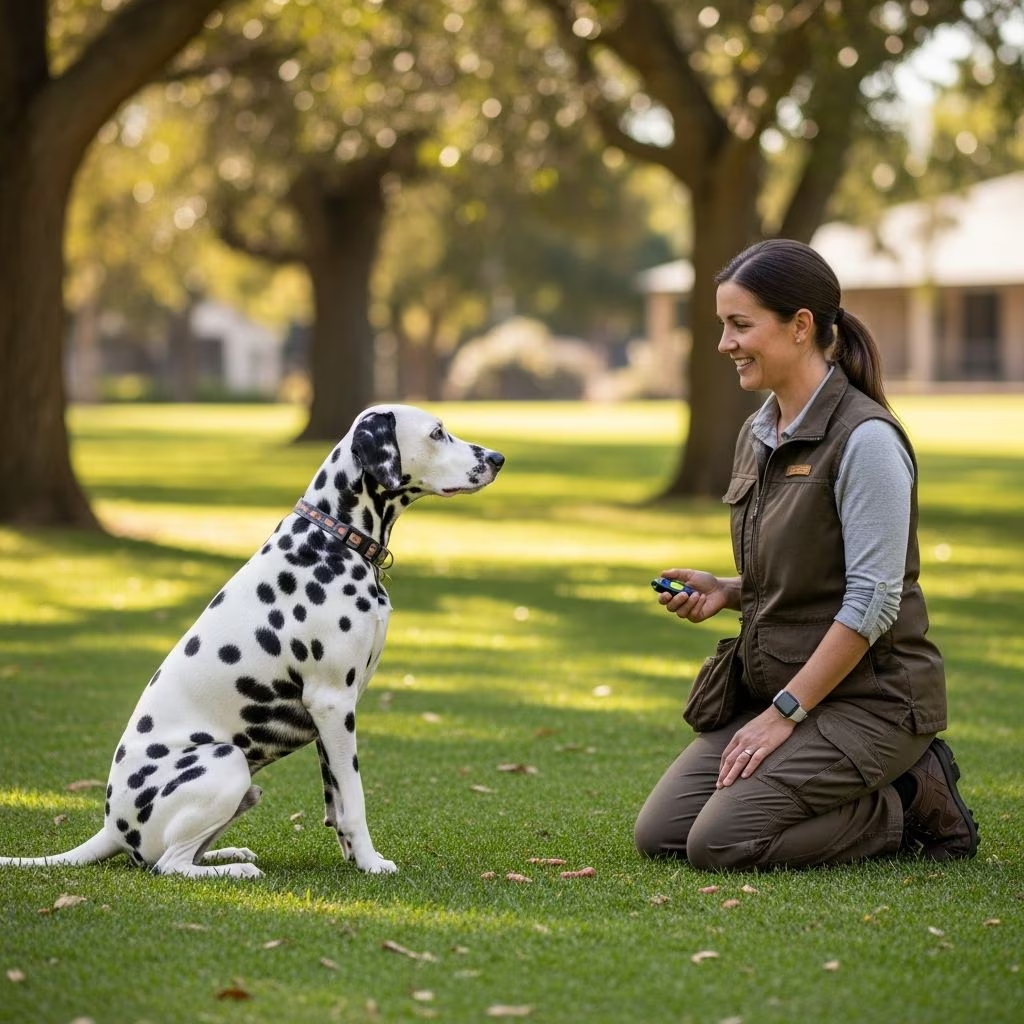
Dalmatians, with their striking spotted coats and boundless energy, thrive when given structured guidance from an early age. These intelligent dogs respond best to patient, reward-based approaches that build trust and encourage good habits. This guide explores foundational principles, practical techniques, and advanced methods to help your Dalmatian become a confident, well-mannered family member.
Understanding the Dalmatian Personality
Dalmatians are known for their high energy levels, requiring at least 1.5 to 2 hours of daily exercise to prevent boredom-induced behaviors like chewing or excessive barking. Their independent streak can sometimes appear as stubbornness, but this stems from their working breed heritage, originally bred for coaching and guarding. Early training capitalizes on their eagerness to please, turning potential challenges into strengths.
Intelligence shines through in activities like agility and obedience trials, where Dalmatians excel with proper motivation. Owners report faster learning when using lures like treats or toys to shape behaviors, fostering a dog’s natural problem-solving instincts without fear or coercion.
Starting Training on Day One
The moment your Dalmatian puppy arrives home marks the beginning of training. Focus on establishing routines immediately to set clear expectations. Housebreaking tops the list: observe signs like sniffing or circling, then guide the puppy to a designated outdoor spot. Praise lavishly upon success to associate relief with positivity.
During the initial two weeks, prioritize bonding over complex commands. Limit access to prevent mishaps, using baby gates or crates for safe confinement. This phase builds security, making subsequent lessons more effective. Consistency in schedule—meals, play, and potty breaks—accelerates habit formation.
Creating the Right Training Environment
Select distraction-free zones for initial sessions. Indoors works for commands like sit or stay, where your puppy feels secure. Transition to the backyard for leash walking, allowing off-leash exploration in a fenced area to build confidence without escape risks.
As proficiency grows, introduce varied settings like quiet parks. This gradual exposure prevents overwhelm, ensuring commands generalize across environments. Always prioritize safety, using long lines for recall practice in open spaces.
Essential Tools for Success
- High-value treats: Small, soft pieces of chicken or cheese for motivation.
- Clicker: Marks precise moments of success, pairing with rewards for clear communication.
- Leash and collar: Flat buckle collars over corrective types to promote positive associations.
- Toys: Squeaky or tug items for play-based reinforcement.
Core Techniques: Positive Reinforcement Mastery
Positive reinforcement forms the cornerstone of Dalmatian training, rewarding desired actions to encourage repetition. Lure training proves highly effective: hold a treat near the nose, moving it to guide sitting, then click and reward upon compliance. Verbal cues like “sit” follow naturally as the behavior solidifies.
Immediate rewards maintain focus, especially vital for puppies with fleeting attention spans. Sessions of 5-15 minutes, repeated 3-5 times daily, keep energy high without fatigue. Vary rewards—praise for basics, premium treats for challenges—to sustain interest.
| Behavior | Lure Method | Reward Timing |
|---|---|---|
| Sit | Treat above nose to ground | Instant click + treat |
| Down | Treat from sit to floor | Upon elbows touching |
| Recall | Exciting toy toss after approach | At your feet |
| Leash Walk | Treats for loose lead | Every few steps |
Building Obedience Foundations
Housebreaking Essentials
Success hinges on prediction and praise. Feed on a schedule, taking puppies out post-meals, naps, and play. Designate one spot to leverage scent marking instincts. Accidents warrant quiet cleanup with enzymatic cleaners, never scolding, to avoid substrate preferences indoors.
Leash Manners and Recall
Dalmatians pull due to excitement; teach loose-leash walking by stopping when tension occurs, rewarding slack. For recall, practice in low-distraction areas, using joyful tones and running backward to entice pursuit. Advance to longer distances, always ending on successes.
Addressing Common Challenges
Stubborn moments arise from boredom or testing boundaries. Counter with mental games like puzzle toys alongside physical outlets. Avoid yelling or physical corrections, which erode trust and provoke anxiety. Instead, redirect to alternatives, reinforcing calm compliance.
Socialization: Key to a Confident Dalmatian
Expose puppies to diverse stimuli between 3-16 weeks: people, dogs, sounds, and surfaces. Controlled puppy classes offer safe interactions, teaching bite inhibition and focus amid distractions. Timid Dalmatians benefit most, transforming shyness into sociability.
Continue socialization lifelong through walks, visits, and events. Pair new experiences with treats to create positive links, reducing reactivity. Well-socialized Dalmatians shine in therapy work and public settings.
Advanced Training and Enrichment
Beyond basics, engage their athleticism with agility, rally, or scent games. These channel energy productively, preventing destructive tendencies. Incorporate variety to combat boredom—alternate obedience with tricks like spinning or weaving.
Mental stimulation rivals physical: hide treats in sniff mats or teach names of toys. Short daily brain games enhance focus and deepen bonds.
Exercise Regimen for Peak Performance
Dalmatians demand vigorous activity: runs, hikes, or fetch sessions totaling 90-120 minutes daily. Split into morning jogs and evening play to match energy peaks. Swimming suits their joints, especially given breed predispositions.
Monitor for overexertion in puppies, favoring play over intensity until maturity around 18 months.
Common Pitfalls and How to Avoid Them
- Inconsistency: Mixed signals confuse; enforce rules uniformly across household members.
- Overlooking Mental Needs: Physical alone insufficient; puzzles prevent frustration.
- Punitive Methods: Fear-based tactics backfire, causing shutdown or aggression.
- Skipping Classes: Group settings accelerate learning through peer modeling.
FAQ
How long until my Dalmatian puppy is housebroken?
Typically 4-6 months with diligent scheduling, though full reliability may take up to a year.
Are Dalmatians good for first-time owners?
They suit committed novices willing to invest time in exercise and training, given their energy.
What if my Dalmatian ignores commands?
Revisit basics in quiet settings, increase reward value, and ensure sufficient exercise to boost focus.
Can adult Dalmatians be trained?
Yes, with patience; focus on positives and short sessions to rebuild habits.
How do I prevent jumping or nipping?
Ignore attention-seeking jumps, reward four-on-floor; redirect nips to toys with praise.
Long-Term Commitment to Harmony
Training evolves with your Dalmatian, from puppy antics to senior calm. Annual refreshers maintain skills, adapting to age-related changes. This investment yields a loyal partner for adventures and quiet evenings alike.
References
- Training a Dalmatian — Ravenwood Dalmatians. N/A. http://www.ravenwooddals.com/traindal.pdf
- Dalmatian Dog Breed Guide: Care & Training — BorrowMyDoggy. N/A. https://www.borrowmydoggy.com/doggypedia/dog-breed-guides-dalmatian
- Dalmatians Temperament, Traits & Lifespan — Desert Sky K9. N/A. https://desertskyk9.com/dalmatians-temperament-traits-lifespan/
- Training and understanding your Dalmatian — Caprilli Dalmatians. N/A. https://www.caprilli-dalmatians.com/dalmatian-101/training



