

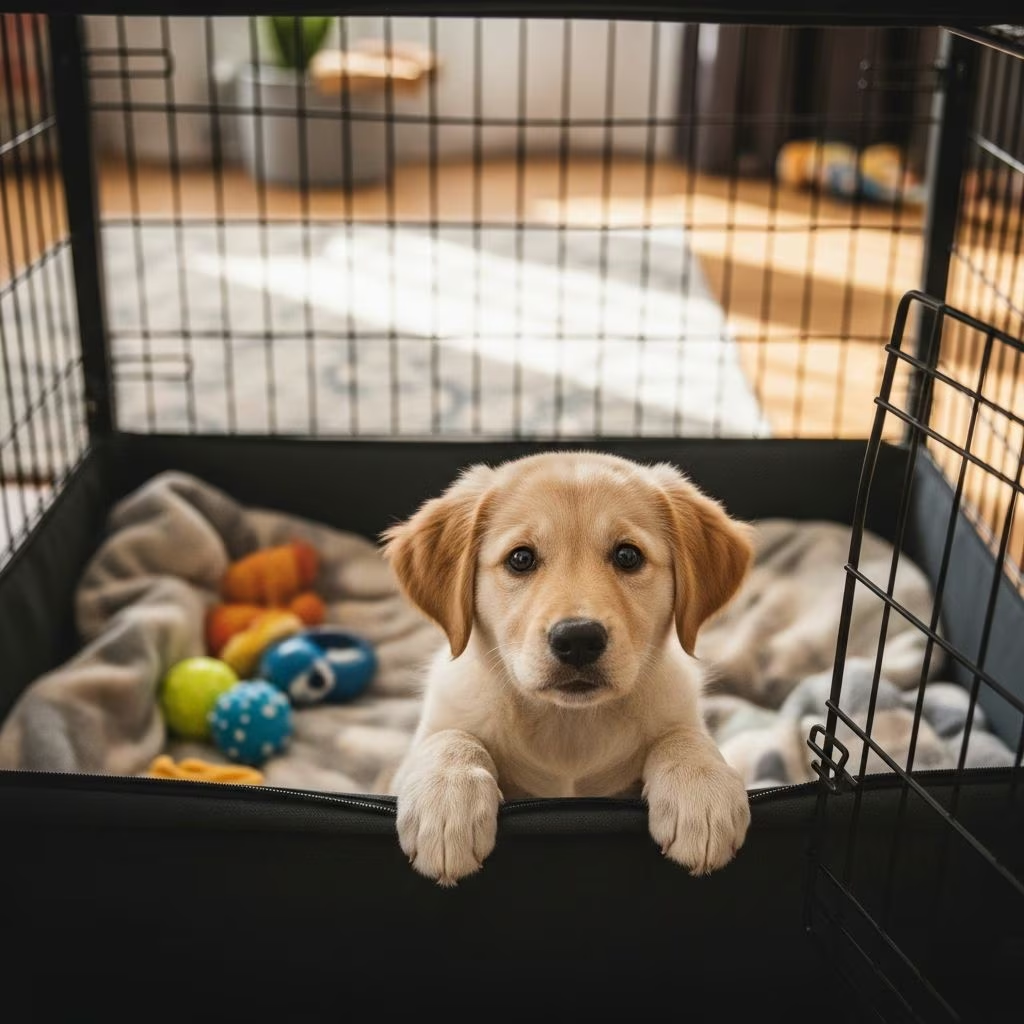
Crate training transforms a simple enclosure into a safe haven for your puppy, promoting better behavior, easier housebreaking, and overall security. This method leverages a dog’s natural denning instinct, making the crate a voluntary retreat rather than a punishment.
Why Crate Training Matters for Your Puppy’s Development
At its core, crate training teaches puppies self-control and helps prevent destructive behaviors when unsupervised. Puppies instinctively avoid soiling their sleeping area, so a properly sized crate accelerates potty training by encouraging them to hold their bladder and bowels. Beyond housebreaking, it reduces separation anxiety by associating the crate with comfort and rewards.
Animal welfare experts emphasize that consistent crate use builds confidence. For instance, short sessions prevent accidents and chewing on household items, while long-term benefits include safer travel and reduced stress during vet visits. Studies from humane societies show that positively trained dogs view crates as cozy dens, not prisons.
- Housebreaking acceleration: Puppies learn to signal needs promptly.
- Safety assurance: Protects from household hazards during alone time.
- Travel readiness: Eases car rides and boarding.
- Anxiety reduction: Creates a portable comfort zone.
Selecting the Perfect Crate for Your Puppy
Choose a crate that allows your puppy to stand, turn around, and lie down comfortably without excess space, which could lead to soiling one end. Wire crates offer ventilation and visibility, while plastic ones provide a den-like feel for shy pups. For growing breeds, opt for adjustable dividers to customize size as they mature.
| Crate Type | Best For | Pros | Cons |
|---|---|---|---|
| Wire | Active puppies | Airflow, visibility, easy cleaning | Less cozy |
| Plastic | Shy or anxious pups | Secure, den-like | Reduced visibility |
| Fabric | Travel/portable | Lightweight, collapsible | Not for chewers |
Enhance comfort with soft bedding that absorbs accidents, but observe if your puppy chews it—remove if so to avoid ingestion risks. Place the crate in a high-traffic family area initially for security, then transition to quieter spots for sleep.
Building a Positive Foundation: Initial Introduction
Begin without pressure. Position the open crate in a busy room and let your puppy investigate freely. Use high-value treats or toys to lure them near, then inside, marking progress with praise or a clicker.
- Toss treats just inside the door; reward entry with more.
- Gradually require deeper entry (head, paws, full body) before rewarding.
- Once comfortable, introduce a cue like “crate” or “kennel” as they enter voluntarily.
Sessions should last 5-10 minutes, repeated 10 times daily. Patience is key—some puppies warm up in minutes, others days. Never force entry, as it breeds fear.
Mealtime Magic: Associating Food with the Crate
Feed meals inside to forge a strong positive link. Start by placing the bowl near the entrance if hesitant, inching it back over sessions. Use puzzle toys or stuffed Kongs filled with kibble for mental stimulation, turning meals into engaging challenges.
Progress to closing the door briefly during eating, releasing before they finish. This builds tolerance without stress. Repeat across multiple meals daily, varying durations slightly.
Gradual Duration Building: From Seconds to Hours
Once entering eagerly, cue entry, close the door, and sit nearby for 1-2 minutes. Reward calm behavior, then release with a word like “free.” Gradually extend time: 5 minutes, then step away briefly.
- Week 1: 5-10 minutes with you visible.
- Week 2: 10-30 minutes, occasional room exits.
- Week 3+: 1 hour+, incorporating departures.
Incorporate naps and bedtime. Cover three sides for a den effect, reducing stimulation. Always take potty breaks before and after.
Overnight Crate Success Strategies
Puppies can hold needs for 3-4 hours initially (age in months +1), so plan nighttime potty trips. Place the crate near your bed for reassurance, using a ticking clock or heartbeat toy to mimic littermates.
If whining occurs, wait for quiet before releasing to avoid reinforcing cries. Consistency yields quiet nights within 1-2 weeks.
Real-World Application: Crating During Absences
After mastering 30-60 minutes alone at home, test short errands (5-10 minutes). Provide long-lasting chews to occupy them. Build to work hours gradually, never exceeding 4-6 hours for adults.
For travel, practice car crating with familiar routines. Airlines often require crates; ensure compliance with size regs.
Troubleshooting Common Crate Training Hurdles
Persistent whining signals needs or discomfort—check for hunger, thirst, or full bladder. Backtrack steps if anxiety spikes.
| Problem | Solution |
|---|---|
| Whining/Barking | Ignore until quiet; ensure prior potty/exercise |
| Soiling Inside | Crate too big; more frequent breaks |
| Fear of Entry | Slower luring with toys/treats |
| Escaping | Secure latches; add familiar scents |
For aggressive resistance, consult a trainer. Exercise before sessions prevents pent-up energy.
Advanced Techniques for Lifelong Crate Love
Rotate toys and rotate treats to maintain interest. Practice random cues to solidify reliability. For multi-dog homes, train separately first.
Transition to open-crate use once proficient, fostering voluntary denning.
FAQs: Your Crate Training Questions Answered
How long does crate training take?
Typically 2-6 weeks with daily practice, varying by puppy temperament and consistency.
Is crating cruel?
No, when done positively—it’s a welfare tool endorsed by humane societies.
Can adult dogs be crate trained?
Yes, same steps apply, though slower for rescues with past trauma.
What if my puppy hates the crate?
Revert to basics, use softer bedding, and try different locations.
Should I crate during the day?
Yes, for safety, but limit to 4-6 hours with breaks.
Long-Term Benefits and Maintenance
Well-crate-trained dogs exhibit lower stress in new environments and faster behavior adaptation. Maintain by occasional sessions even post-training. Monitor for overuse signs like avoidance, balancing with free play.
References
- How to Crate Train a Puppy or Dog — Best Friends Animal Society. 2023. https://bestfriends.org/pet-care-resources/how-crate-train-puppy-or-dog
- Crate Training Your Dog or Puppy — Maddie’s Fund. 2023. https://www.maddiesfund.org/crate-training-your-dog-or-puppy.htm
- How to Crate Train Your Dog or Puppy — Humane World for Animals. 2024. https://www.humaneworld.org/en/resources/crate-training-101
- A Beginner’s Guide to Crate Training — American Kennel Club. 2024. https://www.akc.org/expert-advice/training/a-beginners-guide-to-crate-training/
- How To Crate Train Your Dog — PAWS. 2023. https://www.paws.org/resources/how-to-crate-train-your-dog/
- Crate Training 101 — Dog Trick Academy. 2022. https://www.dogtrickacademy.com/forum/threads/crate-training-101.2442/



