

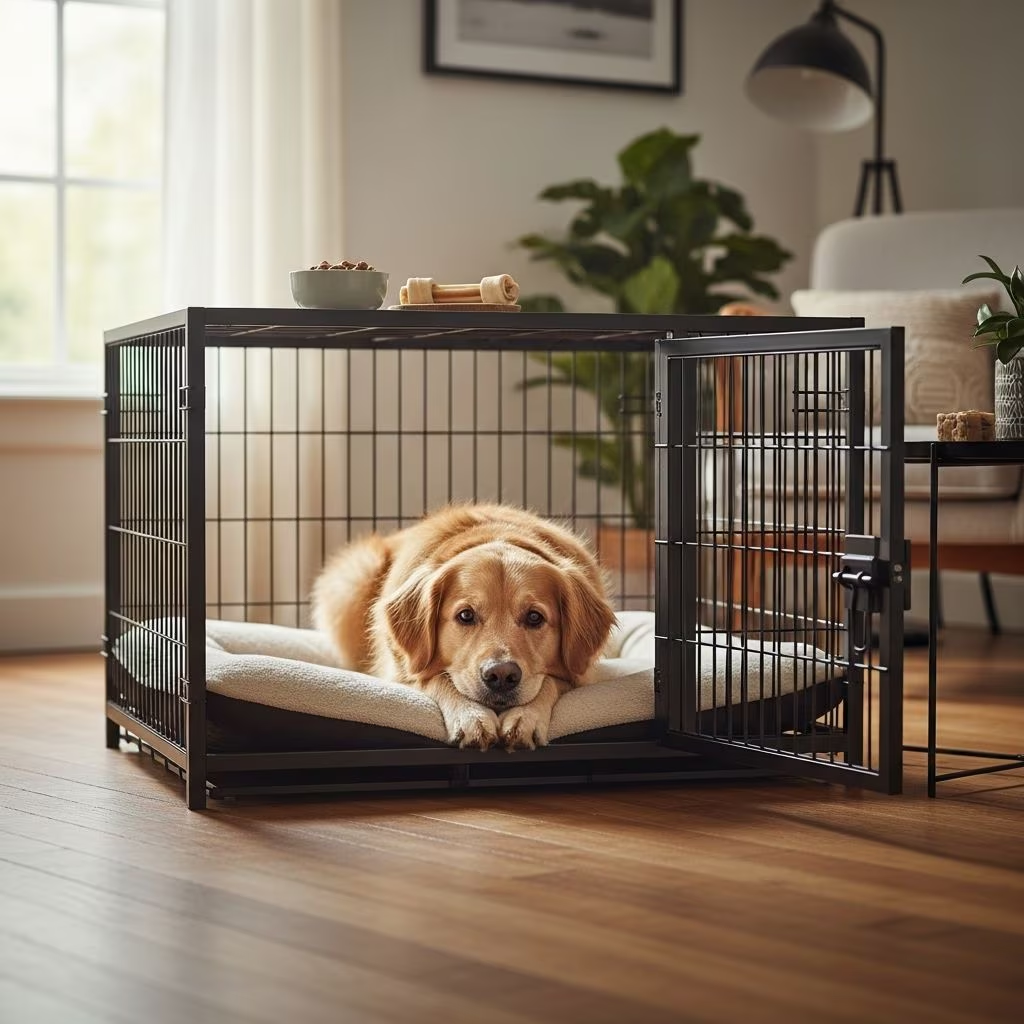
Crate training transforms a simple wire enclosure into a vital tool for dog ownership, promoting safety, better behavior, and stronger bonds between pets and people. This method leverages dogs’ innate preferences for enclosed spaces, making it an essential skill for new and experienced owners alike.
Understanding the Fundamentals of Crate Training
Crate training involves introducing a dog to a crate as a comfortable, personal retreat rather than a place of punishment. Dogs in the wild seek out dens for rest and security, and modern crates mimic this natural instinct, providing a bounded area where they feel protected.
Proper implementation ensures the crate becomes associated with positive experiences, such as meals and play. This approach not only aids in managing daily routines but also supports long-term behavioral health by teaching self-soothing and relaxation.
Key Advantages for Housebreaking Success
One of the standout benefits is accelerating housebreaking. Dogs instinctively refrain from eliminating in areas where they sleep or eat, so a properly sized crate—large enough for standing, turning, and lying down but not excessively spacious—encourages bladder and bowel control.
- Establish predictable potty schedules by crating after meals and naps, then immediately leading to the outdoor spot.
- Reward outdoor elimination with praise and treats to reinforce the habit.
- Gradually increase crate durations as the dog’s control improves, typically aligning with age-based guidelines (e.g., a 2-month-old puppy can hold for about 2-3 hours).
Studies confirm this method shortens the housebreaking timeline compared to free-roaming approaches.
Enhancing Safety and Preventing Household Mishaps
Crates serve as a safeguard against accidents and dangers. When unsupervised, dogs may ingest toxins, chew electrical cords, or knock over objects, leading to injuries or costly damage. Confinement eliminates these risks while the owner is away or busy.
For puppies, this limitation prevents the development of destructive habits like excessive chewing or digging, preserving furniture and floors.
| Risk Without Crate | Benefit With Crate |
|---|---|
| Chewing wires or toxic items | Protected from hazards |
| Indoor accidents | Promotes outdoor elimination |
| Escalating destructive cycles | Breaks bad habit formation |
Combating Anxiety and Building Emotional Resilience
Many dogs experience distress when left alone, manifesting as whining, pacing, or self-destructive actions. A crate acts as a “safe zone,” reducing these symptoms by offering familiarity and boundaries that mimic a den.
Research indicates confined spaces lower stress hormones in anxious dogs when paired with enrichment like puzzle toys or familiar scents. Over time, this fosters independence, decreasing overattachment and separation issues.
Facilitating Safe and Stress-Free Travel
Whether for vet visits, road trips, or flights, a crate-trained dog travels more securely. Airlines often require crates for cargo, and vehicles benefit from restrained pets to prevent distractions or ejections during sudden stops.
- Practice short car rides in the crate to build comfort.
- Include the dog’s bedding and toys for continuity.
- Acclimate to airline-style crates if flying is planned.
This preparation ensures compliance with travel regulations and minimizes motion sickness or escape attempts.
Choosing the Right Crate for Your Dog
Selecting an appropriate crate is crucial for success. Consider size, material, and features tailored to your dog’s breed, age, and needs.
| Crate Type | Best For | Pros | Cons |
|---|---|---|---|
| Wire | All sizes, ventilation | Airflow, visibility, foldable | Can feel less secure |
| Plastic | Travel, escape artists | Durable, enclosed | Heavier, less airy |
| Fabric | Soft travel, small dogs | Lightweight, portable | Not chew-proof |
Measure your dog in a relaxed position and add minimal extra space. Divider panels allow growth adjustments for puppies.
Step-by-Step Guide to Introducing the Crate
Begin slowly to avoid resistance. Force can create lifelong aversion, so positivity is key.
- Placement and Exploration: Position the crate in a family area. Leave the door open with enticing items inside, like treats or toys, encouraging voluntary entry.
- Positive Associations: Feed meals near or inside the crate. Praise calm entry and exit.
- Short Sessions: Close the door for seconds, gradually extending to minutes. Stay nearby, offering verbal reassurance.
- Alone Time: Step out briefly, returning before distress. Use high-value chews to occupy.
- Overnight Crating: Once comfortable, use for sleep, taking out first thing in the morning.
Progress at the dog’s pace; some adapt in days, others weeks.
Daily Routines and Schedules for Optimal Results
Integrate crating into a structured day. A sample schedule for a puppy:
- Morning: Potty, play, 1-hour crate with toy.
- Midday: Short crate during owner’s absence.
- Evening: Dinner in crate, bedtime crating.
Adults may need less frequent use but benefit from scheduled retreats.
Incorporating Enrichment to Keep Dogs Engaged
Boredom breeds frustration, so fill crate time with mental stimulation. Rotate items like stuffed Kongs, chew bones, or sniff mats to maintain interest.
- Frozen treats for teething pups.
- Puzzle feeders for food-motivated dogs.
- Familiar blankets for scent comfort.
This prevents whining and promotes restful behavior.
Common Mistakes and How to Avoid Them
Avoid these pitfalls for smoother training:
- Too Large a Crate: Allows soiling in one end. Use dividers.
- Punitive Use: Undermines trust; reserve for positive contexts.
- Excessive Duration: Puppies under 6 months shouldn’t exceed 4-6 hours daytime.
- Ignoring Signals: Watch for whining indicating potty needs.
Tailoring Training for Different Ages and Breeds
Puppies start young for best results, but adults and rescues can learn too. High-energy breeds like Labs may need more exercise pre-crating, while hounds appreciate cozy enclosures.
Senior dogs benefit from crates for joint relief, using orthopedic pads.
Long-Term Maintenance and Troubleshooting
Once trained, rotate crate use to prevent dependency. If regression occurs—due to changes like moves—revisit basics with extra rewards.
For persistent issues like barking, desensitize door closures and ensure ample exercise.
Frequently Asked Questions (FAQs)
Is crate training cruel?
No, when done positively, it’s a welfare-enhancing tool endorsed by veterinarians.
How long can I crate my dog?
Puppies: 1 hour per month of age up to 8 hours. Adults: 6-8 hours max, with breaks.
What if my dog hates the crate?
Go back to exploration steps, using extra enticing rewards and short sessions.
Can I crate multiple dogs?
Separate crates per dog to avoid fights and ensure individual space.
Does crate training stop separation anxiety completely?
It helps significantly but combine with behavior modification for best outcomes.
References
- Benefits of Crate Training for Dogs — Precision Dog Training. 2023. https://precisiondogtrainer.com/benefits-of-crate-training-for-dogs-precision-dog-training/
- Reasons to Crate Train Your Dog — VCA Animal Hospitals. 2024-01-15. https://vcahospitals.com/know-your-pet/reasons-to-crate-train-your-dog
- Benefits of Crate Training — Elanco Your Pet and You. 2023. https://yourpetandyou.elanco.com/us/behavior/benefits-of-crate-training
- Why Crate Training Is Beneficial — Diggs Pet. 2023. https://www.diggs.pet/blogs/posts/crate-training-benefits
- How to Crate Train Your Dog — Sadie’s Rules K9 Training. 2019-06-29. http://www.sadiesrulesk9training.com/blog-posts/2019/6/29/how-to-crate-train-your-dog-and-why-you-should
- How to Crate Train a Puppy or Dog — Best Friends Animal Society. 2024. https://bestfriends.org/pet-care-resources/how-crate-train-puppy-or-dog
- Crate Training Your Puppy — UC Davis Veterinary Medicine. 2022. https://www.vetmed.ucdavis.edu/sites/g/files/dgvnsk491/files/inline-files/Crate_Training_Your_Puppy.pdf



