
Mastering Crate Training for Dogs
Unlock stress-free crate habits with proven, positive techniques that turn your dog's den into a beloved retreat.
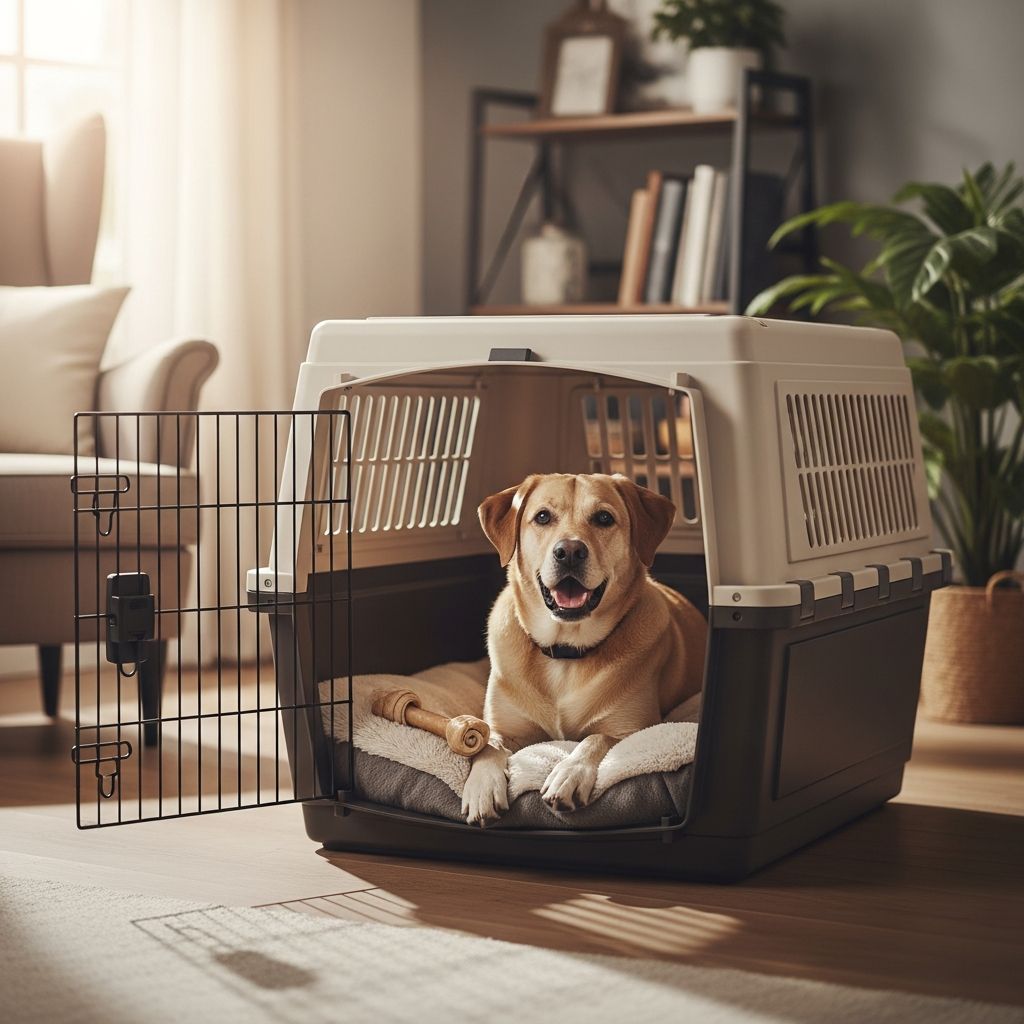
Crate training transforms a simple wire enclosure into a safe, comforting sanctuary for your dog, aiding housebreaking, preventing destructive behavior, and easing separation anxiety. This method leverages a dog’s innate denning instinct, where confined spaces mimic natural burrows, promoting relaxation and security when introduced properly.
Why Crate Training Benefits Every Dog Owner
Proper crate use supports multiple aspects of dog ownership. It accelerates potty training by establishing a routine where dogs avoid soiling their sleeping area. During travel, crates provide stability in cars or planes, reducing motion sickness risks. For safety, they prevent chewing hazards or escapes when unsupervised. Long-term, trained dogs view crates as rest zones, lowering stress during vet visits or boarding.
- Housebreaking aid: Dogs naturally hold bladder in their den.
- Safety measure: Protects puppies from household dangers.
- Travel essential: Compliant for air and road trips.
- Behavioral tool: Manages separation issues calmly.
Selecting the Perfect Crate Setup
Choose a crate matching your dog’s adult size: large enough to stand, turn, and lie down comfortably, but not excessively spacious to encourage cleanliness. Wire models with dividers suit growing puppies; plastic airline crates work for travel. Add a soft mat or towel for coziness, avoiding loose fabrics that could be ingested. Position in high-traffic family areas initially for familiarity.
| Crate Type | Best For | Pros | Cons |
|---|---|---|---|
| Wire | Home use, puppies | Airflow, visibility, divider option | Less secure for escape artists |
| Plastic | Travel, airlines | Durable, den-like | Poor ventilation |
| Fabric | Portable, apartments | Lightweight, collapsible | Not chew-proof |
Reinforce weak points with zip ties for durability, especially with strong chewers.
Building Positive First Impressions
Introduce the crate during calm moments, not as punishment. Leave the door open and toss high-value treats like small bits of chicken or cheese inside sporadically. Praise lavishly when your dog investigates voluntarily. Alternate with toys to vary rewards, fostering curiosity without pressure.
Pro tip: Deliver treats directly from inside the crate to link entry with immediate positivity. Repeat sessions 5-10 times daily, keeping them short (2-5 minutes) to prevent overwhelm.
Gradual Entry and Stay Exercises
Once comfortable approaching, teach a cue like “crate” or “kennel.” Say the word as your dog steps in, followed by treats dropped further inside. Encourage full entry by pointing or luring gently. Practice back-and-forth movement between crate and a nearby bed to build flexibility.
- Lure into crate with treat trail.
- Feed occasional meals inside with door open.
- Close door briefly (1-2 seconds) while praising.
- Extend to 10 seconds, then minutes.
For stays, introduce a down position inside using food lures, rewarding relaxation.
Mastering Door Closures and Alone Time
Progress by closing the door for half-seconds, opening immediately with treats. Gradually increase to 10 minutes while you sit nearby, then step away briefly. Use stuffed Kongs—frozen peanut butter or yogurt fillings—for distraction during longer sessions. Release before fussing to avoid negative associations.
Build duration: Start with 1 minute, add 30 seconds per successful session. Incorporate household noises to desensitize.
Advanced Techniques for Reliable Habits
Teach remote entry: From across the room, cue “go to crate,” rewarding auto-entry. Practice down/stays with door open under supervision to promote calm. Feed all meals crated, pairing with high-value chews like marrow bones for lasting appeal.
For multi-dog homes, assign individual crates to prevent resource guarding during meals.
Addressing Common Crate Resistance
Puppies whining? Ignore attention-seeking cries but release on quiet moments. Adults anxious from past trauma need slower pacing—revert to treat-tossing basics. Never force entry; it builds fear. If escape attempts occur, check for reinforcement needs and increase exercise beforehand.
- Whining: Wait for silence before opening.
- Pacing: Add calming toys, reduce session length.
- Escapees: Zip-tie seams, supervise rigorously.
Daily Routines and Long-Term Integration
Incorporate crate naps post-play, nighttime sleeping, and pre-departure stays. Aim for 1-2 hours max during day for adults; puppies need frequent breaks per age (e.g., 2 hours max under 3 months). Rotate locations gradually for versatility.
Consistency yields results in weeks; full proficiency may take months with daily practice.
FAQs
Can adult rescue dogs be crate trained?
Yes, with patience. Start slower, using extra-high rewards to override past negativity.
How long can a dog stay crated overnight?
Puppies: 3-4 hours max initially; adults: 6-8 hours with potty breaks.
What if my dog chews the crate?
Upgrade to heavy-duty models, ensure ample exercise, and rule out separation anxiety.
Is crate training cruel?
No, when done positively—it’s a welfare tool endorsed by experts for safety and comfort.
When to stop crate training?
Never fully; use as needed lifelong for travel, recovery, or routine.
Essential Tools for Success
- High-value treats (beef lung, cheese).
- Stuffed Kongs or puzzle toys.
- Comfortable crate mat.
- Clicker for precise timing.
References
- 6 Steps to Crate Train Your Dog – Leash and Learn — Leash and Learn. 2019. https://leashandlearnnyc.com/step-by-step-crate-training/
- Crate Training Your Dog or Puppy – Maddie’s Fund — Maddie’s Fund. N/A. https://www.maddiesfund.org/crate-training-your-dog-or-puppy.htm
- How to Crate Train Your Dog (and Why You Should!) – Sadie’s Rules — Sadie’s Rules K9 Training. 2019-06-29. http://www.sadiesrulesk9training.com/blog-posts/2019/6/29/how-to-crate-train-your-dog-and-why-you-should
- How to Crate Train Your Dog in Nine Easy Steps — American Kennel Club (AKC). N/A. https://www.akc.org/expert-advice/training/how-to-crate-train-your-dog-in-9-easy-steps/
- 3 Easy Crate Training Tips — Dunbar Academy (YouTube). N/A. https://www.youtube.com/watch?v=OyNXG0CBgzM
- How to Crate Train an Adult Dog: A Step-by-Step Guide — K9 Connoisseur. N/A. https://k9connoisseur.com/blogs/news/how-to-crate-train-an-adult-dog
(Word count: 1678)
Similar Articles








Read full bio of medha deb




