

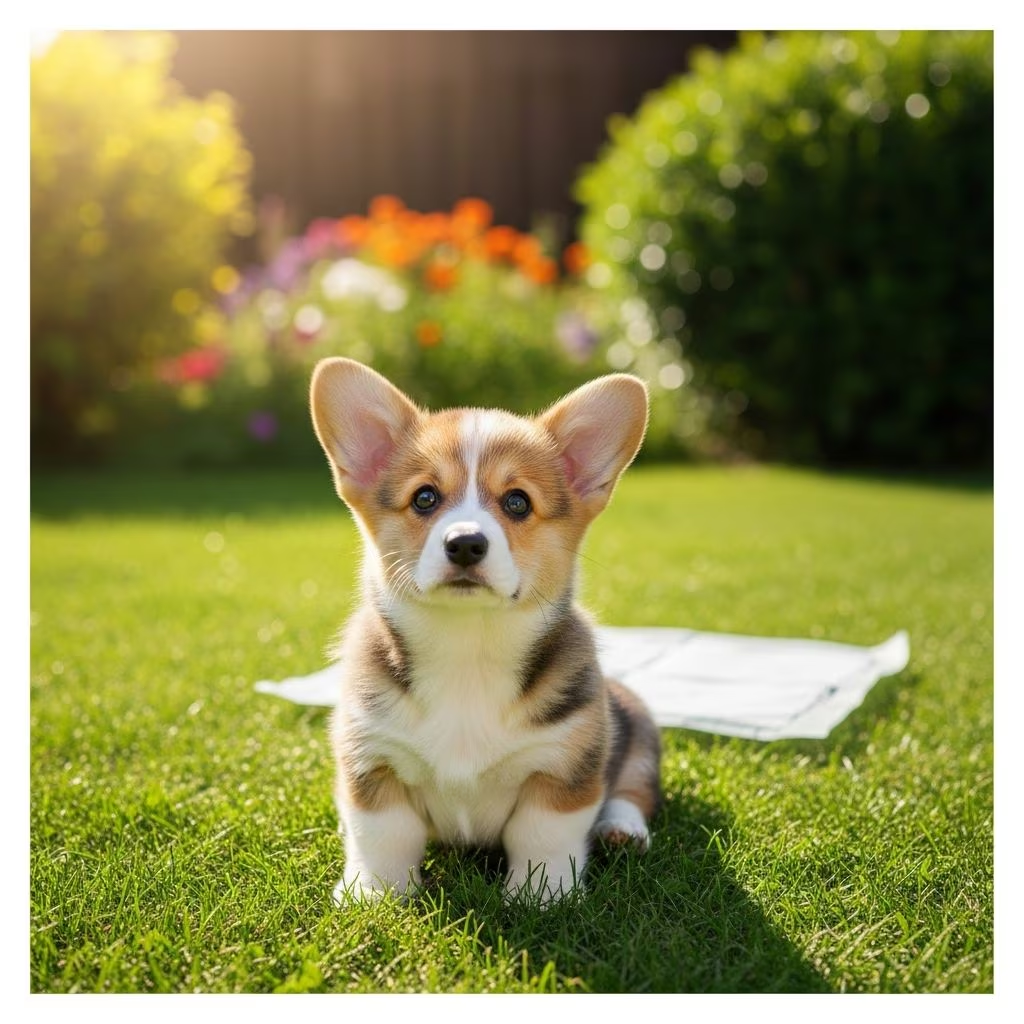
Corgis, with their sharp minds and eager-to-please nature, respond exceptionally well to structured potty training methods. This guide provides a step-by-step approach to housebreaking your Corgi, whether starting with a young puppy or retraining an adult, emphasizing consistency, positive reinforcement, and keen observation for lasting results.
Understanding Corgi Traits for Successful Training
Corgis descend from herding breeds, making them intelligent and responsive to routines. Their natural instinct to keep living areas clean aids in potty training, but their stubborn streak requires patient, uniform guidance from all household members. Puppies typically master basics in weeks, while adults may need habit-breaking efforts. Factors like age influence bladder capacity: puppies under 12 weeks hold for about 2 hours, extending to 6-8 hours by six months.
Essential Preparations Before Starting
Success begins with planning. Align family on rules—no mixed signals like allowing indoor pads for some while demanding outdoor use for others. Stock up on enzymatic cleaners to erase accident scents, preventing repeat spots. Select a crate sized for your Corgi to stand, turn, and lie comfortably—too large invites soiling in corners. Establish feeding times to predict elimination needs, as meals trigger bowel movements within 30 minutes.
- Gather supplies: Crate, exercise pen, leash, treats, enzyme spray.
- Set house rules: Designate one outdoor spot or indoor alternative.
- Prepare mentally: Expect accidents; focus on progress over perfection.
Building a Predictable Daily Routine
A fixed schedule mimics pack life, helping Corgis anticipate potty times. Feed at set intervals—three meals for puppies, twice daily for adults—followed by immediate outdoor trips. Typical timeline: potty upon waking, post-meals, after play, before bed, and every 2-4 hours for young pups.
| Age | Potty Breaks per Day | Max Hold Time |
|---|---|---|
| 8-12 weeks | 10-12 | 2 hours |
| 3-6 months | 8-10 | 4-6 hours |
| Adult | 4-6 | 8 hours |
Track successes in a journal to refine intervals, adjusting for water intake or activity levels.
Leveraging Crate Training for Bladder Discipline
Crates tap into dogs’ aversion to soiling dens, building control. Introduce gradually: meals inside, short stays with toys, then overnight confinement. Never use as punishment. Combine with tethers during supervised play to limit free roam, expanding freedom as reliability grows. Enzymatic cleaners ensure no lingering odors undermine progress.
Recognizing and Responding to Potty Signals
Vigilance prevents mishaps. Watch for sniffing, circling, whining, or door-scratching—rush outside immediately. Praise lavishly and treat upon completion, using cues like “go potty” for association. If caught mid-act, interrupt calmly, escort outside to finish, then clean indoors thoroughly. Excited Corgis may leak; preempt with breaks during high-energy moments.
Deciding on Puppy Pads: Pros and Cons
Pads suit apartment dwellers or inclement weather but risk confusing location preferences. Use as temporary bridge: place near door, gradually shift outside. Avoid long-term reliance, as it delays full outdoor mastery. For seniors with mobility issues, pads maintain dignity without stairs.
Positive Reinforcement: The Reward System
Corgis thrive on praise. High-value treats post-success cement habits. Ignore accidents silently—scolding fosters fear and hiding. Consistency across handlers amplifies learning; track improvements weekly to stay motivated.
Troubleshooting Common Hurdles
Persistent accidents signal issues: medical (UTIs via vet check), stress, or insufficient outings. Regression in adults often ties to routine changes; revert to puppy protocols. Multi-dog homes need separate schedules to avoid mimicry.
- Frequent small puddles: Possible infection; consult vet.
- Indoor preference: Scent marking; deep clean and restrict access.
- Nighttime accidents: Limit evening water; longer crate naps.
Age-Specific Training Adjustments
Puppies: Foundation Phase
Start day one home. Every 30-60 minutes initially, scaling back. Night crates with no water post-7 PM.
Adults: Habit Reformation
Address ingrained patterns. Leash indoors for control, rewarding outdoor choices. Patience counters resistance.
Seniors: Comfort-Focused
Shorter holds demand more breaks. Ramps aid access; pads if arthritis limits.
Integrating Potty Training with Broader Obedience
Combine with commands like sit-stay for structured outings. Socialization prevents fear-based issues. Professional trainers help stubborn cases, per AKC guidelines.
Long-Term Maintenance for a Lifetime Habit
Once reliable, maintain 4-6 daily walks. Vacation backups ensure consistency. Annual vet checks rule out age-related incontinence.
Frequently Asked Questions
How long does it take to potty train a Corgi puppy?
Typically 4-6 months for full reliability, varying by individual consistency.
Can adopted adult Corgis be housebroken?
Yes, with 2-8 weeks of dedicated routine-breaking, using crates effectively.
What if my Corgi regresses after progress?
Reintroduce strict supervision and schedules; rule out health issues.
Are belly bands useful for male Corgis?
They protect during training but don’t teach habits; use short-term.
Should I wake my puppy for night potty breaks?
Yes, every 3-4 hours initially, fading as control improves.
References
- House Training Your Puppy — American Kennel Club (AKC). 2024-05-15. https://www.akc.org/expert-advice/training/how-to-potty-train-a-puppy/
- Crate Training Basics — ASPCA. 2023-11-20. https://www.aspca.org/pet-care/dog/training/crate-training-your-puppy
- Potty Training Puppies — Humane Society of the United States. 2025-02-10. https://www.humanesociety.org/resources/how-potty-train-your-puppy
- Canine Bladder Development — Veterinary Centers of America (VCA). 2024-08-01. https://vcahospitals.com/know-your-pet/house-training-your-puppy
- Positive Reinforcement in Dog Training — Association of Professional Dog Trainers (APDT). 2023-12-05. https://apdt.com/resource-center/positive-reinforcement/



