

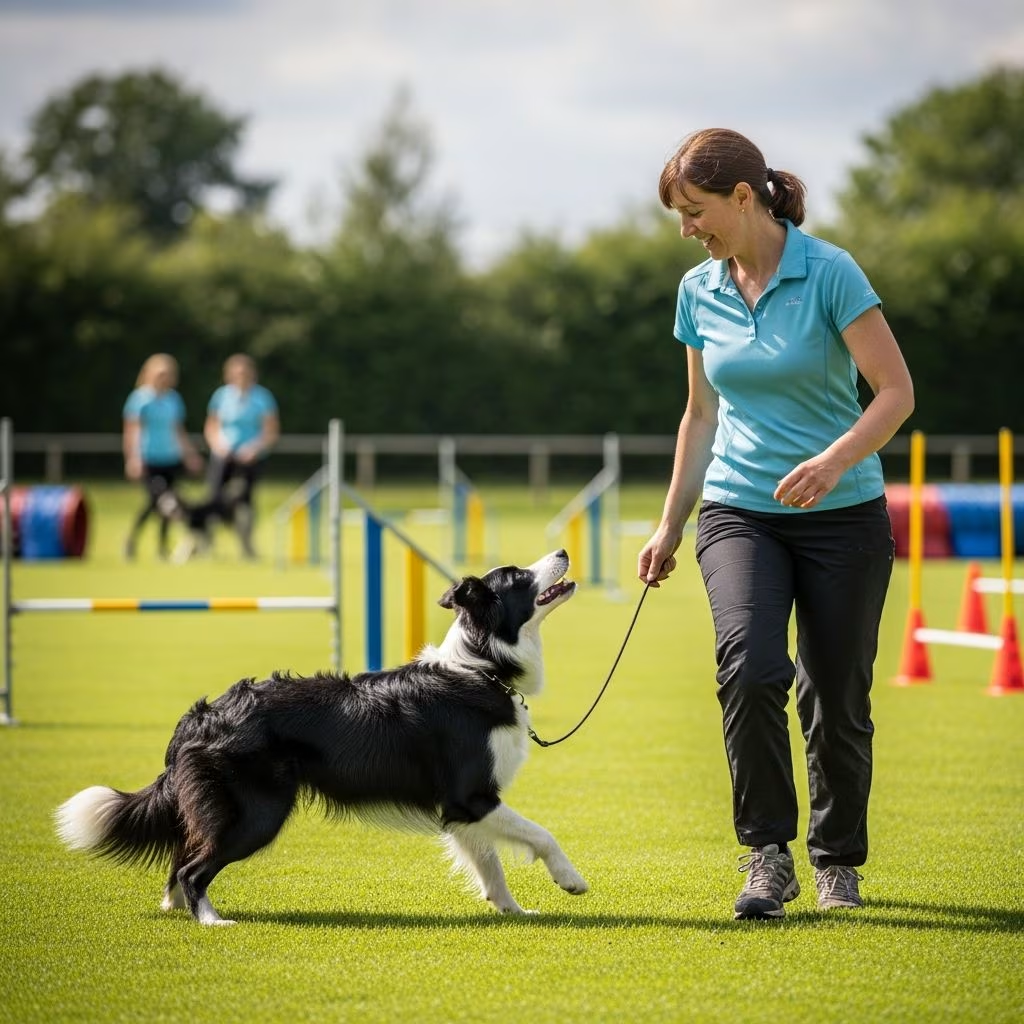
Competitive obedience transforms basic dog training into a dynamic sport that showcases precision, focus, and partnership between handler and canine. This discipline, popular worldwide, challenges teams through structured exercises judged on accuracy and responsiveness.
Understanding the Foundations of Canine Competitive Obedience
At its core, competitive obedience evaluates a dog’s ability to perform commands reliably under distraction, fostering impulse control and attentiveness. Unlike casual training, it demands pinpoint execution in heeling, recalls, stays, and retrieves, turning everyday skills into competition-ready performances.
Organizations like the American Kennel Club (AKC) and Royal Kennel Club outline standardized rules, ensuring fair play across events. Handlers score points based on minimal errors, with top performers advancing through progressive classes. This structure motivates continuous improvement, benefiting both sport participants and pet owners seeking better-behaved companions.
Essential Skills Every Competitor Must Build
Success hinges on mastering five primary skill sets: heeling, recalls, stationary positions, jumping, and retrieving. Heeling requires the dog to maintain position beside the handler during patterned movements, on and off leash, demonstrating sustained focus.
Recalls test reliable returns to the handler from distance, even amid distractions. Stationary skills—sit, down, stand, and stay—evaluate endurance in position while the handler moves away or hides. Jumps and retrieves add physical and cognitive challenges, requiring clean execution without handler guidance.
- Heeling: Smooth, close positioning with automatic sits at halts.
- Recalls: Swift, straight-line returns to front position.
- Stationary: Prolonged holds under varying conditions.
- Jumps: Accurate clearances of hurdles or broad jumps.
- Retrieves: Prompt pickup and delivery of objects like dumbbells.
Training Timeline: From Puppy to Pro
Begin with puppies as young as 14-16 weeks, capitalizing on their rapid learning phase. Early exposure to core skills via luring and reward markers lays a robust groundwork without overwhelming the pup.
| Age/Stage | Focus Areas | Session Goals |
|---|---|---|
| 14-16 Weeks | Intro to heeling, basic recalls, sits/downs | Build enthusiasm with short, fun drills |
| 6-12 Months | Off-leash heeling, stays, simple retrieves | Incorporate mild distractions |
| 1+ Years | Full routines, jumps, advanced precision | Simulate trial pressures |
Adolescents refine these under graduated distractions, while adults polish for competition. Consistent short sessions—5-15 minutes daily—prevent burnout and solidify habits.
Positive Reinforcement: The Heart of Effective Training
Positive methods dominate modern obedience training, using immediate treats, toys, or praise to link actions with rewards. Timing is critical: deliver reinforcement within seconds to avoid confusion. Verbal markers like “yes!” paired with hand signals enhance clarity, fading treats over time for cue-responsive behavior.
Consistency across sessions reinforces reliability. Vary rewards to sustain motivation, ensuring the dog associates effort with unpredictable joy. Patience accommodates individual paces, turning setbacks into trust-building opportunities.
Weekly Training Schedules for Steady Progress
A structured routine maximizes gains. Dedicate days to specific skills, blending practice with play for balance.
- Monday: Heeling patterns and halts.
- Tuesday: Recall drills with increasing distance.
- Wednesday: Stationary stays, handler distractions.
- Thursday: Retrieve and jump sequences.
- Friday: Full run-throughs in varied environments.
- Weekend: Review weak areas, fun games.
Track milestones to celebrate achievements, like new toys for mastered commands. Gradually escalate distractions—from quiet rooms to parks—mirroring trial conditions.
Navigating Competition Levels and Rules
Events feature progressive classes, starting introductory and culminating in elite divisions. Novice emphasizes basics; Open adds off-leash and retrieves; Utility demands advanced heeling, scents, and signals.
Scoring penalizes deviations: creeping during stays or wide heeling deducts points. Winners minimize faults, qualifying for championships via consistent 1st places. Study venue-specific rules, as variations exist globally.
Finding the Right Classes and Instructors
AKC-affiliated clubs offer ideal starters, with pros teaching breed-agnostic techniques. Seek instructors with competition titles for real-world insights. Home practice complements classes, focusing on instructor-prescribed drills. All dogs qualify, purebred or mixed.
Overcoming Common Training Hurdles
Distractions derail novices; counter with proofing—practicing amid controlled chaos. Inconsistent cues confuse; standardize language and signals. Physical issues or fear demand vet checks or desensitization. Progress stalls without routine; log sessions to identify patterns.
The Lasting Benefits Beyond the Ring
Competitive training enhances daily life: reactive dogs gain control, energetic ones channel focus. Handlers build confidence through goal-setting, celebrating incremental wins. The handler-dog bond deepens into intuitive teamwork, enriching companionship.
Goal-Setting Strategies for Handlers
Break ambitions into bites: perfect a recall before full heeling. Use progress tables to visualize growth, adjusting for plateaus. Even non-competitors reap rewards from structured sessions.
Frequently Asked Questions (FAQs)
What age is best to start competitive obedience?
Puppies from 14 weeks excel due to plasticity, but adults succeed with patience.
Do I need a purebred dog?
No—all breeds and mixes welcome in most programs.
How often should I train?
Short daily sessions outperform infrequent marathons.
What if my dog loses focus in distractions?
Proof gradually, rewarding attention amid low-level chaos.
Can this improve my pet’s behavior at home?
Yes—impulse control and responsiveness transfer seamlessly.
References
References
- Competitive Obedience Training for Dogs: 5 Key Tips! — Off Leash K9 Training Oklahoma. 2023. https://offleashk9oklahoma.com/competitive-obedience-training-for-dogs/
- A Beginner’s Guide to Competition Obedience for Dogs — Joseph’s Dog Training. 2023. https://josephsdogtraining.com/a-beginners-guide-to-competition-obedience-for-dogs/
- New to competitive obedience? — The Royal Kennel Club. 2024-10-01. https://www.royalkennelclub.com/activities/other-activities/competitive-obedience/new-to-competitive-obedience/
- Competitive Obedience Training Guide — Top Tier Dog Gear. 2024. https://www.toptierdoggear.co.uk/blogs/training-tips-and-gear/competitive-obedience-training-guide
- Getting Started in Obedience — American Kennel Club. 2025-03-01. https://www.akc.org/sports/obedience/getting-started/
- Raising a Performance Puppy – 14-16 weeks — Obedience Road. 2023. https://www.obedienceroad.com/blog/raising-a-performance-puppy-14-16-weeks



