

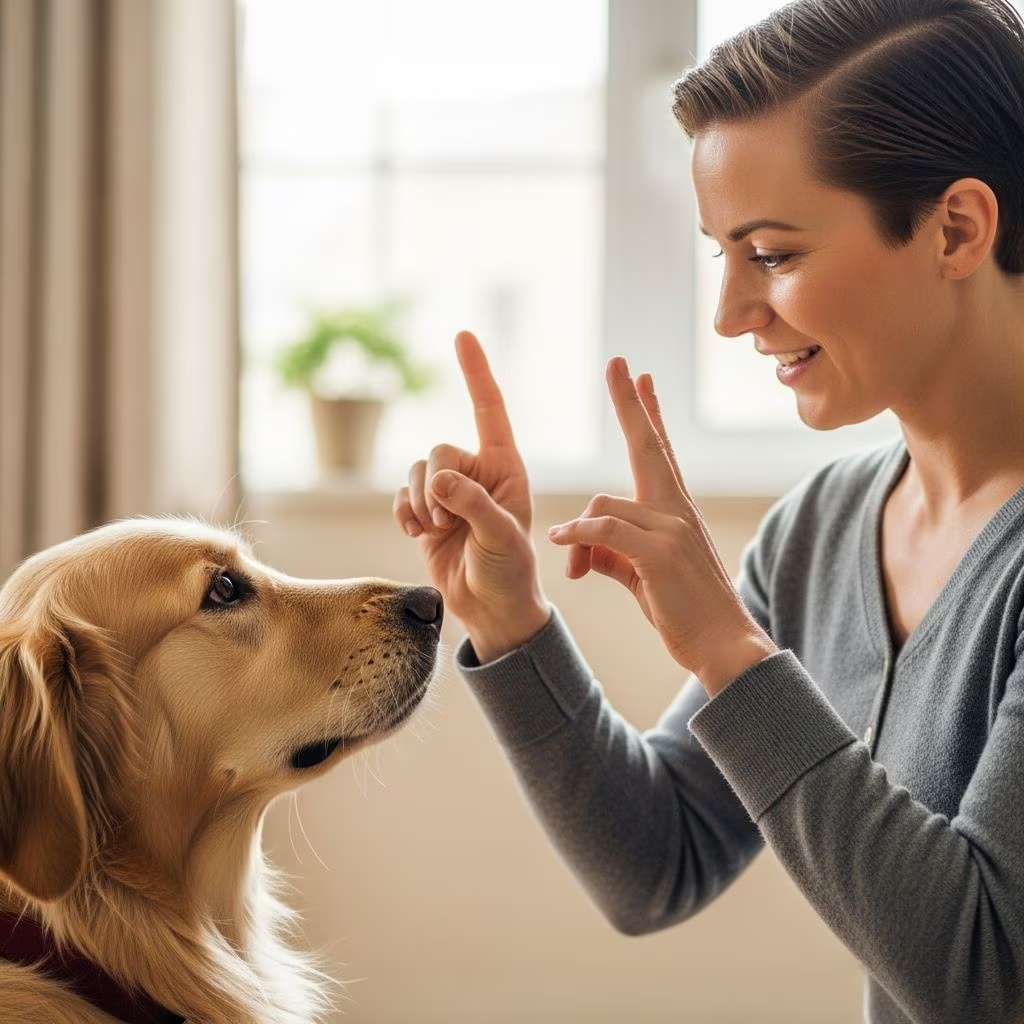
Deaf dogs bring unique joy to households, but their hearing loss requires adapting traditional training to visual and tactile methods. This guide explores practical techniques to capture attention, teach commands, and foster safety, drawing from expert insights on positive reinforcement and consistency.
Why Visual and Tactile Training Works for Hearing-Impaired Pets
Dogs primarily interpret human intentions through body language rather than words, making them ideal candidates for non-auditory communication. Hearing dogs already respond to gestures, but for deaf companions, these become primary tools. Research from animal behavior specialists emphasizes shifting focus to deliberate movements of hands, face, and body to bridge the gap left by absent sound cues.
Positive reinforcement remains key: pair clear signals with treats or affection to create associations. This method builds trust without frustration, turning potential challenges into strengths. Deaf dogs often excel in focus once trained, as they rely less on distractions like noise.
Capturing and Holding Your Dog’s Focus
The foundation of training a deaf dog is establishing reliable attention. Without a voice command, owners must proactively teach ‘check-in’ behaviors where the dog voluntarily looks toward you.
- Reinforce natural glances: Every time your dog makes eye contact, respond immediately with a visual marker like a thumbs-up or hand flash (fist opening to palm), followed by a treat. This conditions the dog to associate looking at you with rewards.
- Use vibrations strategically: Stomp lightly on the floor or drop heavy items to create floor tremors, then reward when the dog turns. Practice in low-distraction settings first.
- Tactile alerts: Gently tap the shoulder or base of the tail. Start by tapping, then offering a treat as they orient toward you. Repeat across rooms and outdoors to generalize the cue.
Consistency turns these into habits. Short sessions—5-10 minutes daily—prevent overwhelm and keep engagement high.
Essential Hand Signals for Basic Commands
Hand signals provide clear, distance-friendly communication. Begin in quiet environments, using lures like treats to guide positions, then fade them out.
| Command | Signal Description | Training Tip |
|---|---|---|
| Sit | Raise palm upward from chest level | Lure nose up with treat, mark when hips drop |
| Down | Lower flat hand from eye level to floor | Capture natural lies; build duration gradually |
| Stay | Open hand toward dog like a stop sign | Step back one step at a time, return to reward |
| Come (Recall) | Pat chest twice, then open arms | Use long line in safe areas; reinforce movement toward you |
Customize signals but maintain distinctness—avoid similar shapes. Pair with a visual marker (e.g., hand flash) to pinpoint correct responses precisely. Progress from close range to 20+ feet in fenced spaces.
Incorporating Touch for Intimate Cues
Touch mimics natural dog-to-dog interactions, ideal for close quarters or when visuals are obstructed.
- Gentle taps: Single tap on haunches for ‘sit’; double on shoulder for ‘look/orient’.
- Pressure points: Light chest nudge for ‘back up’; flank squeeze for ‘move over’. Always follow with praise to keep associations positive.
- Affection integration: Use pets during calm moments to signal safety, strengthening bonds.
Monitor for sensitivity; some dogs startle if touch is sudden. Desensitize by pairing novel touches with high-value rewards.
Safety Measures for Off-Leash Scenarios
Recall is non-negotiable for deaf dogs, as they can’t hear dangers like traffic. Train in enclosed areas with long lines (20-50 feet) to build distance reliability.
- Start inches away: Signal ‘come’, mark approach, jackpot reward (multiple treats).
- Add distance: 5 feet, then 10, fading line tension.
- Introduce distractions: Toys or mild scents, always prioritizing recall success.
For advanced safety, some use low-stimulation e-collars as cues (vibration/tap modes), introduced positively—not as punishment. Pair first zaps with treats to signal ‘attention needed’. Never off-leash in unfenced public spaces.
Daily Routines and Advanced Behaviors
Embed training into life for fluency. Teach ‘place’ by luring to a mat, marking settle, and building duration for calm alone time.
- Mealtime focus: Signal ‘sit’ before bowls; release with thumbs-up.
- Door protocols: Shoulder tap for ‘wait’, then ‘come’ inside.
- Exercise games: Hide-and-seek with signals reinforces recall joyfully.
Advanced cues like ‘heel’ (hand at side) or ‘leave it’ (wrist flick away) expand independence.
Building Emotional Resilience and Bond
Patience defines success. Celebrate micro-wins: a glance, a sit, a return. Short, fun sessions prevent burnout.
Deaf dogs may sleep deeply, missing wake-up sounds—use lights or vibrations for alarms. Nightlights aid visibility. Multi-dog homes benefit from cross-training hearing dogs to ‘alert’ via nose-nudges.
Common Hurdles and Fixes
Issue: Dog ignores signals outdoors. Solution: High-value rewards (meat bits), shorter distances, wind-at-back starts.
Issue: Startle responses. Solution: Condition with ‘surprise’ games—random treats from behind.
Issue: Inconsistent family use. Solution: Chart signals, group practice sessions.
Frequently Asked Questions
Can deaf dogs learn as fast as hearing ones?
Yes, often faster in visuals, with consistent methods.
Are vibrating collars safe?
When used for cues (not punishment), yes; consult pros.
What if my dog was deaf later in life?
Prior hearing dogs adapt well; reteach faded cues.
Best treats for motivation?
Soft, smelly like cheese or hot dogs; tiny pieces.
Group classes for deaf dogs?
Seek positive, visual-focused trainers.
Long-Term Success Strategies
View training as lifelong enrichment. Annual refreshers maintain skills. Join communities for support—deaf dogs thrive with informed owners. Your adaptation honors their spirit, creating unbreakable partnerships.
References
- How to Communicate with Your Deaf Dog — Unconditional Rescue. Accessed 2026. https://www.unconditionalrescue.org/how-to-communicate-with-your-deaf-dog/
- How to Communicate with a Deaf Dog — Karen Pryor Clicker Training. Accessed 2026. https://clickertraining.com/how-to-communicate-with-a-deaf-dog/
- How to Train a Deaf Dog — KC Dawgz. Accessed 2026. https://kcdawgz.com/how-to-train-a-deaf-dog-kansas-city/
- Communicating With a Deaf Dog — Old Dog Haven. Accessed 2026. https://olddoghaven.org/communicating-with-a-deaf-dog-teaching-an-old-dog-new-tricks/
- DEAF DOG TRAINING: The SECRET to Perfect Communication — YouTube (Terrie Hayward). Accessed 2026. https://www.youtube.com/watch?v=9etRF_rbNvo



