

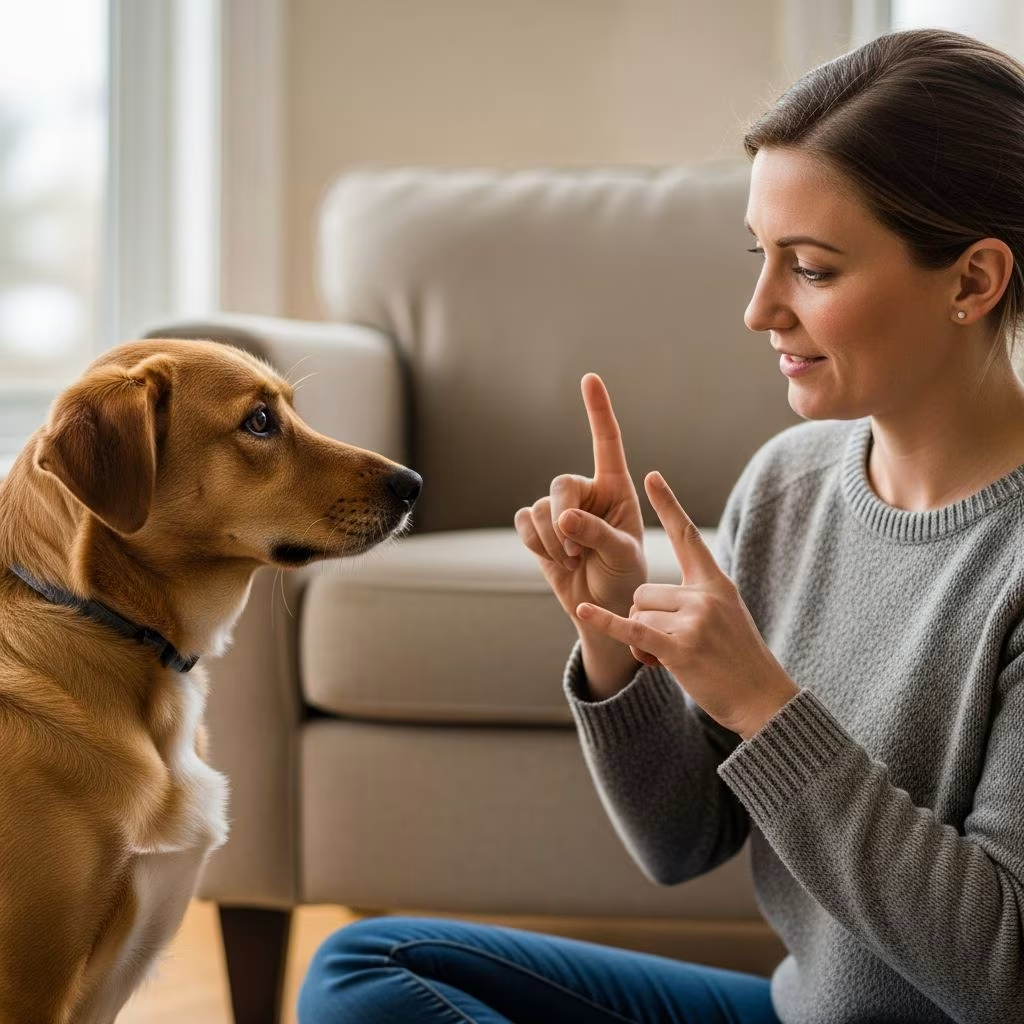
Deaf dogs offer the same loyalty and affection as their hearing counterparts, but they require adapted training approaches centered on visual and tactile signals. By shifting from auditory commands to deliberate body language and gestures, owners can foster clear understanding and prevent frustration on both sides. This comprehensive guide explores practical techniques, essential tools, and step-by-step strategies to help your deaf dog thrive.
Understanding the Unique Needs of Deaf Dogs
Deafness in dogs often stems from genetics, aging, or injury, affecting breeds like Dalmatians or those with merle coat patterns. Unlike hearing dogs that respond to voice tones, deaf dogs rely entirely on sight and touch for cues. This adaptation not only works for them but can enhance training precision, as visual signals are less ambiguous in noisy environments.
Key advantages include reduced stress from loud noises and heightened focus on owner movements. However, challenges arise in gaining attention without calling out, making proactive habits like regular check-ins vital for safety during walks or play.
Building Foundational Attention Skills
The cornerstone of deaf dog training is teaching reliable orienting behaviors. Start indoors in low-distraction settings to encourage your dog to look at you voluntarily.
- Check-In Reinforcement: Every time your dog glances your way, respond immediately with a visual marker and treat. This builds a habit of frequent eye contact.
- Tactile Cues: Gently tap the shoulder or back, then deliver a treat. Practice across rooms and gradually outdoors to signal “look at me” effectively.
- Vibration Introduction: Use a gentle vibration device to mimic a tap, pairing it with rewards for non-intrusive attention-grabbing.
Consistency turns these into automatic responses, ensuring your dog checks in during potentially hazardous situations like crossing streets.
Visual Markers: The New ‘Clicker’ for Deaf Dogs
Traditional clickers provide auditory feedback, but deaf dogs need visual equivalents. A hand flash—clenching then opening the fist—or thumbs-up gesture serves as a bridge signal, paired repeatedly with treats to condition excitement.
Implementation steps:
- Perform the gesture while simultaneously offering a high-value treat.
- Repeat 10-20 times per session until the dog’s eyes light up at the signal alone.
- Incorporate into all training for precise timing of correct behaviors.
This marker clarifies the exact moment of success, accelerating learning just like with hearing dogs.
Essential Hand Signals for Everyday Commands
Hand signals replace verbal commands, offering clarity and distance effectiveness. Develop a personal vocabulary of distinct, repeatable gestures, drawing inspiration from sign languages but customized for your dog’s view.
| Command | Gesture Description | Training Tip |
|---|---|---|
| Sit | Palm up, raise hand smoothly | Lure with treat above nose, mark on contact |
| Stay | Flat palm facing dog at chest level | Build duration gradually with rewards |
| Come (Recall) | Extend arm, pull toward chest | Practice on long leash in safe areas |
| Down | Open hand lowers to floor | Capture natural downs first |
| Good | Thumbs up or open flash | Use as primary marker |
Begin with luring: Show the signal, guide the dog with a treat, mark success, and fade the lure over sessions. Short, 5-minute daily practices yield rapid results.
Tools That Enhance Training Success
While signals form the core, supportive tools bridge gaps without relying on sound.
- Vibration Collar: Delivers pulsed vibrations to gain attention safely—never use shock settings. Pair with treats for positive association.
- Long Leash (20-50 ft): Enables recall practice in open spaces, preventing escapes while building confidence.
- Treat Pouch: Keeps rewards accessible for instant reinforcement during outings.
- Flashlight Clicker: Combines light flashes with vibration for marking in low light.
Introduce tools slowly, always associating them with positivity to avoid fear.
Mastering Recall: Prioritizing Safety
Recall is non-negotiable for deaf dogs, practiced in enclosed or leashed areas to mitigate risks.
- Start 1-2 feet away: Signal ‘come,’ mark approach, jackpot reward.
- Extend distance incrementally, using check-ins to prompt looks back.
- Add distractions like toys, reinforcing heavily for compliance.
Aim for 100% success initially, fading treats to intermittent schedules. This creates a rock-solid behavior where returning equals joy.
Advanced Behaviors for Daily Life
Once basics solidify, expand to practical skills.
- Go to Place: Signal to mat or bed, mark settling, build duration for calm alone time.
- Leave It: Closed fist away from item, open for reward elsewhere.
- Emergency Stop: Distinct wave with vibration for instant halt.
Break complex tasks into micro-steps, celebrating progress to maintain motivation.
Overcoming Common Training Hurdles
Owners may face plateaus, but persistence pays off.
- Distractions: Return to quieter zones, rebuild fluency.
- Inconsistency: Family-wide signal agreement prevents confusion.
- Food Dependency: Transition to praise, toys, or life rewards like walks.
Short sessions prevent burnout; end on successes to boost confidence.
Creating a Deaf-Friendly Home Environment
Beyond training, adapt living spaces: Use baby gates for visibility, flashing lights for doorbells, and leashed supervision outdoors. Nighttime routines benefit from vibrating alarms on beds to signal owner presence.
Exercise via scent games or flirt poles keeps energy high without auditory reliance.
Long-Term Bonding and Enrichment
Training evolves into lifelong dialogue, strengthening trust. Deaf dogs often excel in agility, obedience, and therapy roles, proving limitations are perceptual. Regular vet checks monitor health, as deafness links to balance issues in some cases.
Enrich with puzzle toys, nose work, and visual play to engage their sharp senses fully.
Frequently Asked Questions (FAQs)
Can all deaf dogs be trained successfully?
Yes, with positive methods, most deaf dogs learn commands faster via visuals, matching hearing peers’ capabilities.
Is a vibration collar safe for deaf dogs?
When used humanely for attention only, yes—avoid punishment features and condition positively.
How long until my deaf dog learns basic signals?
Typically 1-4 weeks with daily 5-minute sessions, varying by age and prior training.
Should I use ASL signs for my dog?
ASL-inspired single-hand versions work well if consistent; custom signals are equally effective.
Can deaf dogs live safely off-leash?
Only in fully fenced areas after proven recall; long lines recommended otherwise.
References
- How to Communicate with a Deaf Dog — Karen Pryor Clicker Training. Accessed 2026. https://clickertraining.com/how-to-communicate-with-a-deaf-dog/
- Training a Deaf Dog: Hand Signals, Tools, and Patience — Unconditional Rescue. Accessed 2026. https://www.unconditionalrescue.org/training-a-deaf-dog-hand-signals-tools-and-patience/
- Communicating With a Deaf Dog — Old Dog Haven. Accessed 2026. https://olddoghaven.org/communicating-with-a-deaf-dog-teaching-an-old-dog-new-tricks/
- DEAF DOG TRAINING: The SECRET to Perfect Communication — Terrie Hayward (YouTube). Accessed 2026. https://www.youtube.com/watch?v=9etRF_rbNvo
- Beginning Sign Training — Deaf Dogs Rock. Accessed 2026. https://deafdogsrock.com/beginning-sign-training



