

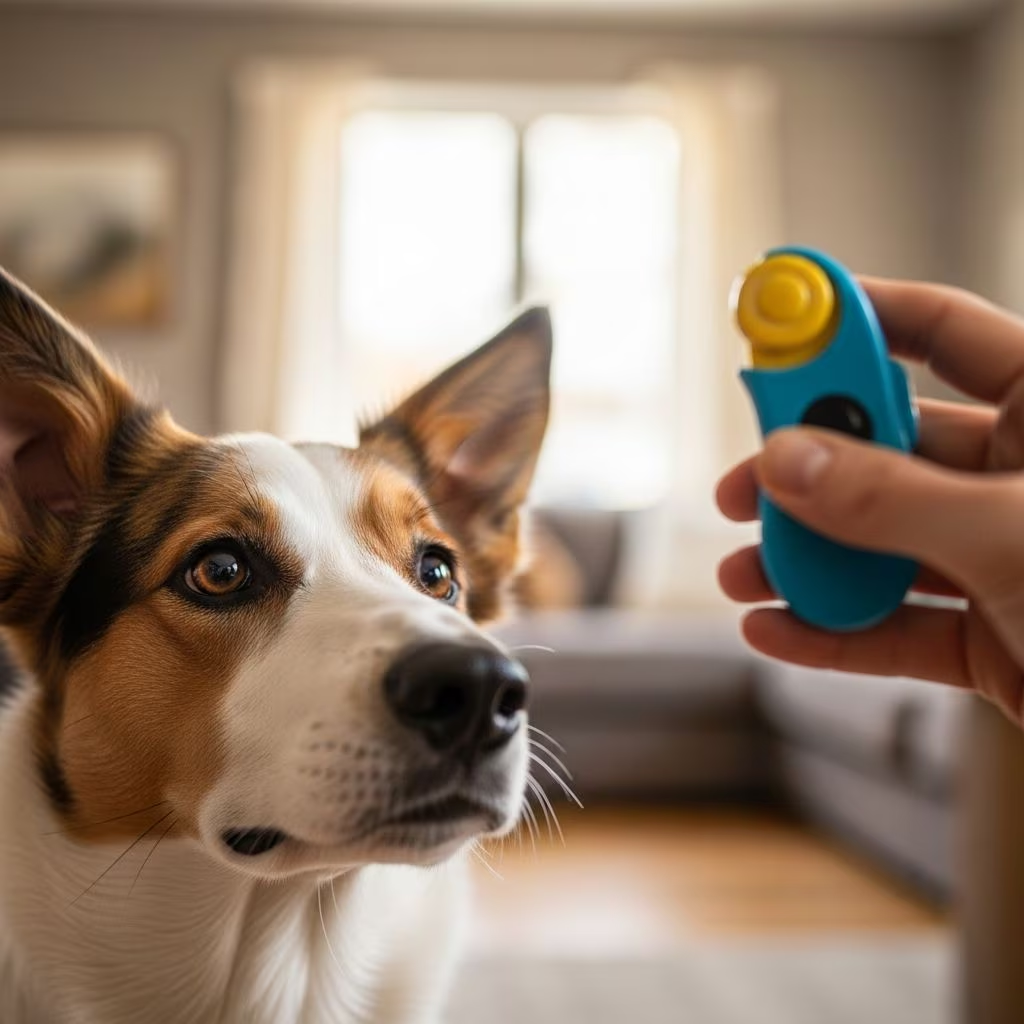
Clicker training stands out as a powerful, science-backed approach to teaching dogs new skills through positive reinforcement. By using a distinct clicking sound to mark the precise moment a dog performs a desired action, trainers can communicate effectively and accelerate learning. This method, rooted in operant conditioning, helps dogs associate specific behaviors with rewards, leading to quicker mastery of commands and tricks.
The Science Behind Clicker Effectiveness
At its core, clicker training leverages operant conditioning, where dogs learn to repeat actions that yield positive outcomes. The clicker serves as a conditioned reinforcer: after repeated pairing with treats, the sound alone predicts a reward, creating an emotional bridge that reinforces behavior instantly. Unlike verbal praise, which can vary in tone, the clicker’s sharp, consistent noise targets the dog’s amygdala for rapid processing.
Research in animal learning shows that marking behaviors precisely prevents confusion. For instance, if a dog sits briefly before standing, a delayed treat might reward the wrong action; the click eliminates this gap, ensuring clarity. This precision fosters purposeful, voluntary responses rather than reflexive ones, turning training into an engaging puzzle for the dog.
Key Advantages for Dogs and Owners
- Builds Confidence: Especially for anxious dogs, the predictable click provides control and reduces fear, encouraging exploration of new situations.
- Enhances Precision: Marks exact moments of success, ideal for complex behaviors like heel or recall.
- Strengthens Bonds: Focuses on successes, making sessions enjoyable and boosting mutual trust.
- Versatile Application: Works for basics, tricks, and rehabilitation without corrections.
Owners report dogs become eager learners, offering behaviors proactively to earn clicks, which transforms training from chore to game.
Essential Tools and Setup
You’ll need a quality clicker—a small plastic device producing a clear ‘click’—high-value treats like soft bits of chicken or cheese, and a quiet space. Start with sessions of 5-10 minutes to maintain focus. For multi-dog homes, use individual clickers to avoid confusion.
| Tool | Purpose | Tips |
|---|---|---|
| Clicker | Marks behavior | Choose one with adjustable volume for sensitive dogs |
| Treats | Primary reward | Vary sizes; use smallest for high-rate behaviors |
| Leash/Toy | Management | Prevents distractions during early stages |
Step-by-Step Guide to Get Started
Step 1: Charge the Clicker
“Loading” or “charging” pairs the click with rewards. Sit with your dog, click once, then immediately offer a treat—10-20 times in a row. Watch for ear perk or anticipatory salivation, signaling understanding.
Step 2: Capture Spontaneous Behaviors
Observe natural actions like looking at you or lying down. Click the instant it happens, followed by a treat. This teaches that good things follow desirable choices without cues.
Step 3: Introduce Luring for Basics
For sits, hold a treat above the nose and move it back; click as haunches lower, then treat. Repeat 5-10 times before fading the lure.
Step 4: Shape Advanced Skills
Break complex behaviors into approximations. To teach ‘spin,’ click slight head turns toward a lure, gradually requiring full circles. Reward progressively better efforts.
Step 5: Add Cues and Proof
Once reliable, say the cue (e.g., “sit”) just before the behavior, then click/treat. Practice in varied locations to generalize.
Training Techniques for Common Challenges
Handling Jumping: Ignore jumps, click four paws on floor. Consistency turns chaos into calm greetings.
Recall in Distractions: Start indoors, click/treat approaches. Gradually add distance and mild distractions.
Nervous Dogs: Use low-pressure captures; the click’s neutrality builds trust without overwhelming.
Session Best Practices
- End on success to keep motivation high.
- Intersperse with play for short attention spans.
- Aim for 20-50 reps per behavior daily.
- Track progress in a journal.
Short, frequent sessions prevent fatigue, with dogs showing anticipatory responses—looking to you post-click—as mastery indicator.
Fading the Clicker for Real-World Use
Once behaviors solidify, reduce clicks: alternate with verbal markers like “yes,” then praise alone. Randomize treats to maintain response without dependency. This transitions skills to lifelong habits.
Real-World Success Stories
Owners of reactive dogs note reduced leash pulling after clicker sessions focused on calm walking. Trick enthusiasts teach chains like “sit, down, roll” rapidly, impressing at events.
Common Mistakes and Fixes
| Mistake | Why It Happens | Fix |
|---|---|---|
| Clicking too late | Misses precise moment | Practice timing on videos first |
| Inconsistent rewards | Confuses dog | Treat every click without fail |
| Long sessions | Leads to frustration | Cap at 5 minutes | Overusing clicker | Creates dependency | Fade systematically |
Adapting for Puppies, Seniors, and Special Needs
Puppies thrive with play-integrated clicks; seniors benefit from low-impact shaping for mobility. For rescues, start with confidence-builders like target touches.
FAQs
Is clicker training suitable for all dogs?
Yes, its positive focus works across ages, breeds, and temperaments, particularly benefiting fearful pups.
How long until results?
Basics in days; complex skills in weeks with consistency.
Can I use my voice instead?
A consistent word like “yes” works, but clicker’s precision excels.
What if my dog fears the clicker?
Classically condition from distance, gradually closing gap.
Do I need treats forever?
No, phase to life rewards like walks or play.
Advanced Applications
Beyond obedience, use for agility cues, service tasks, or desensitization. Chain behaviors by clicking sequences, rewarding endpoints.
References
- Clicker Training for Dogs 101: Everything You Need To Know — Chewy. 2023. https://www.chewy.com/education/dog/training-and-behavior/clicker-training-for-dogs
- Mark & Reward Dog Training Using Clickers — American Kennel Club. 2023-10-15. https://www.akc.org/expert-advice/training/clicker-training-your-dog-mark-and-reward/
- The Benefits of Clicker Training for Nervous Dogs — K-9 Divine. 2024. https://k-9divine.com/services/dog-training/the-benefits-of-clicker-training-for-nervous-dogs/
- Clicker Training for Dogs: Could It Be Better than Dog Treats? — K9 Connoisseur. 2023. https://k9connoisseur.com/blogs/news/clicker-training-for-dogs
- Appealing to a Dogs Subconscious; One Hidden Benefit of Clicker Training — Good Doggie. 2022. https://www.gooddoggie.co.uk/appealing-to-a-dogs-subconscious-one-hidden-benefit-of-clicker-training/
- A Guide to Clicker Training Pets — Best Friends Animal Society. 2024. https://bestfriends.org/pet-care-resources/guide-clicker-training-pets
- Why is Clicker Training Effective? — Clicker Training. 2023. https://clickertraining.com/why-is-clicker-training-effective/



