

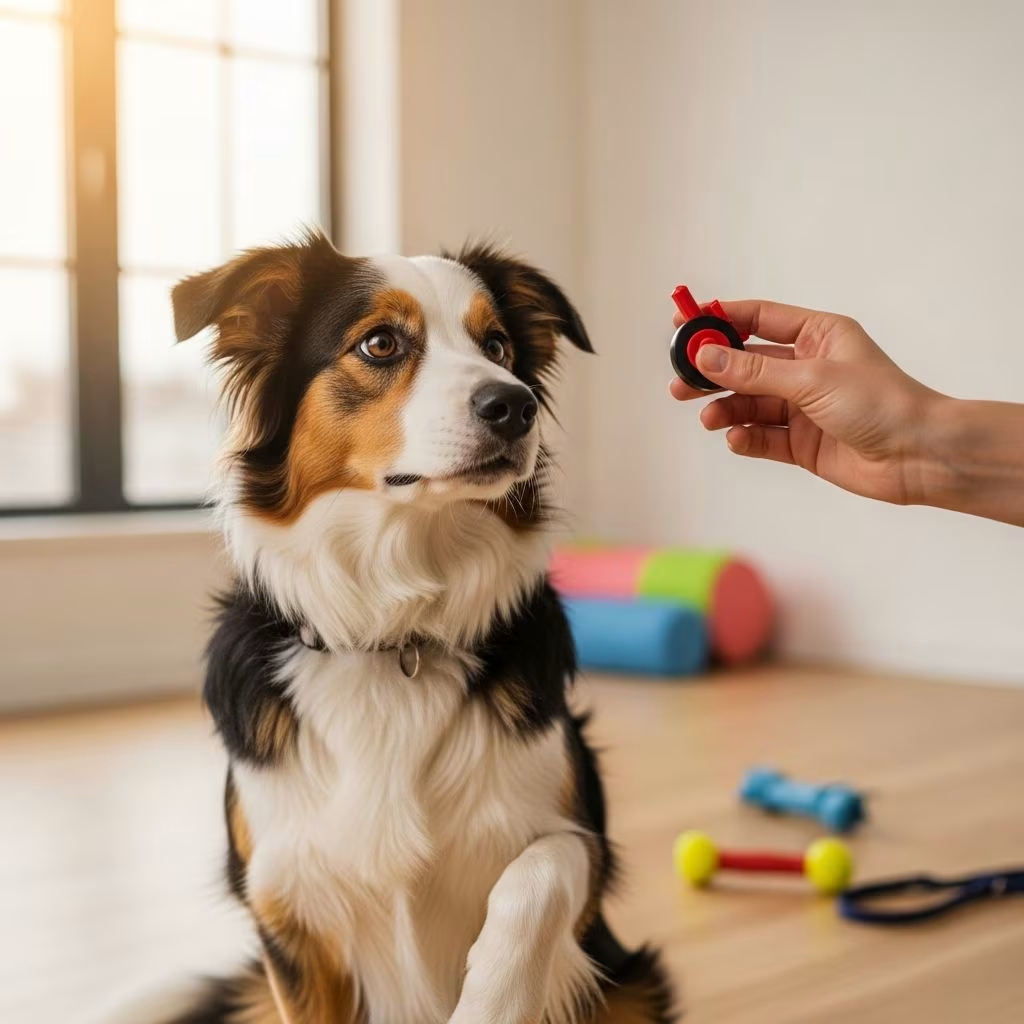
Clicker training revolutionizes how dogs learn by using a distinct sound to mark precise moments of correct behavior, paired with rewards to encourage repetition. This method, rooted in operant conditioning, accelerates skill acquisition and strengthens the human-canine bond through consistent positive experiences.
Understanding the Science Behind Clicker Training
The core principle of clicker training lies in its use of a conditioned reinforcer. The clicker produces a sharp, consistent noise that dogs quickly associate with upcoming rewards, such as treats or praise. Unlike verbal praise, which can vary in tone and timing, the click offers unmistakable precision.
Operant conditioning, pioneered by B.F. Skinner, underpins this approach. Dogs learn through consequences: behaviors followed by rewards increase in frequency. The click acts as a “bridge,” signaling the exact instant of success, even if the treat arrives seconds later. This timing precision prevents confusion, making training sessions more efficient.
Essential Tools and Preparation
To begin, gather a quality clicker—a small device with a metal strip that creates a clear “click-clack” sound—and high-value treats like small pieces of chicken or cheese. Avoid kibble initially; opt for soft, pea-sized morsels that dogs find irresistible.
- Clicker: Choose one with adjustable volume for sound-sensitive dogs.
- Treats: Vary types to maintain interest; use lower-value rewards as proficiency grows.
- Training Space: Start in a quiet, distraction-free area to build focus.
Prepare mentally by practicing your click timing alone. Sessions should last 5-10 minutes, 3-5 times daily, to keep energy high and prevent fatigue.
Step 1: Charging the Clicker for Association
The foundational phase, known as “charging” or “loading” the clicker, teaches your dog that the sound predicts rewards. Sit with your dog in a calm spot, click once, then immediately deliver a treat—within one second.
Repeat 20-30 times per session, without commands. Watch for signs of understanding: ears perking, eager anticipation, or looking toward the treat source. Most dogs grasp this in 10-20 repetitions.
“The clicker becomes a conditioned reinforcer after pairing it repeatedly with primary rewards like food.”
If your dog seems startled, muffle the clicker in your pocket or use a softer marker like a verbal “yes” initially.
Step 2: Capturing Natural Behaviors
Once charged, capture spontaneous good behaviors. Notice moments like your dog lying down calmly or making eye contact, then click and treat instantly.
This method builds a repertoire of reinforced actions without luring or commands. For example:
- Click for four paws on the floor when guests arrive.
- Mark quiet moments to reduce barking.
- Reward loose-leash walking naturally.
Capturing leverages your dog’s initiative, fostering enthusiasm for offering behaviors.
Step 3: Teaching Basic Commands with Precision
Transition to known behaviors like “sit.” Say the cue, wait for compliance, click the instant the rear hits the ground, and treat.
| Command | Timing Tip | Common Mistake |
|---|---|---|
| Sit | Click as haunches lower | Clicking after standing up |
| Down | Mark elbow bend | Delayed click confuses action |
| Stay | Initial click for position hold | Over-rewarding movement |
Precise timing is non-negotiable; a half-second delay attributes the reward to unintended actions. Practice 5-10 reps per session.
Advanced Techniques: Shaping and Luring
Shaping breaks complex behaviors into tiny approximations. To teach “roll over,” click for lying on side, then shoulder lift, building incrementally.
Luring guides with a treat: Hold it above the nose for sit, move to chest for down, clicking upon success. Fade the lure by mimicking hand motion without food.
- Shaping Pros: Encourages creativity; ideal for tricks.
- Luring Pros: Quick for positions; beginner-friendly.
- Combine: Lure initially, shape for refinement.
Remain silent during shaping to avoid cueing; add verbal commands only after reliability.
Overcoming Common Challenges
Dogs may mug for treats—ignore and wait for calm. If clicking scares them, desensitize gradually. For slow learners, shorten sessions and boost treat value.
Distraction-proofing: Start low, add complexity (e.g., outdoors) once basics solidify. Proof in varied environments for real-world reliability.
Transitioning from Clicker to Real-Life Cues
Once fluent (offering 10-15 times/minute), introduce cues before behavior. Phase out clicking by interspersing verbal praise or life rewards (e.g., walks for recalls).
Retain the clicker for new skills or fading old ones, ensuring lifelong positive association.
Benefits Across Dog Ages and Breeds
Puppies absorb quickly; adults refine with clicker clarity. Works for rescues overcoming past trauma via force-free methods. All breeds benefit, from high-drive herders to laid-back lap dogs.
Sample Training Schedule
| Week | Focus | Daily Sessions |
|---|---|---|
| 1 | Charge + Sit/Capture | 5x5min |
| 2 | Down + Stay Shaping | 4x7min |
| 3+ | Tricks + Distractions | 3x10min |
Frequently Asked Questions
Can clicker training work for aggressive dogs?
Yes, by focusing on incompatible calm behaviors, but consult professionals for severe cases.
How many treats per session?
20-50 small pieces; adjust for size/activity to avoid weight gain.
Is a clicker better than treats alone?
Yes, the marker enables precise communication, speeding learning.
What if my dog ignores the clicker?
Recharge with higher-value rewards; ensure timing and consistency.
Can I use clickers for house training?
Absolutely—click for outdoor elimination to reinforce promptly.
Long-Term Success Strategies
Maintain variable reward schedules for reliability. Integrate into daily life: click for door manners or bed settling. Track progress in a journal to celebrate milestones.
Clicker training builds confident, eager learners, transforming challenges into fun challenges.
References
- Dog Clicker Training 101: A Comprehensive Guide — Sniffspot. 2023. https://www.sniffspot.com/blog/dog-training/how-to-clicker-train-a-dog
- Clicker Training For Dogs: A Comprehensive Guide For Beginners — Very Important Paws. 2023. https://www.veryimportantpaws.com/clicker-training-dogs-comprehensive-beginners-guide/
- Clicker Training for Dogs 101: Everything You Need To Know — Chewy. 2023. https://www.chewy.com/education/dog/training-and-behavior/clicker-training-for-dogs
- Mark & Reward Dog Training Using Clickers — American Kennel Club (AKC). 2023-10-01. https://www.akc.org/expert-advice/training/clicker-training-your-dog-mark-and-reward/
- Fifteen Tips for Getting Started with the Clicker — Karen Pryor Clicker Training. 2023. https://clickertraining.com/15tips/
- How to Clicker Train Your Dog — Endura Flap. 2023. https://enduraflap.com/blogs/pet-doors/clicker-train-your-dog



