

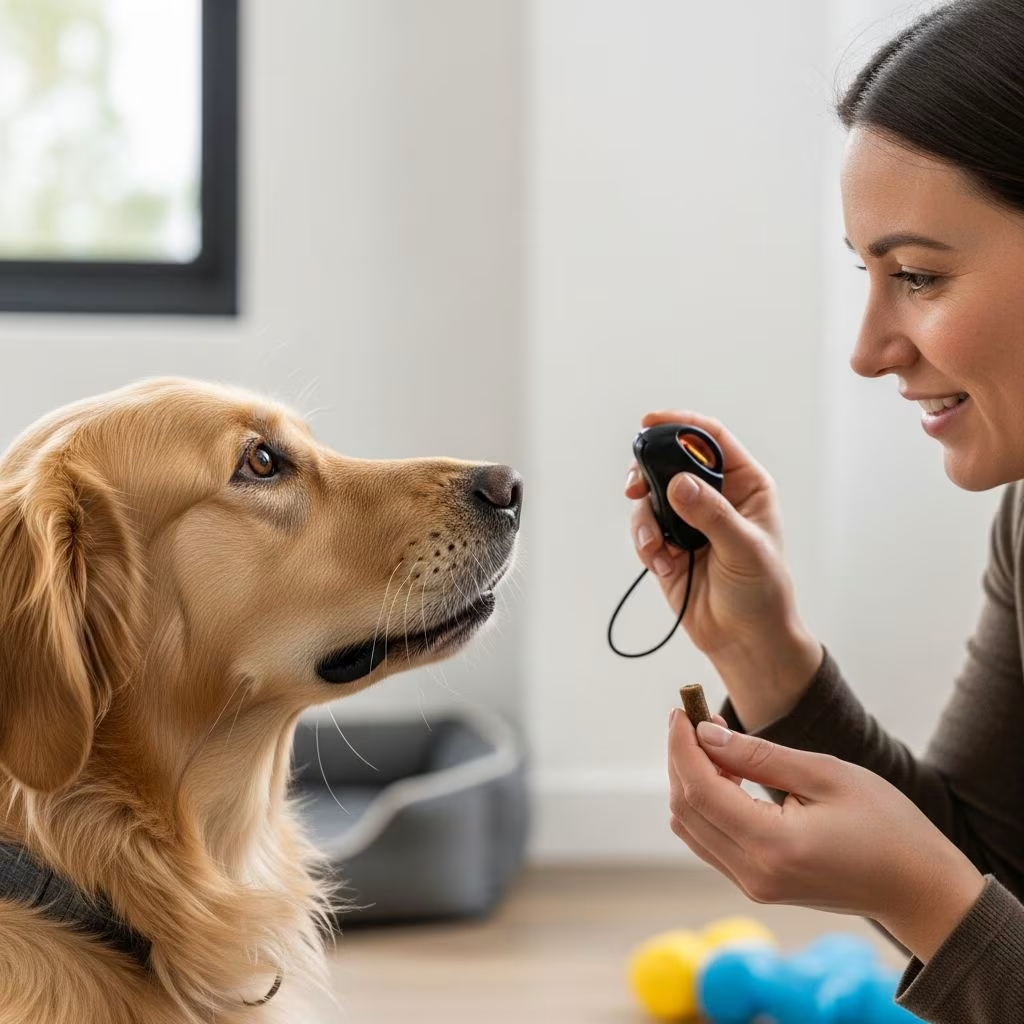
Clicker training stands out as a highly effective positive reinforcement technique that uses a distinct clicking sound to pinpoint the exact moment a dog performs a desired action, followed by a reward to encourage repetition. This method transforms training into an engaging game, fostering quicker learning and deeper human-canine connections compared to traditional approaches.
Why Choose Clicker Training Over Other Methods?
Unlike verbal praise or treat-only systems, the clicker delivers unmatched precision because its sharp, consistent sound bridges the gap between action and reward, helping dogs associate specific behaviors accurately. For instance, while a treat might arrive slightly late, causing confusion, the click marks the behavior instantly, making it ideal for shaping complex skills or correcting subtle issues like jumping or begging.
This approach excels particularly with nervous or anxious dogs, as it eliminates intimidation from raised voices or corrections, instead providing clear, predictable feedback that builds self-assurance. Dogs learn they control positive outcomes, releasing feel-good chemicals that turn sessions into confidence-boosting puzzles rather than stressful ordeals.
Essential Tools and Setup for Success
To begin, you’ll need a quality clicker—a small device producing a crisp “click”—high-value treats like small bits of cheese or chicken, and a quiet space free from distractions. Start with sessions lasting just 3-5 minutes to match a dog’s attention span, incorporating play breaks to maintain enthusiasm.
- Clicker: Box-style or i-Click models for reliability.
- Treats: Soft, pea-sized pieces for quick consumption.
- Optional: Leash for outdoor practice or target stick for advanced shaping.
Step-by-Step Guide: Loading the Clicker
The foundation of clicker training is “charging” or “loading” the clicker, teaching your dog that the sound predicts treats. Sit with your dog in a calm environment and follow these steps:
- Click the device once.
- Immediately offer a treat, within half a second.
- Repeat 15-25 times without commands, pausing between reps to avoid saturation.
Watch for signs of understanding: ears perking, eager anticipation, or looking toward your treat hand—these indicate the association is forming. This process, rooted in operant conditioning, conditions the click as a secondary reinforcer, making it as motivating as food itself.
Teaching Core Behaviors with Precision Marking
Once loaded, apply the clicker to fundamental commands. For sitting:
- Cue “sit” verbally or with a lure (hold treat above nose, moving back to encourage butt drop).
- Click precisely when hips touch the ground.
- Deliver the treat right after.
Practice 5-10 reps per session, varying locations to generalize the skill. Progress to “down” by luring from sit position, clicking the elbow fold or chest contact. The click’s timing prevents errors like popping up prematurely, ensuring clarity.
Shaping Advanced Skills and Tricks
Shaping breaks complex behaviors into incremental steps, rewarding approximations. To teach “spin”:
- Click and treat for head turns toward a lure.
- Progress to quarter-turns, then half-circles.
- Finally, click full spins, adding a verbal cue.
This method shines for tricks like “roll over” or “target touch,” turning training into problem-solving that dogs adore. Capture spontaneous good behaviors too—click calm lying down during family meals to reinforce politeness without commands.
Common Challenges and Fixes
| Challenge | Solution |
|---|---|
| Dog ignores click | Reload with more reps; use higher-value treats. |
| Mugging for treats | Click first, then treat from opposite hand; ignore jumps. |
| Over-excitement | Shorten sessions; end on success. |
| Slow progress | Break steps smaller; add play intervals. |
Tailoring Clicker Training for Special Dogs
Puppies and Seniors
Puppies absorb clicker training rapidly due to their eagerness, mastering basics in days. Seniors benefit from mental stimulation, with the method’s gentleness accommodating reduced mobility—focus on low-impact behaviors like “watch me” for focus.
Nervous or Reactive Dogs
For fearful pups, clicker training’s positivity is transformative. The emotionless click avoids triggering anxiety, offering control and predictability. Start with low-pressure captures like eye contact, gradually desensitizing to triggers like doorbells by clicking calm paws-on-floor moments.
Fading the Clicker: Transition to Real-World Use
Don’t rely on the clicker forever. Once reliable (80-90% success in distractions):
- Randomize clicks: every 2nd or 3rd success.
- Introduce verbal markers like “yes!” or praise.
- Reduce treats to life rewards (walks, play) or occasional jackpots.
Wean gradually to prevent extinction bursts, where behaviors temporarily worsen. Soon, cues alone suffice, with the clicker reserved for new skills.
Boosting Engagement: Tips from Pros
- Keep it fun: Intersperse commands with tricks or games.
- Variable rewards: Mix treat values to mimic slot machines, sustaining motivation.
- Train daily: 3-5 minute bursts build habits without burnout.
- Proof in distractions: Graduate to parks, adding distance/duration.
Trainers note clicker-trained dogs eagerly seek sessions, viewing humans as puzzle providers.
Science Behind the Click: Operant Conditioning Explained
Clicker training leverages operant conditioning, where behaviors followed by rewards increase in frequency. The click acts as a conditioned reinforcer, processed quickly by the dog’s amygdala for instant feedback, outperforming variable human voices. Studies affirm positive methods enhance learning speed and retention over aversive ones.
Frequently Asked Questions (FAQs)
Is clicker training suitable for all dogs?
Yes, from energetic puppies to timid rescues; its positivity adapts universally.
How long until results show?
Basics in 1-2 weeks with consistency; advanced skills vary by dog.
Can I use my voice instead of a clicker?
A consistent word like “yes” works but lacks the click’s precision.
What if my dog fears the clicker sound?
Start muffled in a pocket, gradually exposing while pairing with treats.
Does clicker training work for aggression issues?
It supports management by reinforcing calm alternatives; consult pros for severe cases.
Real-World Applications Beyond Obedience
Beyond sits and stays, clickers aid service dog tasks, agility cues, and therapy work. In shelters, they accelerate adoptions by showcasing manners quickly. Owners report stronger bonds, with dogs offering behaviors proactively to “earn” clicks.
Incorporate into daily life: click loose-leash walking or ignoring distractions. For multi-dog homes, individual sessions prevent jealousy.
Long-Term Maintenance and Troubleshooting
Sustain progress with random reinforcements, avoiding predictability. If regression occurs (e.g., new environments), briefly reintroduce the clicker.
Track via a journal: sessions, successes, challenges. Adjust based on patterns, ensuring training remains enjoyable.
References
- Clicker Training for Dogs 101: Everything You Need To Know — Chewy. 2023. https://www.chewy.com/education/dog/training-and-behavior/clicker-training-for-dogs
- Mark & Reward Dog Training Using Clickers — American Kennel Club. 2024-01-15. https://www.akc.org/expert-advice/training/clicker-training-your-dog-mark-and-reward/
- The Benefits of Clicker Training for Nervous Dogs — K-9 Divine. 2023. https://k-9divine.com/services/dog-training/the-benefits-of-clicker-training-for-nervous-dogs/
- Clicker Training for Dogs: Could It Be Better than Dog Treats? — K9 Connoisseur. 2024. https://k9connoisseur.com/blogs/news/clicker-training-for-dogs
- A Guide to Clicker Training Pets — Best Friends Animal Society. 2023-05-10. https://bestfriends.org/pet-care-resources/guide-clicker-training-pets
- Why is Clicker Training Effective? — ClickerTraining.com. 2024. https://clickertraining.com/why-is-clicker-training-effective/



