

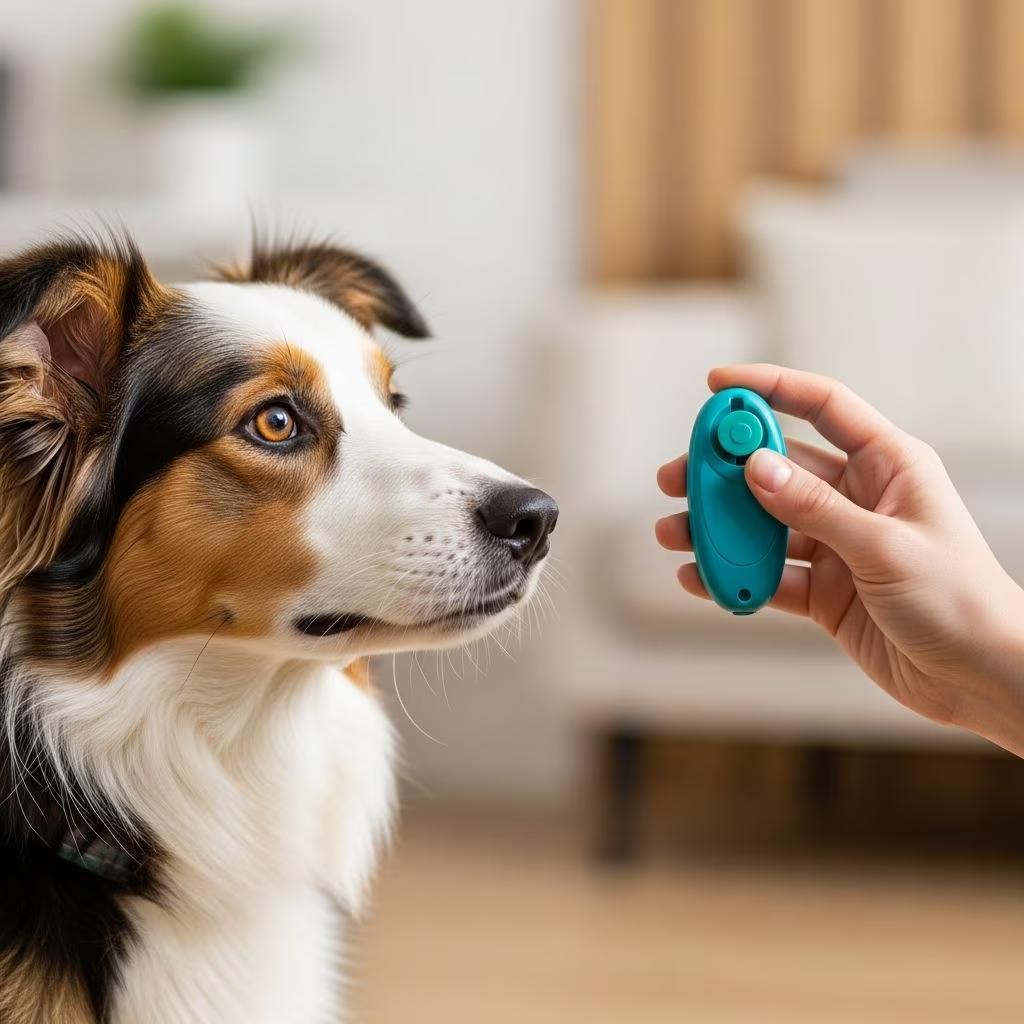
Clicker training revolutionizes how we communicate with dogs by using a distinct sound to mark precise moments of desired behavior, followed by a reward. This method leverages positive reinforcement to foster quick learning and strong bonds between dogs and their owners.
Understanding the Science Behind Clicker Training
At its core, clicker training operates on operant conditioning principles, where behaviors followed by positive outcomes are more likely to repeat. The clicker serves as a conditioned reinforcer—a neutral sound paired repeatedly with treats until it alone signals impending reward. This creates clarity, as the precise click pinpoints exactly what the dog did right, unlike verbal praise which can be ambiguous.
Research from animal behavior experts shows that such marker-based systems accelerate learning rates compared to traditional methods. Dogs respond faster because the click provides immediate feedback, bridging the gap between action and consequence.
Essential Tools and Preparation
To begin, you’ll need a quality clicker—a small device producing a consistent “click” sound—and high-value, small treats like bits of chicken or cheese. Avoid kibble initially; opt for soft, pea-sized pieces that dogs devour quickly to maintain focus.
- Clicker: Choose one with a spring-loaded button for a sharp, two-toned sound.
- Treats: Prepare 20-30 per session; vary types to keep interest high.
- Environment: Start in a distraction-free room to build success early.
Timing your equipment is crucial: always click during the behavior, not after, to capture the exact moment.
Step-by-Step Guide to Conditioning the Clicker
The foundation of clicker training is “loading the clicker,” teaching your dog that click equals treat.
- Quiet Space Setup: Sit with your dog in a calm area. Hold the clicker in one hand, treats in the other.
- First Pairs: Click once, then immediately deliver a treat. Repeat 10-20 times without additional commands.
- Observe Eagerness: Your dog should perk up at the click sound, anticipating reward. Sessions last 1-5 minutes; do 3-10 daily.
This phase typically takes 1-2 days. Short, frequent sessions exploit neural pathway formation during breaks, enhancing retention.
Building Basic Behaviors: Sit, Down, and Stay
Teaching “Sit”
Once conditioned, wait for natural sits or lure gently with a treat above the nose, moving it back until the dog sits. Click the instant the rear hits the ground, then treat.
- Repeat 10-15 times per session.
- Introduce the verbal cue “sit” only after 80% reliability without it.
- Phase treats to intermittent rewards.
Mastering “Down”
From a sit, lure the treat to the ground between paws. Click as elbows bend. Progress to shaping by clicking approximations like head lowering.
Perfecting “Stay”
Click for holding position after a sit or down. Gradually increase duration and distance, clicking calm maintenance.
Advanced Techniques: Shaping, Luring, and Capturing
Clicker training shines in versatility. Here’s a comparison:
| Method | Description | Best For |
|---|---|---|
| Luring | Use treat to guide into position, click completion. | Basic postures like sit/down. |
| Shaping | Click successive approximations toward goal behavior. | Complex tricks, precision tasks. |
| Capturing | Click spontaneous good behaviors as they occur. | Fixing issues like jumping or begging. |
Shaping Example: To teach “spin,” click for head turns, then full circles. Reward builds the chain.
Capturing Calm: Click four paws on floor during guest arrivals, reinforcing quiet greetings.
Integrating Cues and Phasing Out the Clicker
Introduce cues (words, signals) post-reliability: say “sit” just before natural behavior, then click/treat. Fade by rewarding cued actions only.
Transition off clicker: Use a marker word like “yes!” or praise. Maintain with variable rewards to prevent extinction.
Overcoming Common Challenges
Trainees often face hurdles:
- Poor Timing: Practice clicking during behaviors with a helper dog. Delay treats slightly if needed.
- Distractions: Graduate to busier environments slowly.
- Missed Clicks: Always treat after accidental clicks to preserve association.
- Stalled Progress: Return to basics; shorten sessions.
Real-World Applications Beyond Basics
Clickers excel for reactivity: click calm leash walking or ignoring triggers. For service dogs, refine targeting doors or obstacles. Teach tricks like “roll over” or household manners like mat settling.
Benefits for Puppies and Adult Dogs
Puppies learn foundational obedience rapidly, preventing bad habits. Adults refine skills or unlearn issues without force. All ages thrive on positivity, reducing stress.
Top Tips for Long-Term Success
- End sessions on highs.
- Vary rewards to build generalization.
- Track progress in a journal.
- Combine with daily routines for stealth training.
Frequently Asked Questions (FAQs)
Is clicker training suitable for all dogs?
Yes, from puppies to seniors, fearful rescues to high-drive breeds. Adapt treats and pace.
How long until I see results?
Basics in days; advanced in weeks with consistency.
Can I use clicker training without treats?
Eventually, but food jump-starts association. Toys or play work for some.
What if my dog fears the clicker?
Start at distance, pair softly, or use a softer marker initially.
Does clicker training work for aggressive dogs?
It counters aggression via counter-conditioning, but consult pros for severe cases.
Clicker training empowers owners with a fun, effective toolkit. Consistent practice yields obedient, joyful companions ready for any adventure.
References
- Clicker Training Basics: 6 Steps — Instructables. 2023. https://www.instructables.com/Overview-of-training-types/
- Clicker Training for Dogs, Step by Step — Elanco (Your Pet and You). 2024. https://yourpetandyou.elanco.com/us/behavior/guide-clicker-training-your-dog
- Puppy Clicker Training Step-By-Step — Purina. 2024. https://www.purina.com/articles/dog/puppy/training/puppy-clicker-training
- Mark & Reward Dog Training Using Clickers — American Kennel Club (AKC). 2024-10-15. https://www.akc.org/expert-advice/training/clicker-training-your-dog-mark-and-reward/
- Fifteen Tips for Getting Started with the Clicker — ClickerTraining.com. 2023. https://clickertraining.com/15tips/
- A Step-by-Step Guide to Using the Pro-Training Clicker — Starmark Academy. 2011-03. https://www.starmarkacademy.com/wp-content/uploads/2011/03/Pro-Training-Clicker-Guide-2011.pdf
- Clicker Techniques, Part One: The Power of the Click — Guide Dogs. 2024. https://www.guidedogs.com/resources/client-resources/guide-dog-class-lecture-materials/clicker-techniques-part-one



