

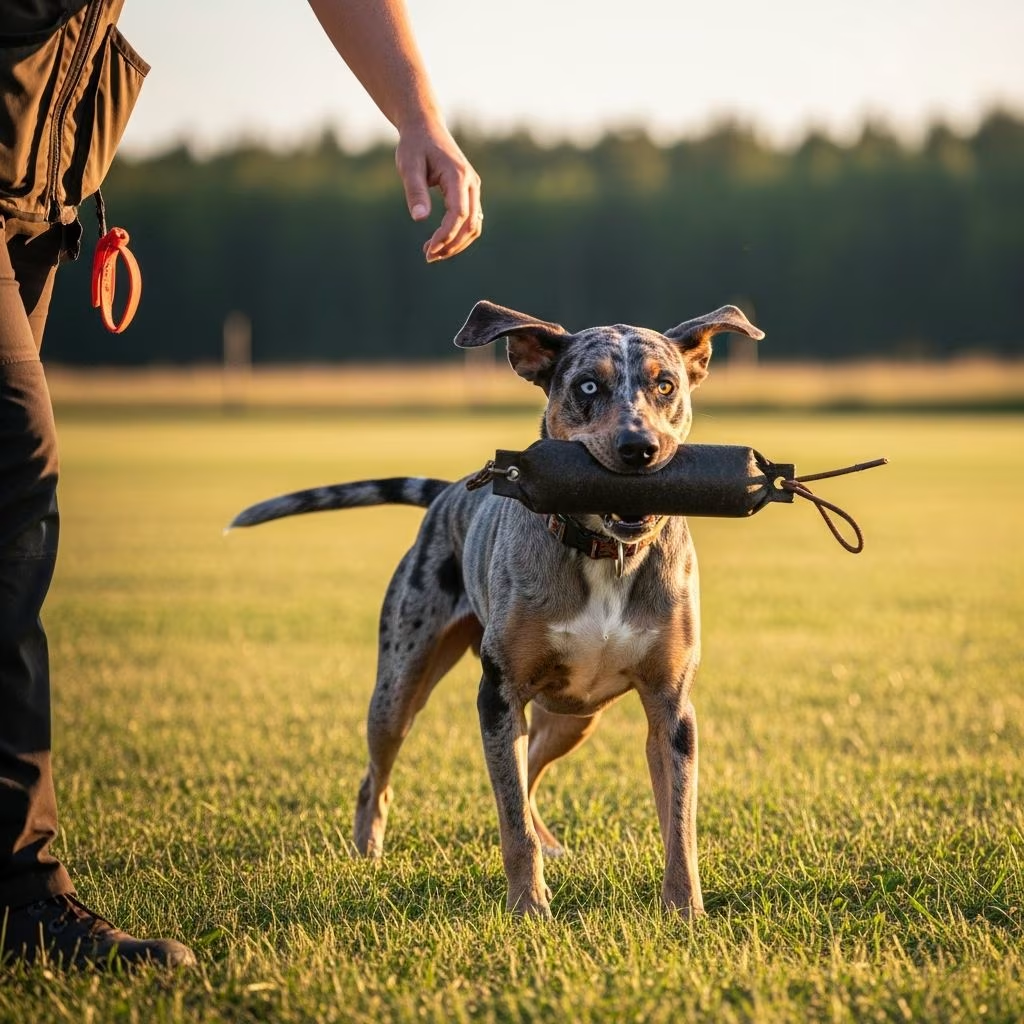
The Catahoula Leopard Dog is a distinctive and powerful breed originating from Louisiana swamps, known for their hunting prowess and striking appearance. These dogs are highly intelligent and capable learners, but their strong drive and independent nature require an owner who understands their unique temperament. Training this breed successfully demands consistency, patience, and a deep appreciation for what motivates them. Unlike many companion breeds, Catahoulas thrive when given clear direction and meaningful work. This comprehensive guide explores the foundational and advanced strategies necessary to train these remarkable dogs effectively.
Understanding the Catahoula Temperament Before Training Begins
Before implementing any training protocol, it’s essential to understand what makes Catahoulas tick. These dogs were selectively bred to hunt wild boar and manage livestock in challenging terrain, which shaped their behavior and instincts. This heritage means they possess a strong prey drive, territorial tendencies, and a work ethic that demands outlet. Unlike breeds content with casual walks and occasional play, Catahoulas experience genuine frustration when their physical and mental needs aren’t met. Recognizing this fundamental aspect of their personality is the first step toward successful training.
The breed’s intelligence is often underestimated. Catahoulas demonstrate high emotional intelligence and can quickly assess their environment and their owner’s responses. They respond exceptionally well to training methods that respect their cognitive abilities and provide clear cause-and-effect learning opportunities. However, this same intelligence can manifest as stubbornness if they don’t perceive training as worthwhile or if they’ve learned that ignoring commands produces no consequences.
Beginning With Strategic Early Socialization
The window for effective socialization closes relatively early in a dog’s development, making early introduction to diverse experiences crucial. Young Catahoula Leopard Dogs benefit enormously from controlled exposure to various people, animals, environments, and stimuli during their first few months. This isn’t random exposure but rather carefully orchestrated introductions that build positive associations.
Socialization serves multiple purposes for this breed. It helps suppress their natural territorial instincts and reduces the likelihood that they’ll develop inappropriate dominance behaviors. When puppies encounter different humans, dogs, and even smaller animals in positive contexts, they learn that novelty doesn’t require defensive posturing. Early socialization also helps prevent fear-based reactivity that can emerge later if a dog hasn’t been properly desensitized to common sights and sounds.
Structure socialization experiences strategically:
- Introduce your puppy to at least ten different people per week, varying by age, size, and appearance
- Arrange controlled meetings with other vaccinated dogs in neutral territory
- Expose your dog to various environments: parks, beaches, urban areas, and rural settings
- Present different sounds: traffic, sirens, construction noise, and household appliances
- Include experiences with different animals, supervised appropriately based on prey drive
Quality matters more than quantity. A single positive encounter with a cat may prove more valuable than repeated passive exposure. The goal is creating neural pathways associated with calm acceptance rather than arousal or fear.
Developing Impulse Control and Emotional Regulation
Catahoula Leopard Dog puppies mature physically at an accelerated rate, often reaching full size within their first year. However, emotional maturity develops more slowly, typically continuing until approximately two years of age. During this extended developmental period, establishing impulse control becomes paramount. A dog that hasn’t learned to manage excitement or frustration as a puppy may exhibit destructive behaviors, excessive barking, or anxiety as an adult.
Building calm behavior requires a systematic approach focused on rewarding the desired state. Rather than punishing excitement or reactivity, which can intensify arousal, redirect your dog’s energy toward calmness and observe when this naturally occurs. When your Catahoula demonstrates even brief moments of quiet focus or relaxation, mark that behavior immediately with praise, physical affection, or high-value rewards.
Practical strategies for developing impulse control include:
- Create a designated rest area where your dog can settle undisturbed, rewarding voluntary retreats to this space
- Practice capturing calm moments throughout the day by immediately rewarding relaxed posture
- Implement “nothing in life is free” protocols where your dog earns access to valued resources through calm behavior
- Use counter-conditioning when your dog shows excitement toward stimuli they shouldn’t chase (birds, passing runners, other dogs)
- Teach a cue like “settle” by rewarding increasing durations of quiet lying down
This phase of training proves challenging because it lacks the excitement many owners anticipate during training sessions. However, the foundation of impulse control enables every subsequent skill and behavior management strategy.
Establishing Reliable Housebreaking Protocols
Preventing housebreaking problems before they develop proves significantly easier than correcting established elimination issues. Puppies require frequent opportunities to eliminate, and establishing a consistent routine creates predictability for both dog and owner. Rather than allowing accidents to happen, maximize success through strategic timing and reinforcement.
Effective housebreaking follows this framework:
- Establish a fixed schedule for outdoor potty breaks, typically within 20-30 minutes after eating or drinking
- Choose a consistent location for elimination, using a specific phrase as a cue
- Use a leash to prevent your puppy from exploring during potty breaks until they’ve eliminated
- Provide immediate and enthusiastic reinforcement when elimination occurs in the correct location
- Clean any indoor accidents thoroughly with enzymatic cleaner to remove scent markers
- Avoid punishment for accidents, which teaches your dog to eliminate in hiding rather than outdoors
Indoor puppy pads can serve as a transitional tool, but they may confuse house training efforts by suggesting that indoor elimination is acceptable. If using pads initially, transition to exclusive outdoor elimination gradually. The most common housebreaking mistakes involve inconsistent reinforcement and assuming your dog understands the concept after limited repetitions. Most puppies require dozens of successful eliminations with positive reinforcement before internalizing the habit.
Teaching Proper Leash Manners and Loose-Leash Walking
Given the Catahoula’s strong prey drive and powerful build, early leash training proves essential for safety and enjoyment of walks. A young dog that hasn’t learned proper leash manners can quickly develop into a powerful puller that makes walking unpleasant for everyone involved. Establishing leash courtesy during puppyhood prevents years of struggling with an adult dog.
The fundamental principle underlying effective leash training is understanding that pulling must never be rewarded with forward movement. When your Catahoula pulls on the leash, stop walking entirely and remain still. Wait for slack in the leash, even if this takes several minutes. The moment tension releases, resume walking. This teaches your dog that pulling creates the opposite effect of what they desire—it halts progress rather than enabling it.
Advanced leash training techniques include:
- Practicing directional changes when your dog pulls, turning completely around to reset their attention
- Using the leash to guide rather than force, creating gentle guidance instead of correction
- Building reward association with eye contact and close positioning during walks
- Incorporating variable reward schedules to maintain engagement over extended training periods
- Introducing “heel” as a formal behavior distinct from loose-leash walking
Consistency proves critical because Catahoulas are quick learners that will test boundaries repeatedly. Your dog will attempt to determine whether pulling works sometimes, and if they succeed even occasionally, this intermittent reinforcement strengthens the pulling behavior significantly. Absolute consistency in response to pulling, every single time, eventually extinguishes the behavior.
Building a Sustainable Exercise and Activity Program
The Catahoula Leopard Dog’s exercise requirements significantly exceed those of many other breeds. These dogs typically require a minimum of 60 minutes of vigorous physical activity daily, with many individuals benefiting from 90-120 minutes. This isn’t casual strolling—Catahoulas need brisk walks, running, swimming, or other activities that elevate their heart rate and engage their muscles fully.
Inadequate exercise creates a cascade of behavioral problems in this breed. Frustrated, under-exercised Catahoulas develop destructive habits including excessive chewing, digging, and fence running. They may become hyperactive indoors, bounce between furniture, and display poor impulse control. More concerning, chronic under-exercise contributes to anxiety and reactive behaviors that become increasingly difficult to manage. Preventing these problems is far easier than resolving them after they’ve developed.
Effective exercise strategies include:
- Combining cardiovascular exercise (running, swimming) with explosive activities (fetch, chase games)
- Incorporating mental stimulation through scent work, puzzle games, and training sessions
- Varying activity types to maintain engagement and exercise different muscle groups
- Including both structured activities (scheduled walks) and unstructured play opportunities
- Taking advantage of your dog’s natural aptitude for retrieving and hunting-related games
- Exploring opportunities for agility training, which provides exceptional physical and mental enrichment
Breaking exercise into multiple sessions throughout the day often works better than single long outings, particularly for younger dogs. Two 45-minute sessions spread across morning and evening provides more consistent energy management than attempting to deplete your dog’s energy with one marathon session.
Leveraging Positive Reinforcement as Your Primary Training Framework
Positive reinforcement serves as the most effective foundation for training Catahoula Leopard Dogs. These intelligent dogs quickly learn to associate specific behaviors with desirable outcomes, and this understanding motivates their participation in training. The beauty of positive reinforcement is that it doesn’t require your dog to fear punishment or correction—instead, it harnesses their natural desire to earn rewards.
Effective positive reinforcement involves:
- Identifying high-value rewards that motivate your individual dog (food, toys, access to activities)
- Timing reinforcement to occur within 0.5-1 second of the desired behavior
- Using variable reinforcement schedules after the behavior is established, rewarding sometimes but not always
- Gradually reducing food-based rewards while maintaining enthusiasm for the task itself
- Pairing reinforcement with clear markers (a specific word or sound) that bridges the gap between behavior and reward
One common misconception is that positive reinforcement means permissiveness. In reality, this approach requires more discipline and consistency than punishment-based methods. Every interaction either reinforces or fails to reinforce behaviors, and unwanted behaviors that receive no consequence will eventually extinguish.
Channeling Drive Through Meaningful Work and Purpose
Perhaps the most overlooked aspect of Catahoula training is providing these dogs with appropriate outlets for their working drive. This breed was specifically developed to accomplish complex tasks in challenging environments. Modern Catahoulas retain these instincts, and they genuinely thrive when given jobs that engage their intelligence and utilize their natural abilities.
Without meaningful work, Catahoulas become bored and frustrated, leading to destructive problem behaviors. With appropriate work, they become focused, satisfied, and far easier to manage. The specific type of work matters less than providing regular opportunities for purposeful activity.
Work options for Catahoula Leopard Dogs include:
- Scent work and nosework competitions or practice
- Agility training and competition
- Hunting and retrieval work
- Advanced obedience training and titling
- Dock diving or water-based activities
- Search and rescue training
- Property management (where they can engage in legitimate patrolling and monitoring)
If specialized work isn’t feasible for your situation, the exercise strategies discussed earlier become even more critical. Multiple substantial exercise sessions daily provide the outlet that work would otherwise supply. Additionally, incorporating training sessions into your daily routine keeps your dog’s mind engaged and provides the sense of purpose these intelligent dogs crave.
Addressing Common Training Challenges and Obstacles
Certain behavioral issues emerge commonly during Catahoula training. Recognizing these patterns and addressing them proactively prevents escalation. Dominance-related behaviors, including resource guarding and boundary violations, require clear leadership and consistent boundary-setting. Excessive vocalization often stems from insufficient exercise or boredom rather than true communication needs. Prey-related reactivity requires careful management and counterconditioning rather than punishment.
The key to addressing any behavioral concern involves identifying the underlying cause rather than treating only the symptom. A Catahoula that barks excessively may need more exercise. One that shows aggression toward other dogs may lack proper socialization. One that chews destructively may be expressing anxiety or frustration. Treating the root cause proves far more effective than punishing the resulting behavior.
Long-Term Training Maintenance and Skill Building
Dog training doesn’t conclude after your Catahoula masters basic commands. Maintaining skills requires ongoing practice and regular reinforcement. Once basic obedience is established, expanding your dog’s repertoire through advanced training keeps them mentally stimulated and strengthens your relationship. Catahoulas particularly benefit from ongoing training that provides novelty and challenge.
Consider that this breed’s intelligence means they adapt quickly to routine training. Varying your approach, introducing new behaviors, and maintaining variable reward schedules preserves engagement over years of training. Dogs that participate in ongoing training sessions maintain better overall behavior and continue viewing training as their favorite activity.
Frequently Asked Questions
- At what age should I begin training my Catahoula Leopard Dog?
- Training begins immediately upon bringing your puppy home. Socialization should start as early as 3-4 weeks of age, and basic obedience training can commence around 8 weeks. Training is not something that starts after your dog reaches a certain age—it begins on day one.
- How long do training sessions need to be?
- Quality matters far more than duration. Catahoulas tend to lose focus during lengthy sessions, so 10-15 minute sessions prove more effective than 45-minute sessions. Multiple short sessions throughout the day provide better results than one long session.
- Can adult Catahoulas be trained if they weren’t trained as puppies?
- Absolutely. While training is easier during puppyhood, adult Catahoulas can learn new behaviors and overcome behavioral issues at any age. Training an adult dog may require additional patience and may progress somewhat slower, but intelligence doesn’t diminish with age.
- My Catahoula seems stubborn and refuses to listen. What should I do?
- Apparent stubborness often reflects insufficient motivation or unclear communication. Evaluate whether your rewards are truly valuable enough to motivate your dog. Additionally, ensure your dog actually understands what you’re asking before assuming defiance.
References
- How to Train a Catahoula Leopard Dog: 7 Vet-Verified Tips — Dogster. 2024. https://www.dogster.com/dog-training/how-to-train-the-catahoula-leopard-dog
- Catahoula Leopard Dog: Your Complete Guide — Dog Academy. 2024. https://dogacademy.org/breeds/catahoula-leopard-dog



