

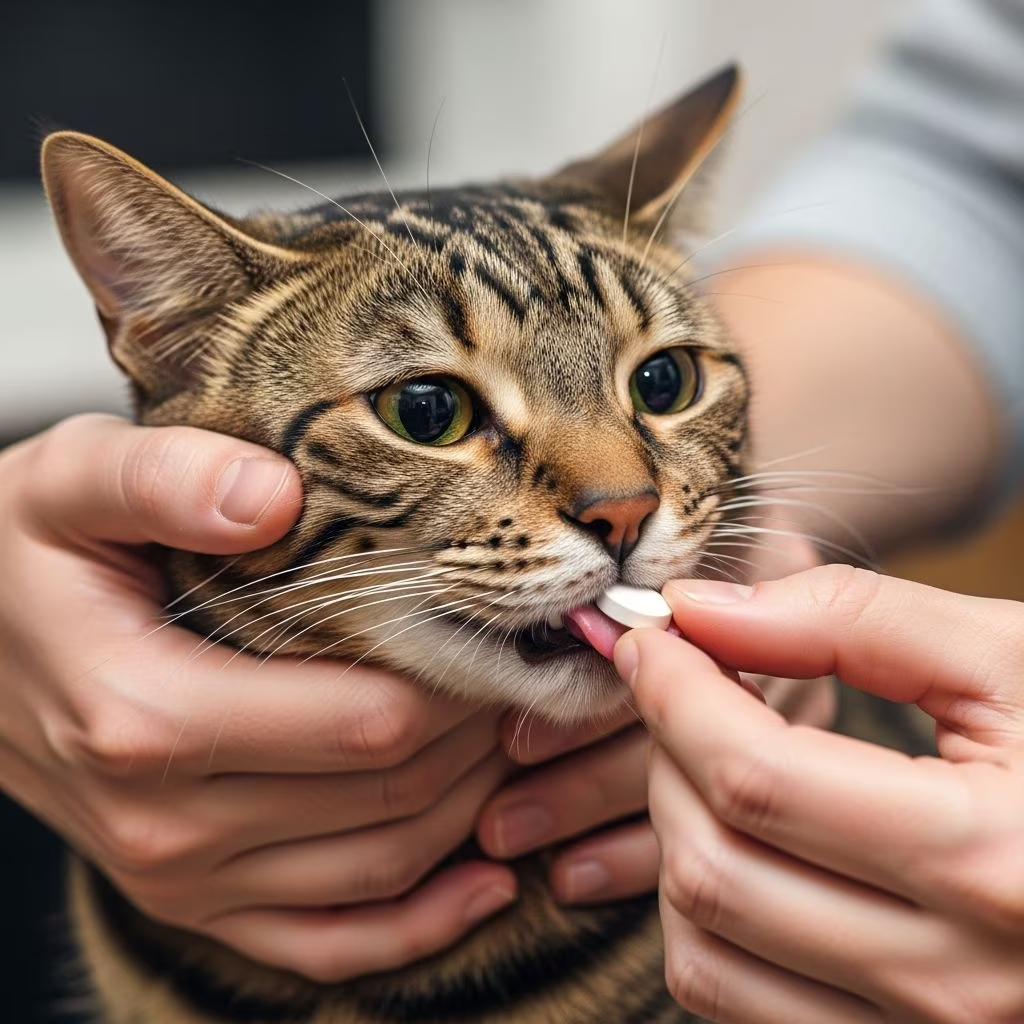
Administering oral medication to cats often ranks among the most daunting tasks for pet owners. Cats’ keen senses and independent nature make them adept at detecting and rejecting pills. However, with the right techniques, patience, and tools, you can ensure your feline receives necessary treatment without undue stress. This guide draws from veterinary recommendations to outline practical approaches, prioritizing safety and efficacy.
Understanding the Challenge of Medicating Cats
Cats possess an acute sense of smell and taste, enabling them to identify disguised medications easily. Unlike dogs, who may eagerly consume treats, cats are selective eaters prone to spitting out unwanted items. Factors like pill size, bitterness, and texture compound the issue. Veterinary sources emphasize preparation, calm demeanor, and method selection based on your cat’s temperament. Success hinges on mimicking natural eating behaviors or using restraint minimally.
Preparation Essentials Before Dosing
Before attempting administration, gather supplies and create a conducive environment. Key steps include:
- Consult your vet: Confirm if the pill can be crushed, compounded into liquid, or hidden in food, as some medications lose efficacy or pose risks when altered.
- Read labels carefully: Note dosage, frequency, storage (e.g., refrigeration for some liquids), and administration timing.
- Assemble tools: Pet piller, treats, pill pockets, towel for wrapping, gloves, and treats for rewards.
- Choose a quiet time: Administer during mealtimes when your cat is hungry and relaxed, ideally with an assistant for support.
Lubricate pills with butter or tuna juice to ease swallowing, but verify veterinary approval first. Remain composed—cats mirror your anxiety, escalating resistance.
Method 1: Concealing Pills in Food or Treats
The least invasive approach involves integrating the pill into palatable items. This leverages cats’ love for flavors while minimizing handling.
- Wet food integration: Bury the pill in a small portion of canned food or tuna. Use just enough to ensure consumption without waste. Monitor to confirm ingestion.
- Pill pockets and treats: Commercial pill pockets mold around tablets like soft chews. Offer by hand as a treat, starting with plain ones to build trust. Ideal for cooperative cats.
- Treat sandwiching: Place the pill between two small treats or pieces of cheese/meat. Administer one treat first, then the medicated one, followed by another to reinforce positivity.
Avoid shared bowls in multi-cat homes to prevent uneven dosing. If your cat ejects the pill, transition to direct methods promptly.
Method 2: Employing a Pet Piller for Precision
For finicky cats, a pet piller—a syringe-like device—delivers pills directly, reducing bite risks. Veterinarians endorse this for reliability.
- Load the pill into the piller, rubber tip facing out.
- Secure your cat: Wrap in a towel (burrito style) exposing only the head, or have an assistant hold gently against their chest.
- Tilt head back slightly, insert piller into the side of the mouth past premolars.
- Depress plunger to deposit at tongue base, then stroke throat or blow on nose to induce swallow.
- Offer water or food post-dose to clear residue.
Practice on empty pillers first. If distress signals appear—hissing, flattened ears, swishing tail—pause and retry later.
Method 3: Manual Direct Pilling Technique
When tools aren’t available, hand-administration works with caution. Best for trusting cats.
- Hold pill between thumb and forefinger.
- Gently grasp head with non-dominant hand, thumb behind upper canines, fingers below.
- Tilt chin upward to open mouth naturally—avoid prying to prevent injury.
- Drop pill onto back tongue third, close mouth, rub throat downward.
- Watch for lip-licking or nose-licking indicating swallow.
Point chin skyward briefly for gravity aid, mindful of arthritic seniors. Follow with syringe water if vet-approved.
Handling Liquids and Alternative Forms
Not all meds are pills; liquids require steady administration.
- Shake well if instructed.
- Insert syringe tip between cheek and teeth, squirt slowly to avoid aspiration.
- Aim for side-of-mouth delivery, allowing licking.
Discuss compounded flavors (e.g., chicken) with your vet for palatability.
Safety Protocols to Prevent Injury
Prioritize welfare for all involved. Watch body language:
| Stress Sign | Action |
|---|---|
| Growling/hissing | Pause, soothe with voice/pets |
| Flat ears, dilated pupils | Release, try later |
| Tail thrashing, piloerection | End session immediately |
| Rigid posture | Offer break, reassess |
Trim claws pre-session. Wear thick gloves. Never force if aggressive—seek vet clinic assistance.
Post-Administration Care and Monitoring
Reward lavishly with play, treats, or affection to associate dosing positively. Observe for 10-15 minutes: vomiting, drooling, or hiding warrants vet contact. Track doses in a log for adherence.
Advanced Solutions for Chronic Cases
For ongoing needs:
- Compounding pharmacies: Custom flavors/textures.
- Transdermal gels: Skin-applied, vet-prescribed only.
- Clinic visits: For recalcitrant cats.
Training via desensitization—handling mouth weekly with rewards—builds tolerance over time.
Frequently Asked Questions
What if my cat spits out the pill?
Do not redose without vet advice to avoid overdose. Use piller next time and confirm swallow.
Can I crush pills into food?
Only if vet confirms—extended-release types are dangerous crushed.
How do I medicate a feral or aggressive cat?
Towel wrap tightly; consider sedation or professional help.
Is it safe to use human pill crushers?
Yes, but clean thoroughly; prefer pet-specific.
What rewards work best?
High-value items like freeze-dried treats or play sessions.
Long-Term Strategies for Medication Success
Consistency fosters routine. Pair with meals, use same room/person. For multi-dose regimens, stagger methods to prevent suspicion. Behavioral conditioning, like clicker training for mouth opening, enhances compliance long-term.
Ultimately, successful pilling safeguards health against infections, parasites, or chronic issues. Persistence pays off—most owners master it within attempts.
References
- ASPCA Pet Health Insurance via Hill’s Pet — Hill’s Pet Nutrition. 2023. https://www.hillspet.com/cat-care/healthcare/giving-cats-medication-and-pills
- How To Give a Cat a Pill: A Step-By-Step Guide — PetMD. 2024-10-15. https://www.petmd.com/cat/general-health/how-to-give-a-cat-a-pill
- How to Give Your Cat a Pill: From Hiss to Bliss — Wedgewood Pharmacy. 2024. https://www.wedgewood.com/blog/how-to-give-a-cat-a-pill/
- How to Get a Cat to Take a Pill — Purina Canada. 2023. https://www.purina.ca/articles/cat/health/how-to-give-a-cat-a-pill
- FASTEST Way to Give Your Cat a Pill Without Struggle — Arbutus West Animal Clinic (YouTube). 2022-05-20. https://www.youtube.com/watch?v=WnikCuQtFOw
- Giving Pills to Cats — VCA Animal Hospitals. 2024. https://vcahospitals.com/know-your-pet/giving-pills-to-cats
- How to give your cat a pill or tablet — YouTube (Veterinary Demo). 2023. https://www.youtube.com/watch?v=I2n-_QCUGfU



