

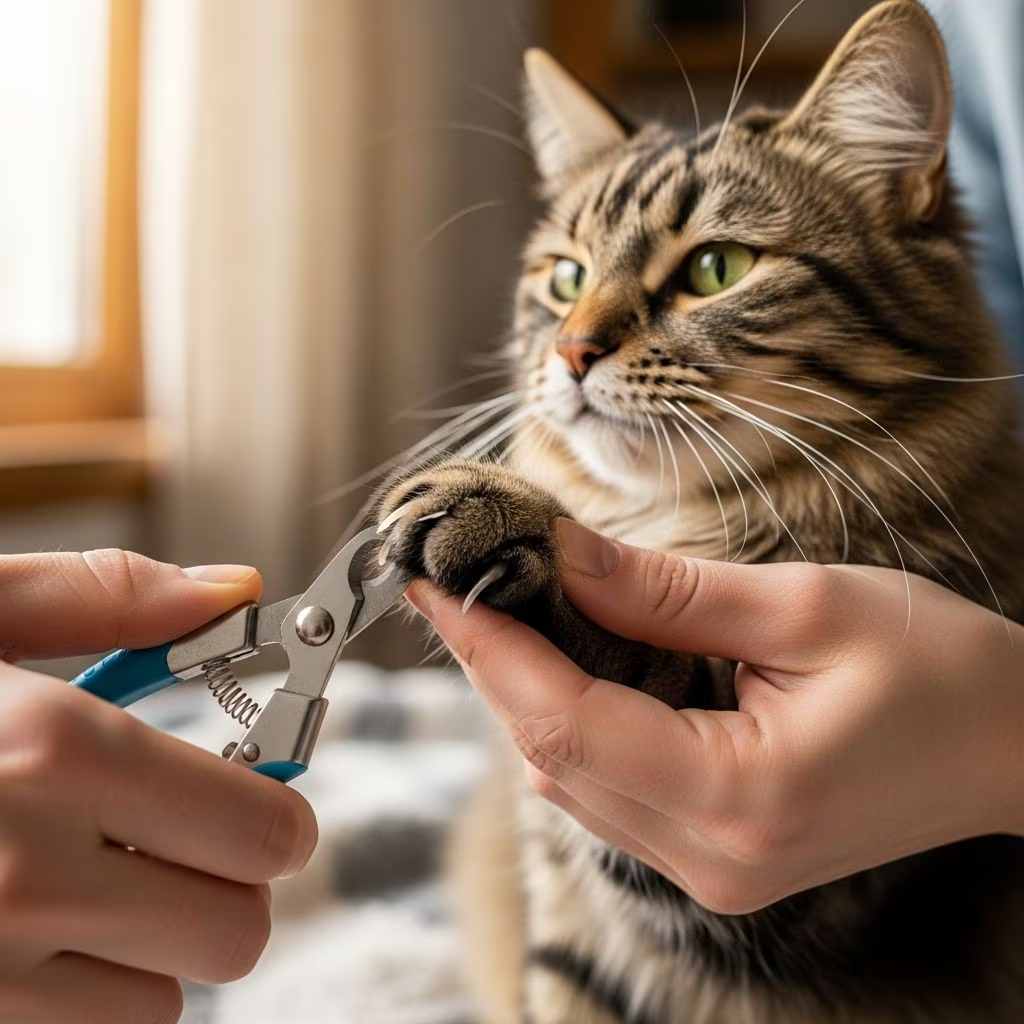
Regular nail maintenance is a vital aspect of feline care that prevents injuries, protects your furnishings, and ensures your cat’s comfort. Many pet owners overlook this simple task, leading to overgrown claws that snag fabrics or cause painful splits. With the right approach, you can perform trims confidently in your living room, saving time and money while building trust with your pet.
Understanding Feline Claw Anatomy and Growth
Cat claws are retractable keratin structures designed for climbing, hunting, and marking territory. Unlike human nails, they grow continuously from the third phalanx bone, curving downward naturally. The **quick**—a sensitive core containing blood vessels and nerves—runs through the nail, visible as a pink area in light-colored claws. Dark nails hide this, requiring extra caution to avoid pain and bleeding.
Overgrown claws lose their natural curve, becoming blunt hooks that impair mobility. Indoor cats, lacking rough surfaces to file them down, need human intervention every 3-4 weeks. Signs of excess length include audible clicking on floors, visible tips when paws are relaxed, or snags on upholstery.
Essential Tools for Safe Nail Trimming
Invest in cat-specific gear to minimize stress and risk. Here’s a curated list:
- Guillotine, scissor, or plier-style clippers: Sized for cats; guillotine offers precision for small nails.
- Nail file or emery board: Smooths sharp edges post-trim.
- Styptic powder or cornstarch: Stops bleeding if the quick is nicked; cornstarch works as a household alternative.
- Cotton balls and treats: For cleanup and rewards.
- Towel or grooming bag: Secures wriggly cats via the “burrito wrap” method.
Avoid human nail clippers—they crush rather than slice, risking splits.
Frequency and Timing: When to Trim
| Cat Lifestyle | Recommended Frequency | Reason |
|---|---|---|
| Indoor only | Every 3-4 weeks | No natural wear; prevents snags |
| Outdoor access | Every 6-8 weeks | Scratching posts/trees file naturally |
| Kitten | Every 2 weeks | Fast growth; habituates early |
| Senior cat | Every 4-6 weeks | Slower growth; check for mobility issues |
Monitor weekly: Tap paws on floors to hear clicks or inspect for hooks. Trim after play when relaxed, never when hungry or agitated.
Building Positive Associations Before Trimming
Sudden handling sparks resistance. Desensitize over 1-2 weeks:
- Gently massage paws daily during cuddles, rewarding with high-value treats.
- Press pads to extend claws briefly, praising calm behavior.
- Introduce clippers’ sound by tapping nearby, associating with snacks.
For kittens, start at 8 weeks to normalize the routine lifelong.
Step-by-Step Guide to Trimming Nails
Follow this proven solo method, adaptable for helpers.
Preparation
- Dim lights, play soft music; position on lap or elevated surface like a table.
- Wrap in towel burrito-style: Leave one leg exposed, tuck tail securely.
Execution
- Secure position: Cat face-up between legs or lap-down; hind legs first as they’re less sensitive.
- Expose nail: Firmly squeeze pad; fur-free view reveals quick.
- Position clippers: 45-degree angle, snip only translucent tip (1-2mm beyond curve). Trim small bits to stay safe.
- File edges: Gently round for safety.
- Repeat: 2-4 nails per session if resistant; praise throughout.
- Reward lavishly: End with play or meal.
Don’t forget dewclaws—higher on legs, often overlooked. Aim for 18 claws total (5 front, 4 rear per paw).

Handling Accidents: What If You Cut the Quick?
Bleeding is common for novices but temporary. Steps:
- Stay calm—cat senses panic.
- Dip cotton in water, press firmly 30 seconds.
- Apply styptic powder/cornstarch/flour; hold until clotting (1-2 min).
- Monitor; vet if excessive.
Pain fades quickly; resume future trims confidently.
Troubleshooting Resistant Cats
Not all felines cooperate. Strategies:
Solo Techniques:
- Sessions under 5 minutes; multiple daily tries.
- Sleep-trimming: Many cats allow when drowsy.
- Distraction toys during.
With Help: One holds/distraction-feeds, other trims.
Advanced Aids:
- Grooming bags/muzzles for aggression.
- Calming pheromone sprays.
- Soft nail caps as interim (glue-on covers, replace monthly).
If impossible, professional groomers charge $10-20 per session.
Alternatives to Traditional Trimming
- Scratchers: Cardboard, sisal posts encourage natural filing.
- Nail Caps: Vinyl sheaths blunt without cutting; safe 4-6 weeks.
- Declawing (NOT recommended): Surgical amputation banned in many areas; causes lifelong pain/behavior issues.
Health Checks During Trims
Inspect for:
- Ingrown nails: Swollen paws; vet extraction.
- Thickened claws: Possible arthritis or infection.
- Paronychia: Pus around base; antibiotics needed.
Integrate into monthly wellness: Weigh, ear check, dental scan.
FAQs: Common Cat Nail Questions
Can I use human clippers on cats?
No—too dull, causes crushing/pain. Opt for feline models.
What if my cat has black nails?
Clip tiny tips only; use light to spot quick glow. Err conservative.
Do kittens need trims?
Yes, from 4-6 weeks to prevent overgrowth habits.
Is trimming painful?
No, if quick avoided. Feels like hair clip.
How to train feral/stray cats?
Slow acclimation; trap-neuter programs first, then gradual handling.
Long-Term Benefits of Routine Trims
Consistent care fosters bonding, reduces vet bills from injuries, and preserves home integrity. Track progress in a journal: Note tolerance, growth rates. Share tips in pet communities for mutual learning.
Expand to full grooming: Brush weekly, bathe quarterly for holistic health.
References
- How to Trim Cat Nails: A Step-by-Step Guide — Willow Glen Pet Hospital. Accessed 2026. https://willowglenpethospital.com/how-to-trim-cat-nails/
- Trim Your Cat’s Nails — Nash County Animal Hospital. Accessed 2026. https://nashpetcare.com/trim-your-cats-nails/
- How to Trim Cat’s Nails | Feline Nail Trim — atDove (YouTube, Sarah Tauber, DVM). 2017-01-27. https://www.youtube.com/watch?v=O0XANBIPV8g
- ASPCA Grooming 101 – Nail Trimming for Cats — ASPCA (YouTube). Accessed 2026. https://www.youtube.com/watch?v=MnQjdTWku5U
- Cat Claw 101: A Guide to Trimming Kitty Nails — Cat Care Society. Accessed 2026. https://www.catcaresociety.org/cat-claw-101-a-guide-to-trimming-kitty-nails/
- From kitty claws to dog paws: A pet parent’s guide to nailing nail trims — Animal Humane Society. Accessed 2026. https://www.animalhumanesociety.org/resource/kitty-claws-dog-paws-pet-parents-guide-nailing-nail-trims



