

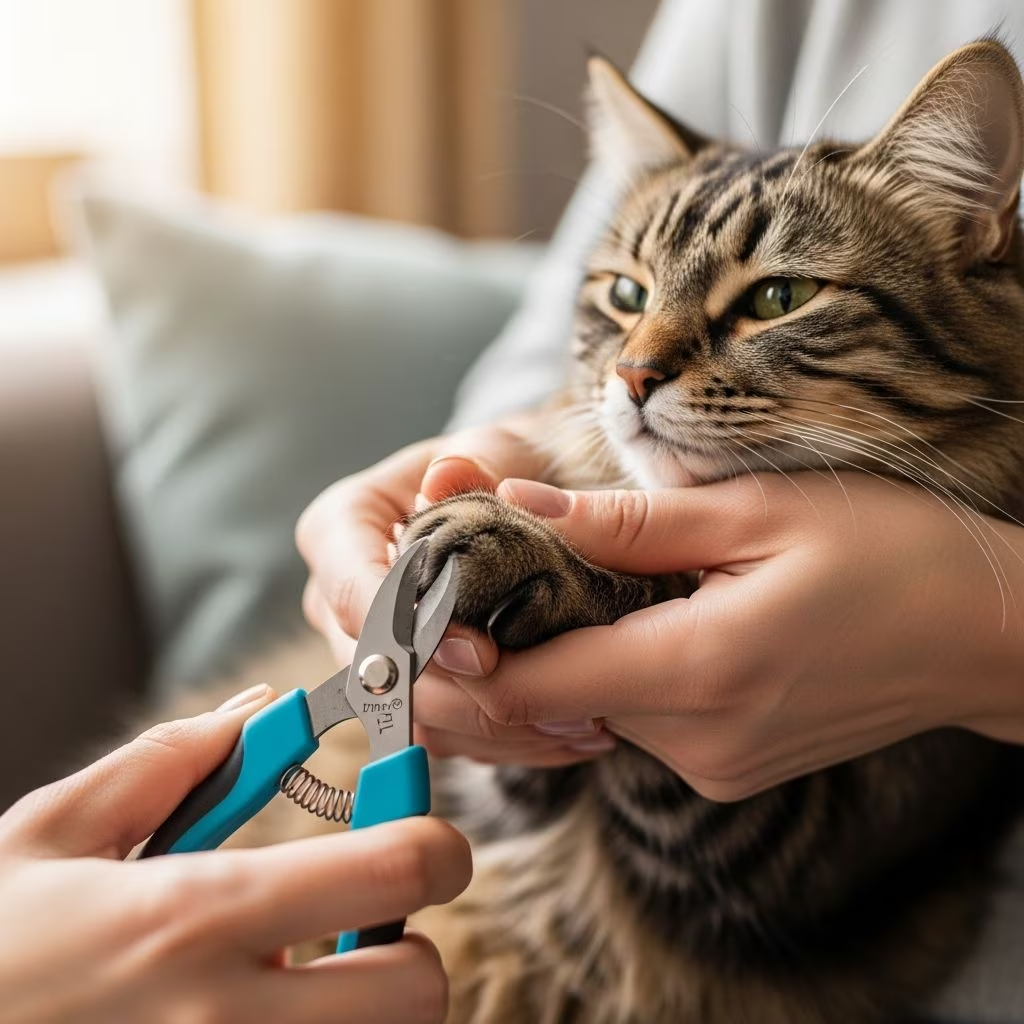
Regular nail maintenance is a vital part of cat ownership, helping to protect your furniture, clothing, and skin from sharp scratches while keeping your pet comfortable. Cats’ claws naturally grow long and curved, designed for climbing and hunting, but in a home environment, they can become overgrown and hazardous if not managed. Learning to trim them yourself saves money on professional grooming and strengthens the bond with your cat through positive handling.
Why Trimming Your Cat’s Nails Matters
Overgrown nails can curl back into the paw pads, leading to pain, infections, or mobility issues. Trimming prevents this and reduces destructive scratching behaviors. Kittens should be introduced to nail care early for lifelong ease, while adult cats benefit from trims every 4-6 weeks. Front paws need more frequent attention since they’re used more for scratching.
- Prevents injury to humans and damage to household items.
- Promotes healthy paw circulation and balance.
- Reduces stress during vet visits by acclimating cats to handling.
Understanding Cat Claw Anatomy
A cat’s claw consists of a hard outer sheath over a sensitive inner core called the quick, which houses blood vessels and nerves. In light-colored nails, the quick appears pinkish; in dark ones, it’s invisible, requiring extra caution. The claw tapers to a sharp point before widening toward the quick—trim only the narrow tip.
| Claw Part | Description | Trimming Guideline |
|---|---|---|
| Tip | Sharp, narrow end | Safe to clip 1-2mm |
| Quick | Pink core with vessels | Never cut—causes bleeding |
| Pad | Soft paw underside | Press gently to extend claw |
Essential Tools for Safe Nail Trimming
Invest in quality tools to avoid splintering or discomfort. Cat-specific clippers are sharper and designed for the claw’s curve.
- Guillotine-style clippers: Sliding blade holds claw securely.
- Scissor-style: Precise for small tips.
- Plier-style: Strong grip for tough nails.
- Human nail clippers work if sharp, but pet versions prevent splitting.
- Nail file or emery board for smoothing edges.
- Styptic powder, cornstarch, or soap for bleeding control.
- Treats for positive reinforcement.
Always check blades for sharpness; dull ones cause pain and splits.
Preparing Your Cat for Nail Trims
Desensitization prevents fights. Start sessions short and reward heavily to build trust.
- Massage paws daily: Gently squeeze pads for 3 seconds, release, treat. Rotate toes over days.
- Introduce clippers: Let cat sniff, clip dry spaghetti near paw, treat immediately.
- Practice extension: Press pad to pop out claw, touch with clippers (no cut), reward.
- Choose calm times: Post-meal when relaxed, in a quiet room.
For skittish cats, wrap in a towel (burrito method), exposing one paw at a time. Go slow—one nail per session for first-timers.
Step-by-Step Guide to Trimming Nails
Position cat in lap facing away or on a table, cradled securely. Work front paws first.
- Secure paw: Thumb on top, index below joint behind claw. Press to extend fully.
- Position clippers: At 45-degree angle, just past narrow tip before curve widens.
- Snip quickly: One smooth motion, removing 1-2mm. Avoid quick.
- Check and repeat: Release toe, inspect, move to next. Smooth edges with file.
- All paws: Do dews (inner front) last; rears if needed, but shorter.
- Finish strong: Praise, play, or treat session end.
Dark nails? Trim tiny bits over multiple sessions, watching for quick recession. Video tutorials show real-time demos for visual learners.
What If You Cut the Quick?
Accidents happen—stay calm. The quick bleed is minor but startling.
- Apply firm pressure to nail tip with cotton (no squeezing pad).
- Dip in styptic powder, cornstarch, or rub on dry soap.
- Monitor: Bleeding stops in minutes; skip rest of trim if cat upset.
Prevent by under-trimming initially. Frequent small trims keep quick receding safely.
Common Mistakes and How to Avoid Them
Many owners struggle initially, but these fixes help.
| Mistake | Why It Happens | Solution |
|---|---|---|
| Forcing all nails at once | Cat stress overload | One paw/session max |
| Cutting too deep | Missing quick cues | Small snips, light source |
| Dull tools | Splintering pain | Sharpen/replace regularly |
| No rewards | Builds aversion |
Tips for Tricky Cats and Special Cases
Kittens: Trim post-nap when sleepy. Seniors: Gentler due to arthritis; check for overgrowth signs. Multi-cat homes: Trim individually to avoid copycat stress.
- Feral/semi-feral: Use gloves, distractions like toys.
- Post-trim: Provide scratching posts to redirect natural urge.
- Frequency: Every 3-6 weeks; watch for dullness or snags.
Alternatives: Vet trims ($10-20) or professional groomers for tough cases.
Declawing: Why It’s Not the Answer
Declawing amputates toe bones—equivalent to finger knuckle removal in humans. It’s painful, risks complications, and alters behavior. Nail trims and scratchers suffice. Many regions ban it; focus on humane care.
Frequently Asked Questions (FAQs)
Can I use human nail clippers on cats?
Yes, if sharp and clean, but cat clippers are safer for curve and strength.
How often should I trim my cat’s nails?
Every 4-6 weeks for adults; biweekly for kittens. Check weekly.
What if my cat won’t let me trim their nails?
Desensitize gradually, enlist help, or seek pro services. Never force.
Do all cats need nail trims?
Indoor cats yes; outdoor ones self-trim on trees but still check.
Is nail trimming painful?
No, if done right—only dead keratin removed, like human nails.
Long-Term Nail Care Routine
Integrate into grooming: Brush weekly, check ears/eyes same time. Track growth in a journal. Healthy nails are smooth, pink-quick distant. If overgrown or infected, vet check.
Empower yourself with practice; most cats adapt in 3-5 sessions. Your patience yields a calmer, safer companion.
References
- Trim Your Cat’s Nails — White Oak Veterinary Hospital. Accessed 2026. https://whiteoakvet.net/trim-your-cats-nails/
- How to Trim Your Cat’s Nails — Arm & Hammer. Accessed 2026. https://www.armandhammer.com/en/articles/how-to-trim-cats-nails
- How to Safely Trim a Cat’s Nails | Vet Tutorial — YouTube (Vet Tutorial). Accessed 2026. https://www.youtube.com/watch?v=VmyU1zMN8YM
- Cat Nail Trimming 101 — Wisconsin Humane Society. Accessed 2026. https://www.wihumane.org/behavior/ask-the-experts/cat-behavior/cat-nail-trimming-101
- Cat Claw 101: A Guide to Trimming Kitty Nails — Cat Care Society. Accessed 2026. https://www.catcaresociety.org/cat-claw-101-a-guide-to-trimming-kitty-nails/
- How to clip or trim cat claws safely — Humane World. Accessed 2026. https://www.humaneworld.org/en/resources/trimming-cats-claws
- ASPCA Grooming 101 – Nail Trimming for Cats — YouTube (ASPCA). Accessed 2026. https://www.youtube.com/watch?v=MnQjdTWku5U



