
Mastering Canine Obedience: A Complete Guide
Unlock the secrets to raising a well-behaved, happy dog
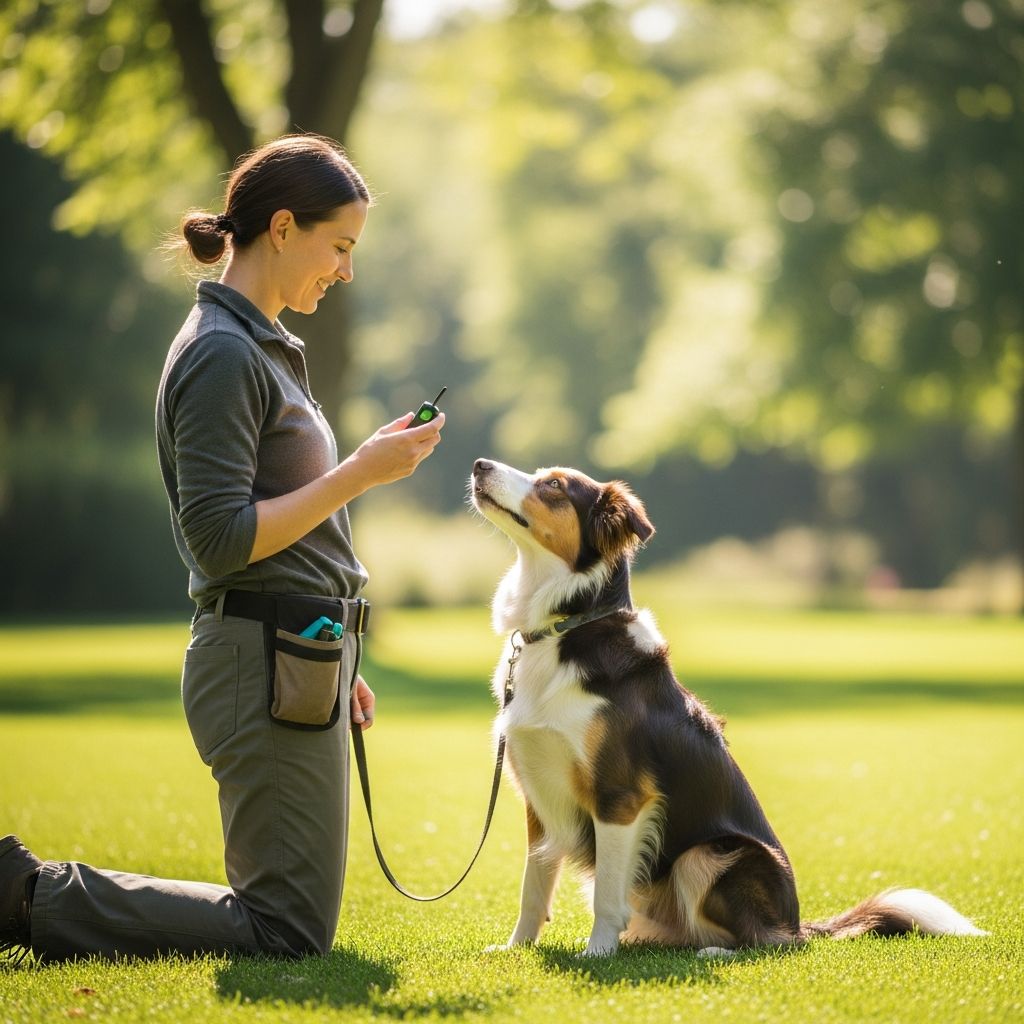
A well-behaved dog is the result of consistent, thoughtful training grounded in understanding how dogs learn. Whether you’re working with a new puppy or addressing behavioral challenges in an adult dog, the principles of effective training remain constant. This comprehensive guide explores evidence-based approaches to dog training that build a strong foundation for lifelong obedience and create a harmonious relationship between you and your canine companion.
Understanding the Foundation of Dog Learning
Before implementing any training technique, it’s essential to recognize that dogs learn through associations and patterns. Positive reinforcement training is widely regarded as the most effective approach to teaching dogs desired behaviors. This method focuses on rewarding good behavior rather than punishing unwanted actions, creating a positive association with obedience.
The science behind this approach is rooted in Thorndike’s Law of Effect, which states that actions producing rewards tend to increase in frequency, while those without rewards tend to decrease. By leveraging this principle, trainers can shape behavior effectively and humanely.
Key prerequisites for successful training include:
- Ensuring your dog’s basic needs are met before training sessions
- Identifying what motivates your individual dog
- Learning to interpret your dog’s body language
- Creating a controlled environment that minimizes distractions
- Maintaining consistency across all interactions
Core Training Methods Explained
Several scientifically-supported training methodologies exist, each with distinct advantages. Understanding these approaches helps you select the most appropriate strategy for your dog’s learning style and your specific goals.
Reward-Based Training Techniques
Lure and reward training involves using food rewards to guide your dog into desired positions or behaviors. For example, holding a treat above your dog’s head while saying “sit” naturally encourages the sitting position. Once your dog complies, the reward reinforces the connection between the command and the action.
Clicker training introduces a distinctive clicking sound as a communication tool. Your dog learns to associate the click with an incoming reward, allowing you to precisely mark the exact moment your dog performs correctly. This method provides clear feedback and accelerates learning significantly.
Shaping teaches complex behaviors by rewarding small, incremental steps toward the final goal. Rather than waiting for your dog to perform an entire behavior perfectly, you reward successive approximations. This technique proves particularly valuable when teaching advanced commands or addressing stubborn behavioral issues.
Science-Based and Relationship-Focused Approaches
Modern dog training increasingly incorporates principles from comparative psychology, ethology, and applied behavior analysis. Science-based trainers design personalized programs using the latest research on behavior modification, ensuring humane and ethical approaches.
Relationship-based training emphasizes consistent feedback and communication. This method provides praise when your dog demonstrates correct behavior and gentle correction when they don’t. The underlying philosophy recognizes that dogs, like children, learn more effectively in enjoyable, low-stress environments. If your dog appears stressed during training, adjusting your approach or ending the session temporarily allows them to regain composure.
Model-Rival Training for Social Learners
Model-rival training harnesses dogs’ natural social instincts by having them observe other well-trained dogs performing desired behaviors. Your dog watches from a distance while another dog successfully completes a task, learning through observation and natural competitive instincts. This method proves particularly effective for search and rescue training and herding work, producing results comparable to reward-based training.
Dogs frequently display excitement during model-rival training, often barking enthusiastically. Provided this excitement stems from genuine enthusiasm rather than anxiety, this heightened engagement actually accelerates learning and retention.
Essential Elements of Successful Training Programs
Regardless of which training method you choose, certain universal principles contribute to success:
Selecting Appropriate Rewards
Different dogs respond to different motivators. While some dogs are highly food-motivated, others may prefer toys, play sessions, or verbal praise. Identifying your dog’s primary motivator significantly enhances training effectiveness. Experiment with various rewards to determine what captures your dog’s enthusiasm most reliably.
Maintaining Consistency
Inconsistent training undermines progress and confuses your dog about what behaviors are acceptable. All family members must use identical commands, reward the same behaviors, and apply consistent rules. This uniformity teaches your dog exactly what’s expected, regardless of who gives the command.
Training Frequency and Duration
Short, frequent training sessions prove more effective than lengthy, infrequent ones. Dogs have limited attention spans, and extended sessions often result in frustration for both dog and trainer. Multiple five to ten-minute sessions throughout the day maintain engagement and accelerate learning.
Progressive Difficulty Escalation
Begin training new behaviors in familiar environments with minimal distractions. As your dog masters each skill, gradually introduce more challenging settings and variations. This graduated approach, similar to teaching a child, builds confidence and prevents overwhelming your dog.
Addressing Unwanted Behaviors
While positive reinforcement focuses on teaching desired behaviors, addressing unwanted actions requires different strategies. Rather than relying on punishment, modern training employs several effective alternatives:
| Technique | Description | Best Used For |
|---|---|---|
| Extinction | Allowing unwanted behavior to cease naturally through consistent non-reinforcement | Attention-seeking behaviors like jumping or excessive barking |
| Incompatible Behavior Training | Teaching an alternative behavior that cannot occur simultaneously with the unwanted action | Replacing destructive habits with constructive ones |
| Cue Management | Putting unwanted behavior on cue, then rarely giving that cue | Behaviors that are harmless in specific contexts |
| Absence Reinforcement | Rewarding all behaviors except the unwanted one | General behavioral modification |
| Environmental Modification | Changing the environment or circumstances that trigger unwanted behavior | Preventative management of problematic situations |
The Role of Classical Conditioning
Classical conditioning pairs neutral stimuli with rewards or positive experiences, creating new associations. A common application involves addressing crate anxiety. By providing a favorite treat or kong stuffed with peanut butter each time your dog enters the crate, you create a positive association, transforming the crate from a source of anxiety into a place of comfort and anticipation.
This technique extends to numerous scenarios, helping dogs overcome fears and anxieties through repeated positive associations with previously stressful stimuli.
Why Punishment-Based Methods Fall Short
Training methods emphasizing punishment, such as the Koehler method, electronic shock collar training, dominance-based approaches, and some “balanced” training techniques, remain controversial within the professional training community. Scientific research consistently demonstrates that reward-based training proves more effective and causes less damage to the dog-owner relationship than punishment-based methods.
Punishment-based approaches carry several inherent disadvantages:
- Dogs may learn to avoid the behavior only when the trainer is present
- Punishment can increase anxiety and stress, potentially worsening behavioral issues
- The dog-owner relationship may suffer, creating trust deficits
- Dogs may develop new fear-based behaviors or aggression
- Learning is generally slower and less reliable than with positive reinforcement
Major veterinary organizations, including the RSPCA, recommend that all training should be reward-based. This consensus reflects decades of behavioral research and practical experience demonstrating superior outcomes.
Creating Your Personalized Training Plan
Successful dog training isn’t one-size-fits-all. Consider these factors when developing your approach:
Assessing Your Dog’s Individual Needs
Does your dog have specific behavioral challenges, or are you establishing baseline obedience? Is your dog naturally motivated by food, toys, or play? Understanding your dog’s unique personality, age, and learning history allows you to tailor your training strategy for maximum effectiveness.
Setting Realistic Goals
Begin with foundational commands like “sit,” “down,” and “stay” before advancing to complex behaviors. Celebrate small victories and progress gradually. Overly ambitious timelines lead to frustration and inconsistent effort.
Maintaining Training Enthusiasm
Make training enjoyable for both you and your dog. If sessions feel like work rather than play, adjust your approach. Dogs are highly perceptive and respond to your energy and attitude. Training should strengthen your bond while building obedience.
Frequently Asked Questions About Dog Training
At what age should I start training my dog?
Puppies can begin learning basic commands as early as 8 weeks old. However, their attention span is very limited, so keep sessions extremely short—just 2-5 minutes. Adult dogs can be trained at any age and often learn quickly if using appropriate motivation.
How long before I see results?
Simple commands like “sit” may be learned within days with consistent training. More complex behaviors and behavioral modification typically require weeks or months of consistent effort. Every dog learns at their own pace, and patience is essential.
Should I use food rewards indefinitely?
Initially, food rewards are highly effective. As your dog masters behaviors, you can gradually reduce food rewards and replace them with praise and play. However, occasional treats maintain motivation and prevent behavior extinction.
What if my dog isn’t motivated by food?
Explore alternative motivators including toys, play sessions, verbal praise, physical affection, or access to preferred activities. Some dogs respond powerfully to play or social interaction rather than edible rewards.
Is professional training necessary?
Many owners successfully train their dogs independently using quality resources and consistent effort. However, professional trainers prove invaluable for complex behavioral issues, aggression management, or when owners feel uncertain about implementation. A professional can also accelerate the learning process.
Building Long-Term Obedience and Behavioral Success
Effective dog training extends beyond teaching individual commands—it’s about establishing a communication system and relationship framework that supports lifelong obedience. By consistently applying reward-based methods, maintaining clear expectations, and making training enjoyable, you create an environment where your dog naturally wants to cooperate.
The most successful dog owners view training as an ongoing process rather than a destination. Regular reinforcement, periodic learning of new behaviors, and continued engagement keep your dog mentally stimulated and emotionally connected to you.
Remember that every dog is an individual with unique needs, capabilities, and learning styles. What works perfectly for one dog may require adjustment for another. Flexibility, patience, and genuine affection for your canine companion form the true foundation of a well-behaved, happy dog.
References
- Foundations Training Methods — Positively.com. https://positively.com/dog-training/article/foundations-training-methods
- Common Dog Training Methods and Their Pros and Cons — Astro Loyalty. https://www.astroloyalty.com/common-dog-training-methods-and-their-pros-and-cons/
- Dog training — Wikipedia. https://en.wikipedia.org/wiki/Dog_training
- Top 10 Dog Training Tips — Small Door Veterinary. https://www.smalldoorvet.com/learning-center/behavior/top-10-dog-training-tips
- How to Train Your Dog & Top Training Tips — RSPCA. https://www.rspca.org.uk/adviceandwelfare/pets/dogs/training
- How to Reward Dogs With Positive Reinforcement Training — Humane World. https://www.humaneworld.org/en/resources/positive-reinforcement-training
Similar Articles








Read full bio of Sneha Tete




