

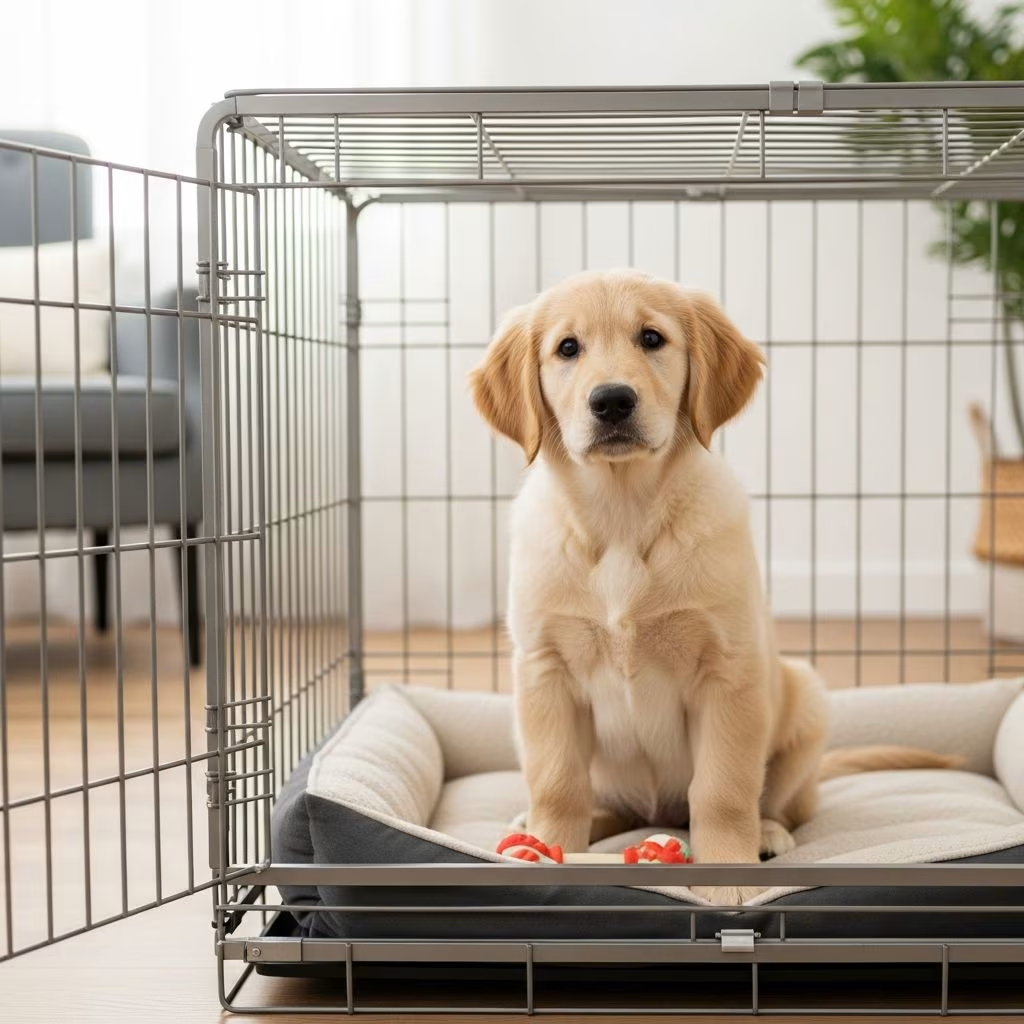
Confinement training represents one of the most effective and humane approaches to canine behavior management when applied with understanding and consistency. Rather than viewing a crate as a restrictive device, progressive trainers recognize it as a tool that aligns with dogs’ natural instincts while providing structure, security, and predictability in their environment. When introduced thoughtfully, this training method addresses multiple behavioral challenges simultaneously—from basic housebreaking to managing anxiety and preventing destructive tendencies.
Understanding the Foundation: Why Dogs Respond to Confined Spaces
Dogs descend from wolves, animals that naturally seek den-like environments for shelter, security, and rest. This denning instinct remains embedded in modern canines regardless of breed or background. A properly introduced crate capitalizes on this innate preference by offering a dedicated personal space where dogs can retreat, relax, and feel protected. This fundamental understanding explains why confinement training works so effectively—it’s not imposing artificial constraints but rather providing a structured outlet for natural behavioral tendencies.
When dogs view their crate as a sanctuary rather than punishment, they willingly enter it during stressful situations, loud environments, or when they simply need downtime. This voluntary association transforms the crate from a confining object into a source of comfort and emotional regulation.
Accelerating Housebreaking Through Strategic Confinement
One of the most compelling applications of confinement training is expediting the housebreaking process. Dogs possess a strong biological preference to avoid soiling areas where they rest and eat. This instinctive cleanliness becomes the foundation for successful toilet training. Research published in Applied Animal Behaviour Science demonstrates that dogs using structured confinement achieved housebreaking milestones significantly faster than their non-crated counterparts.
The mechanism is straightforward: by limiting access to multiple areas of the home, puppies and newly adopted dogs develop bladder control more reliably. The structured schedule becomes equally important—establishing regular intervals for outdoor breaks teaches dogs when and where elimination is appropriate.
Implementing an Effective Housebreaking Schedule
- Morning routine: Release from crate, immediate outdoor elimination opportunity, praise and treat reward
- Feeding intervals: Meals consumed in the crate with door closed, followed by outdoor break within 15-30 minutes
- Playtime cycles: Active play indoors, followed by crate time as energy levels decrease
- Evening protocol: Final outdoor break before extended crate duration overnight
- Duration adjustment: Gradually extend crate intervals as bladder control improves, following the general rule of one month per hour of age for puppies
Consistency in this schedule creates predictable patterns that dogs quickly learn and internalize. Over time, the puppy’s body synchronizes with the routine, reducing accidents dramatically.
Addressing Separation-Related Anxiety and Stress Responses
Many dogs experience anxiety when separated from their owners, manifesting as destructive behaviors, excessive vocalization, or elimination problems. Veterinary behavioral research supports the use of confined spaces as therapeutic interventions for anxious dogs. When introduced gradually and paired with positive associations, a crate becomes a “safe zone” that actively reduces stress rather than amplifying it.
The key distinction involves timing and emotional state during crate exposure. Dogs confined while already in a panic state will associate the crate with negative emotions. Conversely, dogs introduced to the crate during calm moments and rewarded for voluntary entry develop positive neural associations with the space.
Building Positive Associations with Confined Spaces
- Place high-value rewards (treats, favorite toys, puzzle feeders) inside the crate during moments when your dog is relaxed and naturally curious
- Leave the crate door open initially, allowing free entry and exit without pressure or expectation
- Practice short, voluntary confinement periods during times you’re home and present
- Use calming aids like soft bedding, blankets that smell of the home or littermates, or pheromone products to enhance the retreat atmosphere
- Gradually extend duration as your dog demonstrates comfort with the space
Research from veterinary behavioral literature indicates that dogs with established positive crate associations show measurably lower stress markers during separation events. The crate essentially becomes an extension of the owner’s calming presence rather than a trigger for anxiety.
Managing Destructive Behaviors and Environmental Hazards
Destructive behavior—including inappropriate chewing, digging, and elimination—often stems from boredom, anxiety, or lack of supervision during vulnerable periods. Studies examining behavioral confinement indicate that temporary, structured confinement significantly reduces stress-related destructive tendencies, particularly in young or high-energy dogs. By preventing the opportunity for destructive behaviors to occur, you simultaneously prevent the habit from forming.
Additionally, confinement protects dogs from environmental dangers when supervision isn’t feasible. Access to toxic household materials, electrical cords, small objects posing choking hazards, and dangerous areas becomes immediately restricted when a dog is safely crated.
Creating an Enriched Confined Environment
Simply placing a dog in a crate without enrichment creates frustration and reinforces negative associations. Instead, pair confinement with engaging activities that occupy attention and provide mental stimulation:
- Puzzle toys and treat-dispensing toys that require problem-solving
- Long-lasting chewables like bully sticks, yak cheese chews, or antler pieces reserved specifically for crate time
- Kong toys stuffed with frozen peanut butter or treat paste
- Interactive sniff toys that engage natural foraging instincts
- Rotation of toys to maintain novelty and prevent habituation
When enrichment items are consistently paired with crate time, dogs begin anticipating confinement as a positive event associated with valued resources.
Reinforcing Positive Behavior Within the Crated Environment
Confinement training reaches its full potential when paired with positive reinforcement strategies. Rather than using the crate as punishment or correction, view it as an opportunity to reward calm, settled behavior. Dogs confined to spaces inevitably experience moments of relaxation—these moments represent training opportunities.
Feeding meals within the crate (with the door closed during eating) establishes powerful positive associations. Dogs begin to anticipate the crate as a location where good things consistently occur. High-value items—items the dog loves most—should appear specifically and exclusively within the crated environment.
Behavioral Positioning and Relaxation Training
Once dogs accept basic confinement, introducing a “down-stay” command within the crate furthers behavioral development. The physical down position is inherently associated with relaxation and calm, making it an ideal target behavior for reinforcing settled crate time. Initially practice this with the door open while supervising, gradually introducing door closure as confidence builds.
This progression teaches dogs that the most rewarded behavior within the crate is physical relaxation—lying down, remaining still, and accepting confinement peacefully. Over weeks and months, this practiced behavior becomes the dog’s default response to crate time.
Establishing Predictable Routines and Lifestyle Structure
Dogs thrive on predictability and routine. Confinement training naturally facilitates the establishment of structured daily schedules that benefit both canine and human inhabitants. A consistent “potty-play-crate” rotation—repeated multiple times daily—creates a rhythm that dogs quickly internalize and anticipate.
Morning routines might follow this pattern: crate release, immediate outdoor break (with reward for elimination), playtime indoors, feeding in crate, brief rest period, then active play. Afternoon cycles mirror the morning, while evening routines establish extended overnight confinement. Dogs anticipating this rhythm display reduced anxiety because they understand what’s coming next.
Technical Considerations for Crate Selection and Security
The physical crate itself requires thoughtful selection and maintenance. Size matters considerably—the crate should be large enough for the dog to stand, turn around, and lie down in all directions, but not so spacious that a corner can be used for elimination while keeping sleeping areas clean.
Material selection influences the crate’s effectiveness. Solid-sided kennels create more enclosed, den-like environments that many dogs find naturally calming. Wire crates offer visibility and ventilation but feel less cave-like. Some dogs prefer one style while others respond better to the alternative—observation and experimentation determine the best fit.
Maintenance and Safety Reinforcement
- Inspect crate hardware regularly for loose connections or sharp edges
- Use zip ties to reinforce all edges and connection points, eliminating weak spots dogs might exploit
- Ensure proper ventilation and temperature control within the crated space
- Avoid crate placement in direct sunlight or near heat/cooling vents
- Line crates with washable bedding appropriate to seasonal temperatures
Duration Guidelines and Understanding Confinement Limits
While confinement training offers significant benefits, dogs are fundamentally social animals requiring substantial daily interaction, exercise, and mental engagement. Crate time should never become a substitute for proper socialization, training, or companionship.
General guidelines suggest that adult dogs can remain safely crated for 4-8 hours depending on individual circumstances, though shorter durations are preferable. Puppies require more frequent breaks, following the age-in-months guideline for maximum crate duration (a 3-month-old puppy can manage approximately 3-4 hours).
Dogs left in crates excessively develop behavioral and psychological problems despite proper initial training. Balance confinement with ample out-of-crate time featuring supervision, interaction, and environmental enrichment.
Frequently Asked Questions About Confinement Training
Will my dog resent me for using a crate?
When introduced positively and used appropriately, most dogs view their crate as a preferred space rather than a punishment. Dogs that grew up with confinement training often choose to enter their crate voluntarily during stressful moments. The key is ensuring all associations remain positive and duration limits are respected.
What if my dog refuses to enter the crate?
Refusal suggests the introduction process moved too quickly or included negative experiences. Return to basics: leave the door open, place treats inside, and allow voluntary exploration without pressure. Some dogs require weeks of gradual conditioning before accepting even brief confinement.
Can adult dogs be crate trained successfully?
Yes. While puppies adapt more readily to confinement, adult dogs and rescue animals can learn crate training at any age. The process may require extended timeframes and additional patience, but the underlying mechanism remains identical.
Should I use the crate for punishment?
Never. Using the crate as punishment immediately undermines positive associations and transforms it into an object of dread. The crate must remain exclusively associated with positive experiences, safety, and rest.
Integration with Overall Training and Behavior Management
Confinement training functions as a foundational component within comprehensive behavior management rather than a standalone solution. Combined with positive reinforcement training, appropriate exercise, mental enrichment, and socialization, crate training accelerates progress across multiple behavioral domains.
The confinement period itself provides valuable opportunities for teaching calm behavior, establishing routines, and creating positive associations. Between crate sessions, active training, play, and social interaction prevent boredom and build the strong relationship that characterizes well-adjusted canines.
Professional trainers and veterinary behaviorists consistently identify structured confinement training as one of the most effective and humane approaches to canine development. When implemented with understanding, patience, and genuine consideration for the dog’s emotional experience, confinement training simultaneously benefits dog behavior and owner peace of mind.
References
- Benefits of Crate Training for Dogs — Precision Dog Training. 2024. https://precisiondogtrainer.com/benefits-of-crate-training-for-dogs-precision-dog-training/
- Reasons to Crate Train Your Dog — VCA Animal Hospitals. https://vcahospitals.com/know-your-pet/reasons-to-crate-train-your-dog
- Benefits of Crate Training for You and Your Dog — Elanco Your Pet and You. https://yourpetandyou.elanco.com/us/behavior/benefits-of-crate-training
- Why Crate Training Is Beneficial — Diggs Pet. https://www.diggs.pet/blogs/posts/crate-training-benefits
- How to Crate Train Your Dog (and Why You Should!) — Sadie’s Rules K9 Training. 2019. http://www.sadiesrulesk9training.com/blog-posts/2019/6/29/how-to-crate-train-your-dog-and-why-you-should
- Crate Training Your Puppy — UC Davis School of Veterinary Medicine. https://www.vetmed.ucdavis.edu/sites/g/files/dgvnsk491/files/inline-files/Crate_Training_Your_Puppy.pdf
- The Benefits of Crate Training — PAWS (Pets Are Worth Saving). https://www.paws.org/resources/the-benefits-of-crate-training/



