

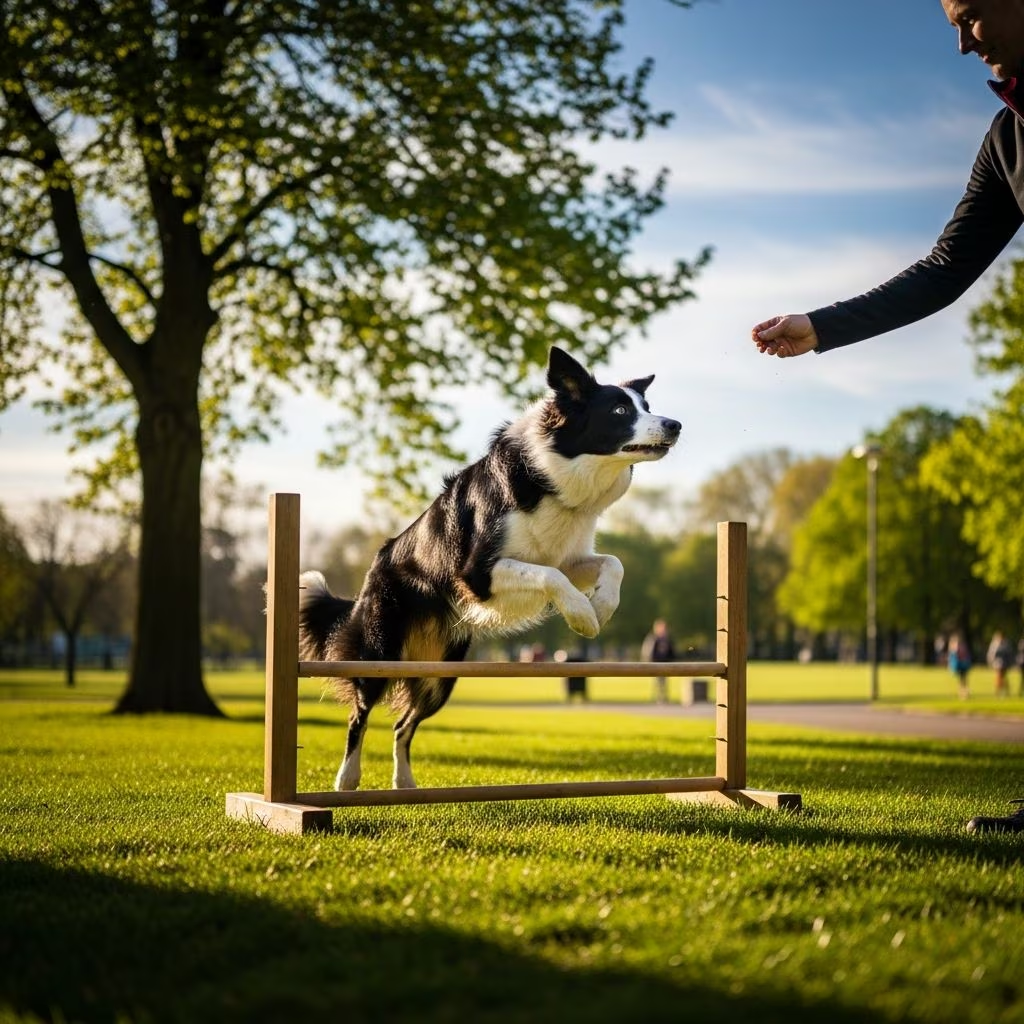
Border Collies represent one of the most intelligent dog breeds, yet their exceptional cognitive abilities often present unique training challenges that standard approaches fail to address. Their reputation for being “easy to train” masks the reality that these herding dogs require specialized methodology, particularly when relying solely on treat-based incentives. Understanding the distinctive learning patterns of Border Collies allows owners to develop training systems that harness their natural instincts while redirecting potentially problematic behaviors.
Understanding the Border Collie Learning Profile
Border Collies possess an inherent drive to work and respond to stimuli in their environment. This breed was originally developed for herding livestock, which shaped their genetic predisposition toward constant vigilance, rapid movement, and intense focus on motion. These characteristics, while valuable in working contexts, can translate into destructive behaviors in domestic settings when owners fail to properly channel them.
The fundamental challenge with Border Collie training stems from their tendency to identify and exploit loopholes in household rules. When owners are preoccupied with daily responsibilities, these dogs quickly learn which behaviors go unpunished. A puppy might discover that chewing shoes or chasing the family cat is acceptable during busy morning hours. Once this pattern establishes itself, the behavior becomes habitual, requiring systematic intervention rather than occasional corrections.
Recognizing that your individual Border Collie has distinct preferences and personality traits is essential for developing an effective training approach. Pushing a naturally cautious dog toward unfamiliar social situations or allowing aggressive interactions with unfamiliar animals can create anxiety rather than confidence. The goal is understanding what motivates your specific dog and building training around those natural inclinations.
Critical Early Socialization Period
The first sixteen weeks of a Border Collie puppy’s life represent a critical developmental window. During this period, the puppy’s brain undergoes significant neural development related to social perception and threat assessment. Proper socialization during this window dramatically influences whether your adult dog develops into a confident, friendly companion or displays fearful and reactive behaviors toward novel stimuli.
Effective socialization involves controlled exposure to various environments, people, and situations without forcing interactions. Rather than simply introducing your puppy to strangers or unfamiliar dogs, allow the puppy to approach at their own pace. Some puppies naturally display cautious temperaments, and respecting these personality traits while gradually building confidence produces better long-term outcomes than aggressive socialization tactics.
Documentation of positive interactions during this developmental period creates a neural foundation for social confidence. Puppies that encounter friendly people, various environments, and different sensory experiences develop more resilient, adaptable adult behaviors. This foundation prevents many behavioral problems before they develop, making early socialization perhaps the most valuable investment in long-term training success.
The Mental Exercise Misconception
Most Border Collie owners respond to energy management advice by implementing scent games, trick training, focus exercises, obedience work, or puzzle toys filled with food. While these activities provide some stimulation, they often fail to address the core issue: Border Collies require genuine mental fatigue that comes from sustained self-control rather than activity participation.
The irony of effective Border Collie mental conditioning is that the most powerful tool involves stillness rather than motion. Teaching your dog to maintain a down-stay, place command, or relaxed settling behavior while exciting activities occur nearby demands extraordinary self-control. Your Border Collie must constantly resist the impulses that drive their breed while remaining calm in situations designed to trigger movement.
This distinction matters because traditional “mental exercise” often creates the opposite effect. Scent games and trick training can heighten arousal levels rather than channel them productively. A Border Collie that completes puzzle toys or participates in agility work may experience temporary satisfaction followed by renewed energy and behavioral problems. Teaching genuine impulse control through extended duration commands provides the mental fatigue that leads to behavioral improvement.
Foundation Commands for Border Collie Puppies
Establishing core commands during puppyhood creates the behavioral framework for all future training. Professional trainers recommend teaching ten foundational skills to young Border Collie puppies before addressing advanced behaviors or specific behavioral problems.
Release and Recall Development
The release command (often taught as “out” or “drop”) establishes the principle that your puppy must immediately surrender any object upon command. This creates reliable toy management during play and prevents the development of possessive behaviors. Consistent practice from the earliest weeks of puppy ownership establishes this as automatic behavior rather than negotiable.
Name recognition and reliable recall form the foundation for all safety in Border Collie ownership. Teaching a puppy to come immediately when called requires positive association with the recall command. Food lures placed directly on the puppy’s nose, followed by reward delivery when the puppy reaches you, create powerful motivation for reliable response.
Sit and Down Commands
Teaching sit serves multiple purposes beyond obedience. This command signals that the puppy must pause and wait for permission to proceed. Extended duration sit exercises, where the puppy remains in position while you move around or provide treats, build impulse control gradually.
The down command provides the essential tool for sustained settling behavior. Unlike sit, which puppy bodies find relatively easy to maintain, down requires genuine commitment to remain still. Training down with multiple treat rewards during the hold period teaches the puppy that duration in the position brings continued reinforcement.
Preventing Obsessive and Reactive Behaviors
Border Collies display a remarkable propensity for developing obsessive behaviors, particularly with moving targets. Some dogs develop problematic shadow chasing, fixation on reflections, or compulsive stalking of family members’ movements. These behaviors emerge from the breed’s genetic predisposition to track and respond to motion.
Prevention through environmental management proves more effective than correction. Managing access to triggering situations—controlling lighting to reduce shadow play opportunities, preventing unstructured chasing games, and avoiding toys that encourage obsessive pouncing—prevents the neural pathways that establish these habits.
When obsessive behaviors have already developed, addressing them requires systematic desensitization combined with rewarding incompatible behaviors. Teaching a strong place command that prevents the dog from engaging in obsessive activities, then rewarding extended duration in that position, gradually reduces the frequency and intensity of problematic fixations.
Managing Fetch and Retrieval Games
Fetch appears to be an ideal activity for Border Collies—it combines physical exercise with their natural retrieving instinct. However, unsupervised fetch can contribute to injury and reinforce compulsive chase behaviors. Veterinarians and canine physical conditioning specialists recommend teaching a reliable wait command that transforms fetch into a controlled activity.
The process involves teaching an exceptionally reliable sit-stay command, where your Border Collie remains seated even as the ball is thrown. The dog must wait until you specifically release them with a permission command before pursuing. This approach allows the ball to stop bouncing before the dog begins running, significantly reducing joint stress and impact injuries.
Training fetch with the wait requirement also prevents the reinforcement of compulsive chasing. Dogs that must wait before retrieving learn that movement occurs only upon permission, not automatically when a ball moves. Over time, this conditioning reduces the intensity of chase drive and develops more measured response patterns.
Addressing Common Behavioral Challenges
Border Collies frequently display selective hearing, jumping up, anxiety, nervousness, and reactivity toward specific stimuli. These behavioral problems, while frustrating, generally respond well to systematic training approaches when owners abandon ineffective treat-based methods in favor of structured impulse control training.
Selective Hearing and Command Reliability
Border Collies sometimes demonstrate inconsistent response to commands, appearing to “selectively” ignore certain instructions. This behavior usually reflects insufficient training for reliability in distracting environments rather than genuine hearing issues. Building command reliability requires practicing in progressively distracting settings, ensuring the dog responds consistently before advancing to more complex scenarios.
Jumping and Impulse Control
Jumping on family members and guests emerges from excitement and seeking attention. Rather than punishing jumping, effective training involves rewarding sitting behavior as an alternative. When visitors arrive, management systems that prevent the jumping scenario (using gates, confining the dog initially, or controlling access) combined with rewarding calm sitting responses eliminate the behavior more efficiently than confrontation.
Anxiety and Reactivity
Border Collies with anxiety issues or reactivity toward specific triggers benefit from counterconditioning approaches that pair the trigger with positive experiences. Slowly introducing the trigger at distances where the dog maintains calm behavior, then rewarding this composed response, gradually shifts the dog’s emotional reaction to the previously anxiety-producing stimulus.
Assigning Meaningful “Jobs” to Border Collies
The breed’s herding heritage creates a genuine psychological need for purposeful work. Providing a “job” need not involve formal herding trials or advanced sport competition. Everyday tasks that channel their natural work drive prove remarkably effective.
Teaching your Border Collie to hold a down-stay while you work around the house, establishing a place command where the dog settles on a mat while family activities continue, or assigning the dog specific tasks during daily routines provides the purposeful engagement their brains require. The dog must resist impulses to participate in activities happening nearby, building the self-control that translates into improved overall behavior.
Many behavioral problems diminish significantly when Border Collies receive appropriate work-like tasks. Dogs that previously displayed destructive behavior, excessive barking, or fence-running often settle considerably when given daily assignments that satisfy their psychological needs.
Building Training Systems That Close Behavioral Loopholes
Border Collies excel at identifying inconsistencies in household rules and exploiting these gaps. Without systematic enforcement, dogs learn exactly which behaviors elicit consequences and which escape notice. Building an effective training system requires identifying behavioral loopholes and implementing consistent responses.
A comprehensive system includes environmental management (preventing access to problematic behaviors), clear rules about which behaviors are acceptable and unacceptable, and consistent consequences that apply across all family members and all situations. When every person in the household enforces the same standards, Border Collies quickly develop reliable behavioral responses.
FAQ Section
At what age should I start training my Border Collie?
Training begins from the moment your puppy arrives home. Even eight-week-old puppies can learn basic commands, recall, and release behaviors. Early foundation training prevents behavioral problems before they develop and takes advantage of the critical socialization window.
How much exercise does a Border Collie puppy need?
While physical exercise matters, mental stimulation through training becomes increasingly important as puppies develop. A balanced approach includes age-appropriate physical activity combined with structured training sessions that build impulse control and teach commands.
Can Border Collies unlearn obsessive behaviors?
Yes, systematic training that rewards incompatible behaviors while managing access to triggers can significantly reduce or eliminate obsessive patterns. Prevention through early environmental management proves more effective than later correction.
Why does my Border Collie ignore commands in certain situations?
This typically reflects insufficient training for that specific environment rather than selective hearing. Building reliability requires practicing commands in progressively distracting settings and ensuring strong foundation training before increasing difficulty.
Is treat-based training effective for Border Collies?
While treats can motivate certain learning, exclusive reliance on treat-based training often fails with Border Collies. Combining treats with structured impulse control exercises, environmental management, and systematic consequences produces more reliable results.
References
- A Realistic, Honest Border Collie Training Guide — Best Mate Dog Training. Accessed January 30, 2026. https://www.bestmatedogtraining.co.nz/training-a-border-collie
- Border Collie Puppy Training – 10 Skills To TEACH FIRST! — McCann Dog Training. January 19, 2020. https://www.youtube.com/watch?v=dZiHiQbM5dw



