

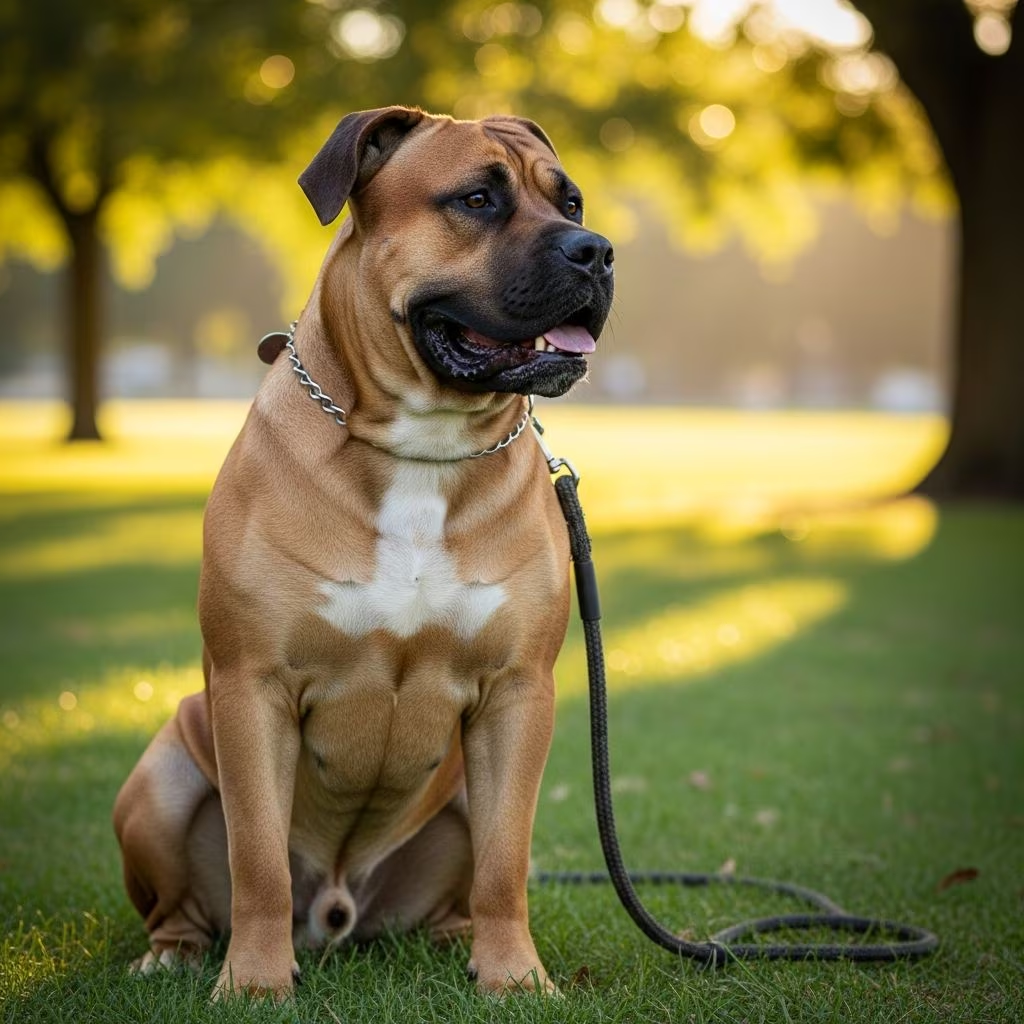
Boerboels, renowned for their imposing stature and innate protective qualities, demand thoughtful training approaches to thrive as devoted family members. These South African giants can weigh over 150 pounds and possess tremendous strength, making early and consistent guidance crucial for safety and harmony. This guide draws on established practices to help owners build a strong foundation, fostering a dog that responds reliably in diverse situations.
Understanding the Boerboel Temperament
At their core, Boerboels blend loyalty with a vigilant nature, traits honed over generations as homestead guardians. They exhibit high intelligence and a desire to please, yet their confidence can lead to independent decision-making if not channeled properly. Recognizing these qualities allows trainers to tailor methods that respect the breed’s heritage while promoting balanced behavior.
- Protective Instincts: Naturally wary of unfamiliar people, Boerboels excel in safeguarding homes but require exposure to prevent overprotectiveness.
- Intelligence and Drive: Quick learners who respond best to structured routines and mental challenges.
- Physical Power: Their size necessitates control training from puppyhood to manage strength safely.
Owners should prioritize patience, as adolescent phases may test boundaries, but consistent reinforcement yields a calm, responsive adult.
Essential Gear for Effective Sessions
Selecting the right equipment sets the stage for productive training. Sturdy tools accommodate the breed’s power without causing discomfort.
| Item | Purpose | Recommendations |
|---|---|---|
| Short Leash | Close control during basics | 6-foot heavy-duty nylon or leather |
| Long Leash | Recall practice in open areas | 20-30 foot retractable or drag line |
| Harness | Pressure-free walking | No-pull design fitting chest girth |
| Rewards | Motivation tools | High-value treats, durable toys |
These items ensure safety and focus, allowing progressive skill-building without frustration.
Building Foundational Obedience Commands
Core commands form the bedrock of Boerboel training, enabling clear communication and impulse control. Begin indoors for distraction-free learning, progressing to varied settings.
Name Recognition and Recall
Teaching a dog to respond to their name creates instant attention. Pair it with “come” by using an enthusiastic tone, holding a reward, and crouching invitingly. On a long leash outdoors, gently reel them in if needed, praising lavishly upon arrival. Practice daily to solidify reliability, vital for safety in expansive yards or parks.
Drop It for Safety
To prevent ingestion of hazards, start with toys. Insert your hand near the mouth while saying “drop it,” releasing praise and returning the item upon compliance. Transition to food items by trading for higher-value rewards, reinforcing voluntary release.
Sit and Stay Mastery
Lure a sit by raising a treat overhead, capturing the natural downward motion. Mark with “good sit” and reward. For stay, command from a sit position, delaying treats to build duration—start at seconds, advancing to minutes. Reset calmly if they break, rebuilding success incrementally.
Leave It and Heel Techniques
Present a treat in your closed fist, saying “leave it.” Reward from your other hand when they back off. For heeling, walk briskly; stop and call to your side if they forge ahead, rewarding position with treats and movement continuation.
Daily repetition in 5-15 minute bursts keeps engagement high, preventing overwhelm in these robust pups.
Harnessing Positive Reinforcement Power
Rewarding desired actions accelerates learning by associating obedience with pleasure. Identify motivators—some Boerboels favor kibble, others tug toys or affection—and deliver immediately post-behavior. This method outperforms punishment, building trust and enthusiasm without fear.
- Timing: Praise within 2 seconds of action.
- Variety: Rotate rewards to maintain interest.
- Calm Delivery: Avoid overexcitement to encourage steady demeanor.
Socialization: Key to Balanced Guardians
Expose puppies to diverse stimuli from 8 weeks: gentle strangers, children, vehicles, and fellow animals. Controlled puppy classes or neighborhood walks build confidence, curbing fear-based reactivity. Aim for positive encounters only, pairing novelties with treats to forge favorable links. Not recommended for novices, Boerboels shine under experienced hands guiding this phase.
Consistency Across the Household
Uniform rules prevent confusion. Align family on commands, boundaries, and rewards. Daily sessions reinforce habits, countering the breed’s adolescent stubbornness. Incorporate training into routines like mealtimes—require sits for eye contact before release—or doorways, practicing waits.
Advanced Skills for Everyday Control
Beyond basics, teach “out” for space management: block mildly and reward retreat. Place training directs to mats or beds, luring then fading cues. Heeling drills with turns and pace changes sharpen focus, integrating sits or downs mid-walk for polished manners.
Exercise Regimen for Mental and Physical Health
Boerboels need 1.5-2 hours daily of vigorous activity: hikes, fetch in fenced spaces, puzzle toys. Puppies under 18-24 months require moderation to safeguard joints—short bursts over marathons. Mental games like scent work complement physical outlets, expending energy productively.
Navigating Puppy to Adult Transitions
From day one, instill boundaries amid rapid growth spurts. Teenage defiance demands doubled consistency, not laxity. Lifelong training integrates as lifestyle, proofing against distractions and stacking commands for complex scenarios.
Common Pitfalls and Fixes
Avoid marathon sessions risking burnout; opt for frequent shorts. Never repeat commands endlessly—project authority once. In distractions, revert to lower levels before advancing. If progress stalls, consult professionals versed in guardian breeds.
FAQs
How early should I start training my Boerboel?
Immediately upon arrival, around 8 weeks, focusing on foundations amid play.
Are Boerboels good for first-time owners?
Generally no, due to size and instincts; experienced handlers fare best.
What if my Boerboel ignores commands outdoors?
Practice on long leashes in low-distraction spots, gradually increasing challenges.
Can I use punishment in training?
Avoid; positive methods yield durable results without damaging trust.
How much exercise for a Boerboel puppy?
Controlled short sessions, ramping up post-18 months per vet advice.
References
- Training from Day One — Fuller Boerboels, Mary Johns. 2019-08-17. https://www.fullerboerboels.com/blog/2019/8/17/training-from-day-one
- Boerboel Dog Breed Guide: Care & Training — BorrowMyDoggy. Accessed 2026. https://www.borrowmydoggy.com/doggypedia/dog-breed-guides-boerboel
- Boerboel Training Guide 2026: Raise a Calm, Well-Behaved Guardian — Pet Age in Human Years Calculator. 2026. https://petageinhumanyearscalculator.com/blog/boerboel-training-guide/



