

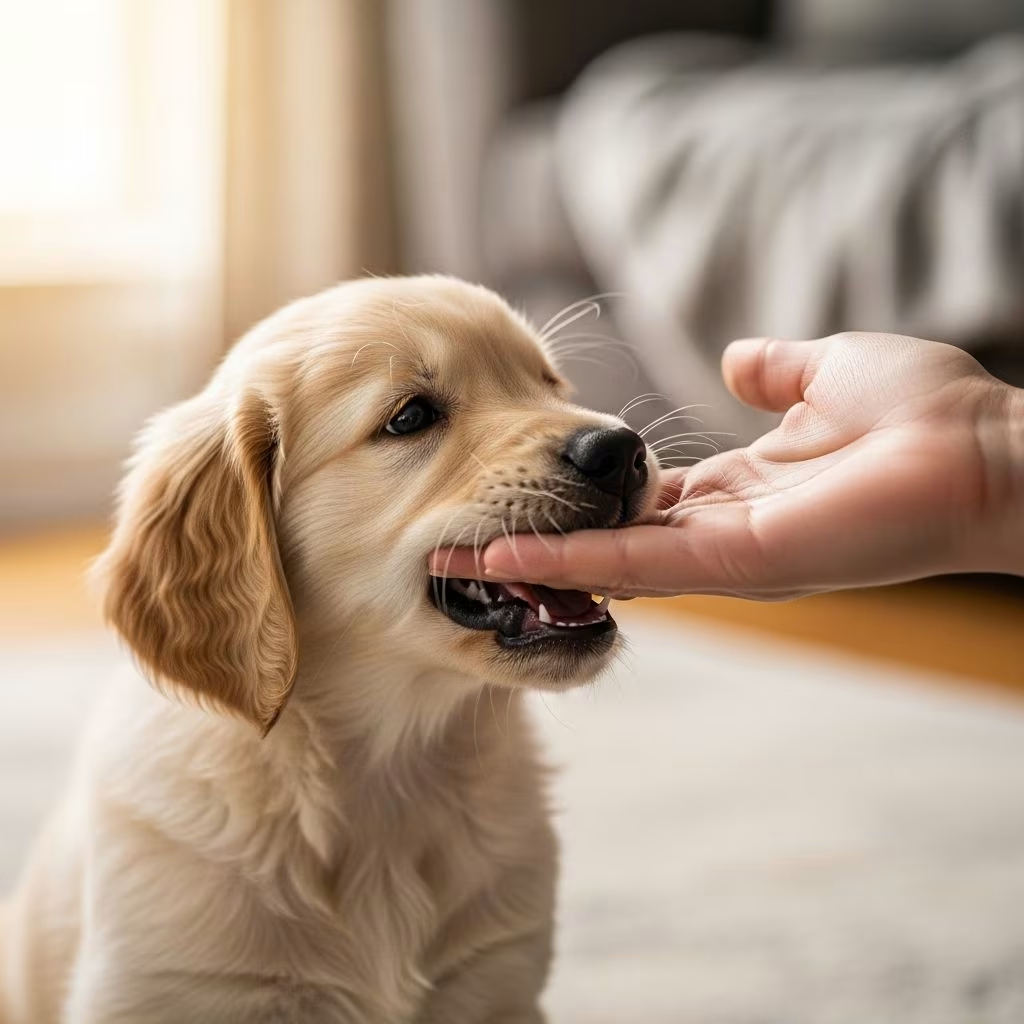
Puppies naturally explore the world with their mouths, but without proper guidance, this can lead to painful bites. Bite inhibition—the ability to control bite pressure—is a critical skill that must be taught early, ideally between 3-5 months, to ensure safe interactions throughout the dog’s life.
Why Bite Inhibition Matters for Every Puppy Owner
Developing a soft mouth prevents injuries during play and reduces the risk of serious bites later. Puppies learn this from littermates, but human households require deliberate training since our skin is more sensitive than theirs. Experts emphasize that poor bite control rehearsed young becomes a hard habit to break.
Trained dogs with good inhibition are less likely to cause harm even in stress, as they instinctively moderate force. Start now: consistency turns rowdy puppies into gentle companions.
The Science Behind Puppy Mouthing
Puppies mouth to investigate, teethe, and play, mimicking wolf pups who use bites to communicate. Without sibling feedback, they miss learning bite strength limits. Human yelps mimic littermate reactions, signaling ‘too hard’.
Key window: 3-5 months, when neural pathways for mouth control solidify. Delay risks ingrained carelessness. Training builds trust, teaching pups hands aren’t chew toys.
Core Principles of Effective Training
Success relies on positive reinforcement, not punishment. Punishments confuse; feedback teaches. Two phases: first, soften bite force; second, reduce mouthing frequency.
- Consistency: Every family member must respond identically.
- Timing: React instantly to hard bites.
- Patience: Repetition over weeks yields results.
Step-by-Step Techniques to Soften Bites
1. The Yelp and Pause Method
During play, if puppy bites hard, emit a high-pitched “Ouch!” or yelp like a hurt pup. Freeze or withdraw attention for 10-30 seconds. Praise softly when they back off, then resume gently.
This mirrors litter play: hard bites end fun. If yelping excites them, quietly walk away instead.
2. Time-Outs for Hard Nips
Hard bite? Say “Ouch!”, stand up, fold arms, and ignore for 1 minute—or place in crate/playpen calmly. Return only when calm; reward with praise.
Gradually raise standards: week 1, timeout level 5 bites; week 2, level 4+; until only level 1 (gentle) allowed.
3. Food Lure Off-Switch
Hold treat in fist base. Say “Off”; if no teeth touch for 1 second, say “Take it”. Build to 20 seconds, counting praise: “Good one, good two”. Retract if teeth felt.
This conditions gentle mouths: treats only for softness.
4. Collar Conditioning and Calming Holds
Gently grab collar during calm moments, reward stillness. Progress to holds during excitement, teaching relaxation. For tiny dogs, use passive restraint: hold calmly through struggles, rewarding calm.
Redirecting Energy to Appropriate Outlets
Never suppress mouthing entirely at first—redirect to toys. Offer chew toys post-timeout; praise engagement.
Toy Selection Table:
| Toy Type | Best For | Tips |
|---|---|---|
| Kong with kibble | Long sessions | Stuff and freeze for appeal |
| Rope toys | Tug games | Stop if teeth graze skin |
| Soft plush | Gentle chewers | Supervise to prevent ingestion |
| Teething chews | Sore gums | Rotate to maintain interest |
Burn energy via walks, fetch, training to curb frustration biting.
Advanced Strategies for Persistent Biters
Settlement Training
Teach “settle” on mat during play. Pause game, wait for four-on-floor, reward. Builds impulse control.
Hand-Feeding Rituals
Feed meals by hand, requiring gentle takes. Teeth? Hand away, retry. Fosters soft mouths daily.
Play Pen Confinement Play
Play in puppy-proof area; hard bite means you exit briefly. Teaches loss of fun.
Common Mistakes to Avoid
- Physical punishment: Increases fear-aggression.
- Inconsistency: Undermines learning.
- Ignoring soft bites: Reward gentleness explicitly.
- No exercise: Bored pups bite more.
Age-Specific Milestones
8-12 Weeks: Focus on yelp/timeouts; socialize safely.
3-5 Months: Refine to toy-only mouthing.
6+ Months: Enroll in classes for polish.
Integrating with Overall Puppy Education
Bite training pairs with housebreaking, crate habits. Puppy classes reinforce via peer play. Track progress: journal bites/week.
Frequently Asked Questions (FAQs)
Why does my puppy bite harder when excited?
Excitement overrides control; use pauses to teach calm.
How long until biting stops?
Force control: 2-4 weeks; full reduction: 4-6 months with consistency.
What if yelping doesn’t work?
Switch to silent withdrawal or timeouts.
Is it too late for an older puppy?
Harder but possible; intensify food exercises and consistency.
Should I let puppies play bite toys roughly?
Yes, but stop if teeth contact skin; model gentleness.
Long-Term Benefits and Monitoring
Well-inhibited dogs enjoy freer play, build owner trust. Monitor: if biting worsens post-6 months, consult vet/behaviorist for pain issues.
Commit daily: 10-15 minute sessions yield transformed behavior.
References
- Teaching Bite Inhibition — Dog Star Daily. Accessed 2026. https://www.dogstardaily.com/training/teaching-bite-inhibition
- How to Stop Puppy Biting and Train Bite Inhibition — American Kennel Club (AKC). Accessed 2026. https://www.akc.org/expert-advice/training/stop-puppy-biting/
- The Calming Technique to STOP Puppy Biting FAST — McCann Dog Training (YouTube). Accessed 2026. https://www.youtube.com/watch?v=eb9qNHCSbMI
- Teaching Bite Inhibition and Dealing with Rough Puppy Play — Oregon Humane Society. Accessed 2026. https://www.oregonhumane.org/portland-training/teaching-bite-inhibition-and-dealing-with-rough-puppy-play/
- The Missing Piece In Your Puppy Biting Training — YouTube (Ken’s training). Accessed 2026. https://www.youtube.com/watch?v=G4IG5kEHb8g
- Creating Good Bite Inhibition — McCann Professional Dog Trainers. Accessed 2026. https://www.mccanndogs.com/blogs/articles/creating-good-bite-inhibition
- Mouthing, Nipping and Biting in Puppies — ASPCA. Accessed 2026. https://www.aspca.org/pet-care/dog-care/common-dog-behavior-issues/mouthing-nipping-and-biting-puppies



